Archived: 1 November 2026
Abstract
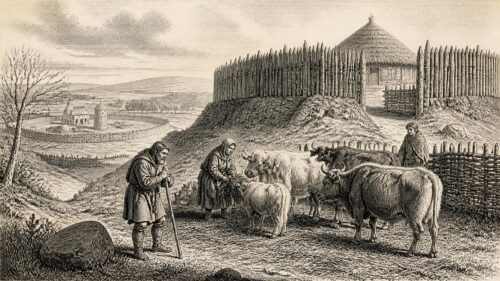
In 700, Irish annals recorded a cattle mortality beginning on 1 February at Mag Trega in Tethba, an event of major significance in a rural economy dependent on livestock for food, labour, wealth and tribute. Sources differ slightly in chronology and detail, but associate the outbreak with Ireland-wide loss and memories of famine and pestilence. Chronicon Scotorum also reports exceptional frost, without proving a causal link. Political instability continued: Fiannamail of Dál Riata was killed and Aurthuile of Cenél nÉogain expelled to Britain. Ecclesiastical institutions remained influential, while later narratives framed crisis through Christian ideas of protection, providence and judgement.
Read Article
Archived: 2 November 2026
Abstract
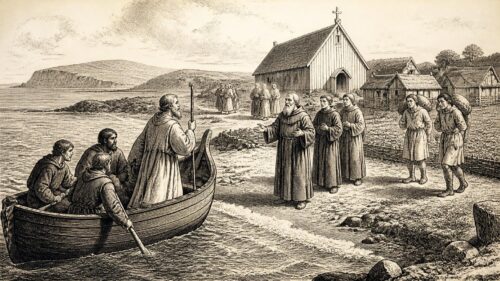
In 673 CE, the Irish annals conventionally group together a small but revealing set of notices: the killing of Domangart, king of Dál Riata; the burning of Mag Luinge; the capture of two named men; the death of Cormac son of Máel Fothartaig; and the voyage to Ireland of Fáilbe, abbot of Iona. None is supplied with a month, day or full narrative. Even the year requires care: the Annals of Ulster preserve these entries under their annal 673 while displaying an Anno Domini equivalent of 672, whereas the Annals of Tigernach place the closely corresponding material under 673. Modern
Read Article
Archived: 2 November 2026
Abstract
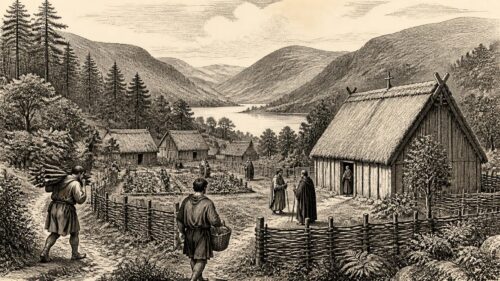
In 659 CE, Ireland’s surviving annalistic record is unusually quiet about battles, harvests and royal assemblies, but it is not empty. The Annals of Ulster, in an entry whose calendar heading explicitly identifies the year as AD 659, records a cluster of deaths: Bishop Fínán son of Rímid, Colmán of Glendalough, Daniél bishop of Cenn Garad, Echaid son of Blathmac, Conall Crannamna, and Eóganán son of Tóthalán. This is firm evidence for what the annalist chose to commemorate, rather than a complete record of all that happened. It offers a revealing cross-section of the Irish world: an important Leinster church,
Read Article
Archived: 4 November 2026
Abstract
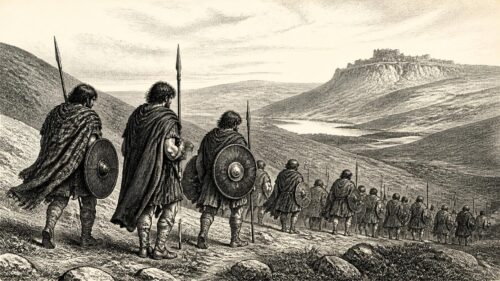
In 638 CE, the clearest event linked to Irish history was not fought on the island of Ireland itself, but in the Irish Sea world to which north-east Ireland belonged. Chronicon Scotorum records a battle at Glenn Muiresan in which the followers of Domnall Brec were put to flight, followed by the besieging of Eten. Domnall Brec was king of the Cenél nGabráin, the leading kindred of Dál Riata: a Gaelic sea-kingdom whose territories and connections extended between Argyll and the coast of Antrim. The annal therefore preserves a hard, if brief, sign that the political shocks of the late
Read Article


