Ard Corann629 CE
The surviving notices for 629 CE in Irish annalistic material are sparse and uneven. One entry in the Annals of Tigernach places the battle of Ard Corann in that year and records a Dál Riata victory with the death of Fiachna son of Deman. A comparative note, however, says the same battle is dated to 629 in one tradition and 630 in another. This narrative therefore separates the securely attested battle notice from broader context, and avoids turning an annal gap into invented sequence or consequence. The year is visible, but only through a very short and disputed record.
Dateline
Year Frame
For 629 CE, the annalistic record opens only a narrow window. One Tigernach entry is placed under T629 and reports a battle at Ard Corann. A separate comparative notice says that the same event appears in the Annals of Ulster as 629, while Tigernach places it in 630. That is enough to discuss the year, but only by staying close to the wording of the texts and not by filling the gap with invented detail.
The year can therefore be treated as a dated notice rather than a full narrative. The surviving wording names a battle, identifies a victor, and records one death, but it gives no wider sequence for Ireland in 629. The annalistic frame is visible because the surrounding entries continue before and after this notice, yet the 629 item itself remains a brief statement, not a developed account of causes, aftermath, or wider conflict.
Battle Notice
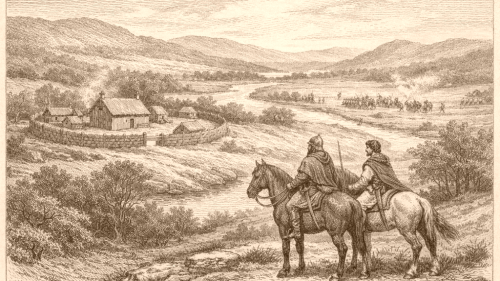
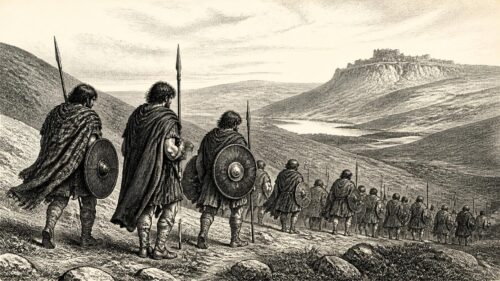
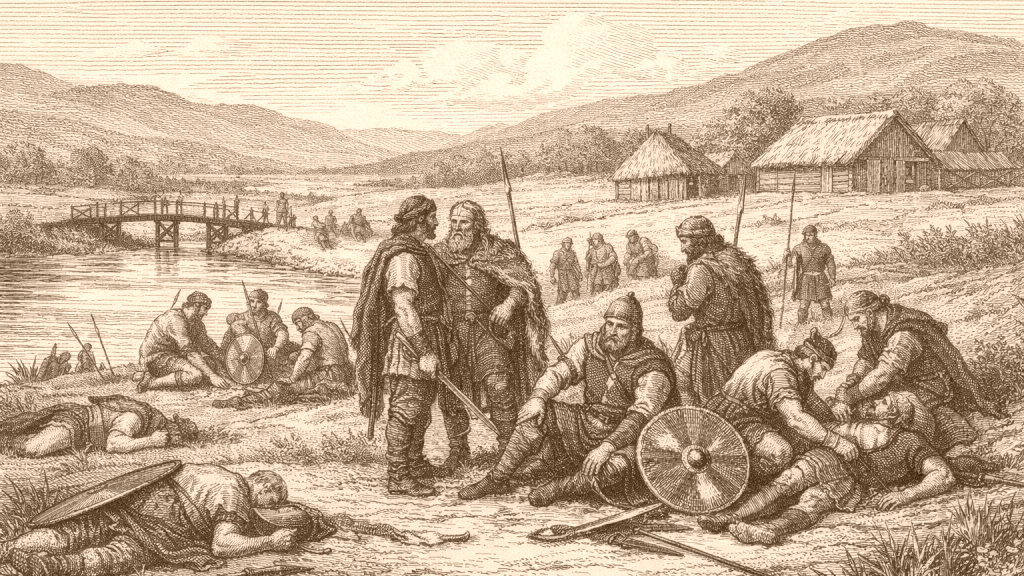
The most specific year-linked statement is the Tigernach notice for T629. It says that the battle of Ard Corann was won by the Dál Riata and that Fiachna son of Deman fell by Connad Cerr, king of Dalriada. The entry is concise and factual. It gives a place-name, a named victor, and a named death, but it does not describe the fighting itself or add any narrative explanation beyond the battle notice.
Because the entry is so brief, its historical value lies in what it directly states. The text does not give troop numbers, field conditions, or a longer sequence of events, and it does not spell out consequences after the battle. What can be said securely is limited to the existence of the notice itself: Ard Corann, Dál Riata’s victory, and the death of Fiachna son of Deman within the annalistic year frame that one tradition attaches to 629.
Dating Problem
The comparative note is important because it preserves uncertainty rather than removing it. It says the Annals of Ulster place the battle in 629, while Tigernach has it in 630. It also says both traditions place the event before the death of Eochaid Buide. This is a direct notice of disagreement in year assignment, and it warns against treating 629 as if every annalistic witness agreed on that date.
That disagreement does not erase the battle, but it does limit what can be stated with confidence about the year label. The evidence supports saying that one annalistic tradition counted Ard Corann under 629, while another counted it under 630. The secure point is the battle notice itself; the uncertain point is the exact year assignment across the traditions. A careful account must preserve both facts together.
Named Figures
The annal entry names two principal figures. Fiachna son of Deman is the man who fell, and Connad Cerr is identified as king of Dalriada and as the victor. The passage is specific about those roles and does not provide wider family background, office history, or biography in the excerpt itself. Its value lies in the direct pairing of a named casualty with a named winner in the battle notice.
A nearby comparison of later Dál Riata material shows that annalistic traditions can preserve only a single event and a few named people, while leaving much unsaid. For 629, the record is similarly spare. It does not support adding motives, alliances, or a fuller personal narrative for Fiachna or Connad Cerr. The evidence remains strongest where it is most exact: names, roles, and the battle itself.
Textual Context
The annals used here are part of a much larger Irish historical corpus. A Galway project describes the Irish annals as texts recording historical events across medieval Ireland and notes a focused exploration of Annals of Ulster material for 600 to 700 CE. That broader setting matters only as context: it shows that 629 belongs within a large chronological run of entries, not as an isolated line detached from the wider annalistic sequence.
A separate annal-access site says the Irish annals are available as English translations of eight medieval annals and that searches typically lead to a year and item rather than a broad narrative. That description fits the present material closely. The usable evidence for 629 is a short year entry and a comparative note on dating, not a detailed sequence of events. The record is therefore compact by design, and the historian must keep it compact.
Chronological Limits
The safest historical statement about 629 is therefore a restrained one. The evidence here does not justify claims about wider Irish warfare, political change, or social conditions for the year, because the retrieved passages give only one battle notice and one dating comparison. Anything beyond that would move from evidence into reconstruction. The gap is real, and the proper response is to leave it visible rather than fill it with inference.
The nearby entries show continuity in the annal sequence, but they belong to adjacent years and cannot be imported into 629. What survives for this year is a battle at Ard Corann, a Dál Riata victory, the death of Fiachna son of Deman, and a disagreement over whether the event was entered under 629 or 630. That is enough to define the year’s secure core, and nothing more should be claimed.
Annal Sequence
The sequence around the notice helps show how tightly the evidence is framed. In Tigernach, the 629 entry sits among nearby annual notices, including later items in 630. That arrangement makes the year boundary visible, but it does not allow later notices to be shifted backward into 629. The chronology has to follow the annal’s own structure, even when that structure leaves a year short of fuller explanation.
The comparative note likewise keeps the focus on the event rather than on speculation. It identifies the same battle across two traditions and records the year difference without resolving it. That means 629 can be discussed only as a year attached by one witness to Ard Corann, not as a period whose whole story has been recovered. The annalistic evidence remains precise in form and very limited in scope.
Historical Core
On the evidence gathered here, 629 CE in Ireland has a small but clear historical core. One annal records Ard Corann under that year, names Dál Riata as victors, and identifies Fiachna son of Deman among the dead. Another comparison shows that the same event was dated differently in a related tradition. These are the secure facts; they are enough to write responsibly, and too little to justify a broader story.
A careful narrative of the year must therefore end where the evidence ends. It can state that one tradition places Ard Corann in 629, another in 630, and that both connect the battle to a death before Eochaid Buide. It cannot responsibly supply missing background, consequences, or a wider political frame. The value of the notice lies in its restraint, because that restraint is what makes the chronology observable at all.