
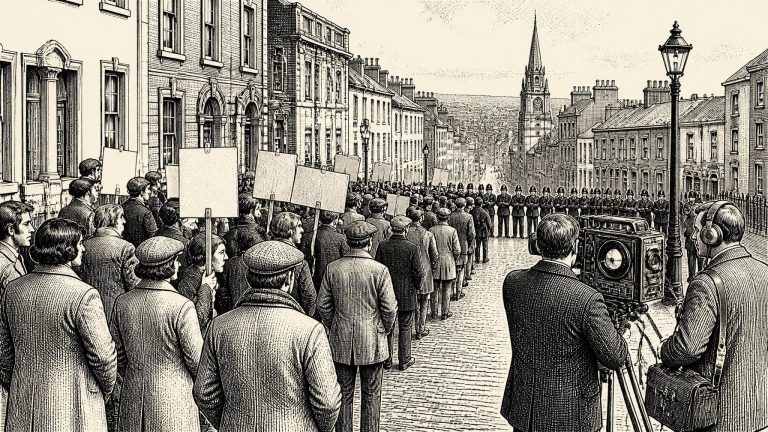
Duke Street’s Television Shock
The campaign’s immediate issues were concrete. In several nationalist-majority or heavily Catholic districts, access to decent housing, work and local political influence was widely regarded as unequal. Local councils possessed substantial discretion in allocating homes and, because local-government voting rights depended in part on property qualifications, many adults had no vote. The drawing of electoral boundaries, especially in Londonderry, helped maintain unionist control of councils despite demographic realities. For campaigners, therefore, demands such as fair housing allocation, an end to gerrymandering, repeal or reform of exceptional security powers, and “one man, one vote” were demands for ordinary citizenship rather than simply constitutional nationalism.
