

Related Archive: Frank Aiken

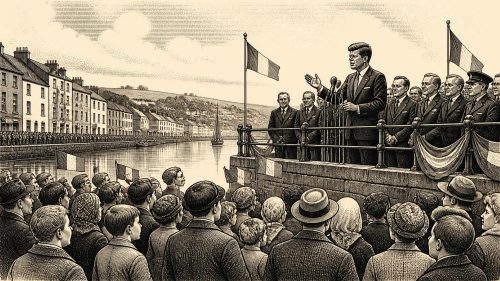
Kennedy’s Summer Homecoming

Kennedy’s Summer Homecoming

Archived: 8 October 2026

Abstract

1963 marked Ireland’s uneven transition towards economic modernisation, planning and international engagement. France’s rejection of Britain’s EEC bid stalled Dublin’s linked application, while growth, industrial change and reduced yet persistent emigration exposed continuing dependence on Britain. A controversial turnover tax highlighted social costs. In Northern Ireland, Terence O’Neill became prime minister amid unemployment and unresolved nationalist grievances. President Kennedy’s celebrated June visit connected statehood, diaspora and American links, before his assassination prompted national mourning. The Planning Act created development controls; cultural and religious life remained influential. Ireland also pursued disarmament at the United Nations, while constitutional division and inequality endured.
Read Article

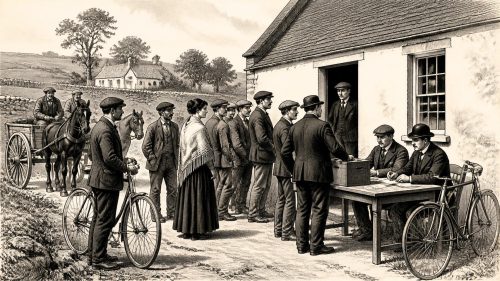
Aiken’s Order and Yeats

Aiken’s Order and Yeats

Archived: 9 October 2026

Abstract

In 1923, the Irish Free State moved from civil war towards constitutional government, though division and repression persisted. After Liam Lynch’s death, Frank Aiken suspended IRA operations and ordered Volunteers to conceal arms, ending organised anti-Treaty resistance without reconciliation. Internment continued, and an eight-thousand-strong hunger strike caused two deaths. Cumann na nGaedheal won the August election, while abstentionist Sinn Féin left parliament incomplete. The state expanded administration through Garda, land, electoral and censorship legislation, and customs barriers made partition economically tangible. League of Nations admission and Yeats’s Nobel Prize brought international recognition, while bereavement, imprisonment and political bitterness endured deeply.

Read Article