Archived: 8 October 2026
Abstract
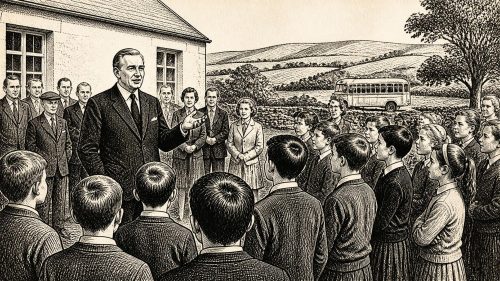
During 1966, Ireland marked the Easter Rising’s fiftieth anniversary with major ceremonies, the Garden of Remembrance’s opening, and the destruction of Nelson’s Pillar. A census recorded population growth and continuing urbanisation, while the Anglo-Irish Free Trade Area signalled export-oriented economic policy despite farmers’ protests over low incomes. Education Minister Donogh O’Malley promised free post-primary schooling and transport from 1967. Seán Lemass resigned as Taoiseach and Jack Lynch succeeded him. De Valera began another presidential term. In Northern Ireland, competing commemorations, UVF violence, sectarian murders and political tensions foreshadowed the coming conflict, underscoring Ireland’s unresolved division amid social and economic change.
Read Article
Archived: 12 October 2026
Abstract
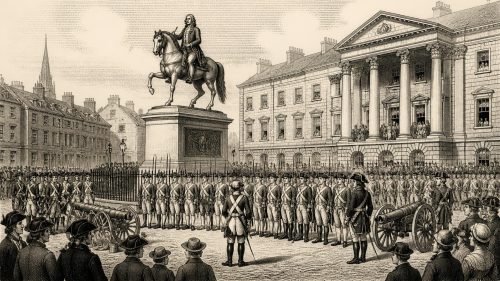
During 1779, war with France and Spain exposed Ireland’s defences, encouraging the growth of locally organised, predominantly Protestant Volunteers. Their armed presence strengthened a campaign for freer trade, prompted by imperial restrictions, falling agricultural prices and impaired credit. Merchants, producers and Patriot MPs, notably Henry Grattan, pressed the Irish Commons to seek commercial relief and use control of supply against government. On 4 November, Dublin Volunteers paraded artillery outside Parliament House, demanding free trade. Crowds added disorderly pressure. Britain promised concessions, although legislation followed later. The agitation linked popular mobilisation with parliamentary action and anticipated demands for Irish legislative independence.
Read Article
Archived: 12 October 2026
Abstract
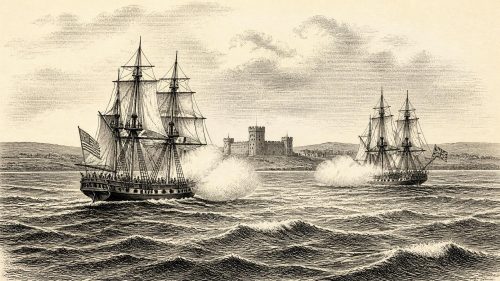
In 1778, Captain John Paul Jones’s Ranger captured HMS Drake off Carrickfergus, exposing Ireland’s weak coastal defences amid imperial war. Fear of attack encouraged Belfast’s first Volunteer company and similar locally organised Protestant corps, which later strengthened demands for political and commercial influence. Wartime disruption prompted limited trade concessions, though these fell far short of free trade and intensified Patriot dissatisfaction. Gardiner’s Catholic Relief Act improved property rights for qualifying Catholics but preserved political exclusion and most penal restrictions. Road building, cultivation, mapping and Dublin’s changing streetscape also reflected gradual improvement. Together, these developments revealed mounting pressures for Irish change.
Read Article

