Archived: 17 October 2026
Abstract
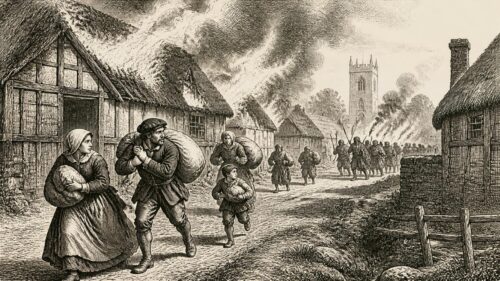
In 1577, Tudor authority in Ireland expanded through garrisons, agreements and coercion, yet faced resistance and disputes over the burdensome cess imposed on the Pale. In Leinster, Rory Óg O’More opposed plantation in Laois after Crown forces received authority to wage destructive war. His followers burned Naas in May and later captured Crown officers, while reprisals intensified. A recorded killing at Mullaghmast exposed mistrust, although claims of a larger massacre remain chronologically uncertain. Elsewhere, officials strengthened control in Thomond and negotiated revenue with Brian O’Rourke. Catholic resistance, overseas plans, religious division and comet marked continuing Leinster conflict at year's end.
Read Article

Archived: 17 October 2026
Abstract
In 1575, Walter Devereux, earl of Essex, failed to establish a durable English colony in north-east Ulster. His final campaign combined pressured diplomacy with Turlough Luineach O’Neill and brutal violence against the MacDonnells: English forces under John Norreys, supported by Francis Drake, killed hundreds of refugees on Rathlin Island. Sorley Boy MacDonnell nevertheless remained powerful, raiding Carrickfergus. Sir Henry Sidney returned as lord deputy, pursuing negotiation alongside garrisoning. Elsewhere, severe drought and disease disrupted communities around Dublin and Leinster. Meanwhile, Ó Maolconaire scribes copied an Irish manuscript at Ballycumin, demonstrating continued Gaelic learned culture amid political, environmental and military instability.
Read Article

