Judge Richard Adams

Coal Dues

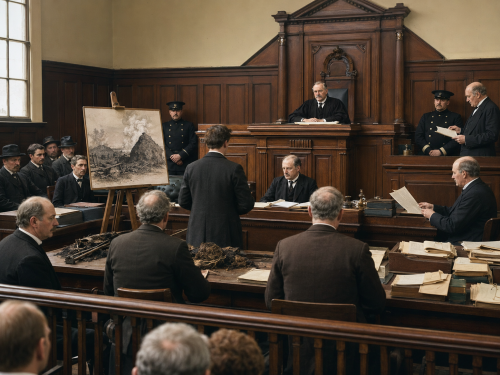
A substantial case before Judge Richard Adams examined the Mayor of Limerick’s asserted right to receive dues upon coal brought into the city. The proceedings, reported on 12 January 1900, required the court to consider whether this inherited privilege rested upon royal charter, lease, long-established prescription or some combination of those authorities. Counsel disputed both the legal foundation of the claim and the capacity in which the Mayor exercised it. What appeared to be an obscure municipal custom therefore became a serious test of whether an ancient commercial right remained enforceable within Limerick’s modern port economy.
Sessions Disputed

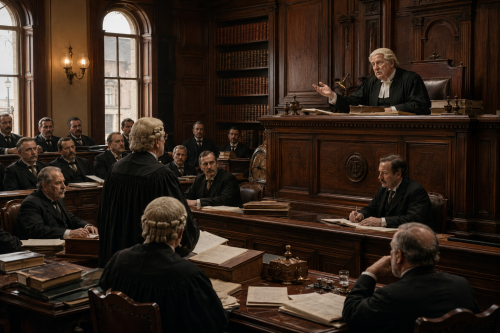
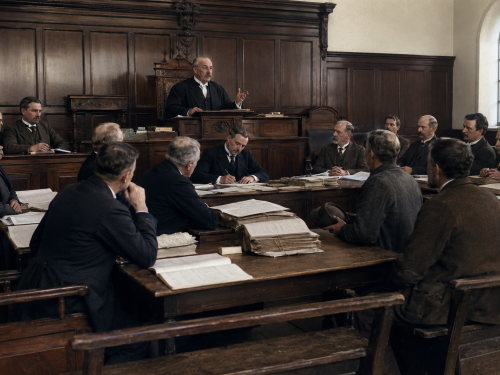
Judge Richard Adams rejected demands that Limerick’s annual Quarter Sessions should be increased from four to eight when he opened the Hilary sittings at the County Courthouse. He asked the barristers and solicitors present whether any member of the local profession supported the proposed change. No one answered in its favour. Adams concluded that the agitation had arisen neither from those practising before the court nor from any clearly demonstrated public demand. He therefore refused to treat the requested increase as a necessary reform and declared that he would continue holding the four established sessions unless legislation compelled him to do otherwise.

Tenant Payments

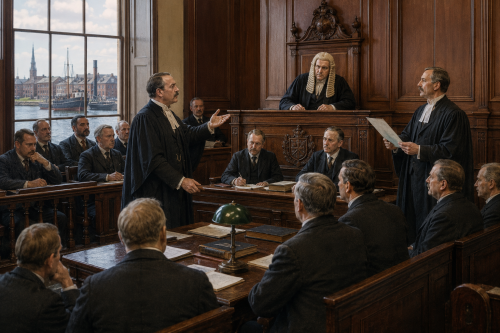
Judge Richard Adams delivered an important ruling during the Limerick Quarter Sessions concerning the fixing of fair rents on Irish agricultural holdings. He declared that money already paid by a tenant to obtain possession of a farm should be taken into account when the judicial rent was assessed. Such payments commonly represented the purchase of the outgoing tenant’s interest, goodwill or tenant-right rather than money paid directly to the landlord. Adams’s statement recognised that an incoming occupier might have invested a substantial sum before paying a single year’s rent and that this financial burden formed part of the true circumstances of the tenancy.

Roads Conflict

Judge Richard Adams awarded £105 compensation at Limerick County Crown Court for hay maliciously burned at Templebredin on the night of 6 December 1899. The claimant, T. M. English, had sought £116 for the destroyed property and argued that hostility arose from his position during a dispute over the maintenance of public roads. Evidence presented to the court connected the burning with an increasingly bitter campaign for the direct employment of labourers by the newly established local authorities. The case brought a rural employment controversy from council meetings into the formal machinery of criminal injury compensation.

Sessions Rejected

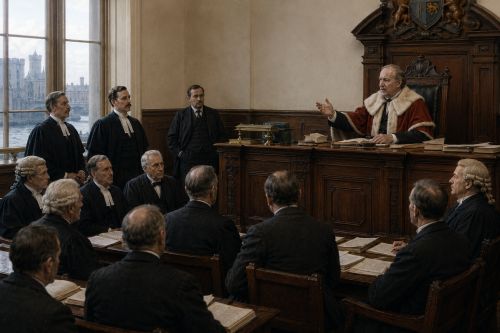
Judge Richard Adams firmly resisted a proposal to double the number of annual Quarter Sessions held in Limerick from four to eight. At the opening of the Hilary sittings, reported on 3 January 1900, the County Court judge asked whether any members of the legal profession present supported the suggested increase. Receiving no affirmative response, he declared that the demand did not come from local barristers, solicitors or the wider public. Adams presented the proposal as the work of a small deputation seeking attention rather than as a reform arising from demonstrated pressure upon the court.

Now Sharing: Articles (154) Images (287) Total Items Archived (441)
Our Mission: 100,000 Items Total Percentage Achieved (0.44%)