
Archived: 7 October 2026
Abstract
Around 30,134 BCE, Ireland was approaching the Last Glacial Maximum, although ice expansion varied regionally and no precise annual reconstruction is possible. Cave deposits, notably Castlepook near Doneraile, preserve a disturbed, long accumulated record of MIS 3 fauna, including mammoth, giant deer, reindeer, bears, wolves, foxes, hyaenas and lemmings. These remains indicate intermittent open, treeless cold habitats and connections with north-west Europe, not a uniform national fauna. Human occupation remains unproven: a possibly butchered reindeer bone suggests brief presence but lacks secure context. Growing ice fragmented habitats and obscured evidence, leaving ecological change rather than social or political history here.
Read Article

Archived: 6 October 2026
Abstract
Around 30,177 BCE, Ireland lay in the later Marine Isotope Stage 3, a cold, largely treeless landscape approaching the Last Glacial Maximum. Cave deposits at Castlepook in north Cork preserve evidence of reindeer, mammoth, giant deer and predators, demonstrating habitable open country despite climatic instability. Scientific dates provide ranges, not exact calendar years, and disturbed deposits require caution. A marked reindeer femur may record stone-tool butchery about 33,000 years ago, suggesting possible human visits. No settlement, tools, hearths or society are securely known. Advancing ice later erased much evidence, making Castlepook a vital but incomplete archive of Ice Age Ireland.
Read Article
Archived: 5 October 2026
Abstract
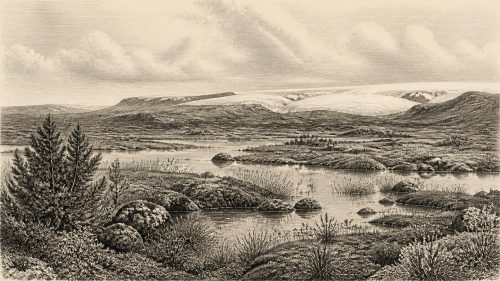
Around 30,241 BCE, Ireland experienced fluctuating Late Pleistocene conditions rather than a datable single event. Derryvree, County Fermanagh, preserves freshwater sediments between glacial tills, indicating tundra vegetation, wet ground and open water during an ice-free interval. As the British–Irish Ice Sheet expanded, regional ice conditions varied; Irish coverage came later. Southern cave assemblages record mammals including reindeer, horse, mammoth and predators, showing biologically productive open habitats before maximum glaciation. No secure evidence proves resident Palaeolithic communities. A possibly butchered reindeer bone suggests tentative human visitation, but settlement, institutions, agriculture and practices remain undocumented. Glacial advance reshaped and obscured this landscape.
Read Article
Archived: 2 October 2026
Abstract
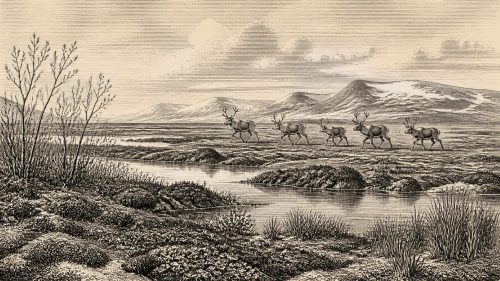
Around 30,343 BCE, Ireland lay within the climatically unstable Late Pleistocene, although no specific calendar-year history can be recovered. At Derryvree, County Fermanagh, organic freshwater sediments between glacial tills demonstrate a local ice-free interval, preserving evidence of open, periglacial wetland with sedges, mosses, shallow pools and cold-adapted insects. This does not show that all Ireland was ice-free. Pre-Last Glacial Maximum cave deposits, especially Castlepook, indicate diverse fauna including mammoth, reindeer, giant deer and predators. A possibly butchered reindeer bone suggests an unconfirmed early human visit, but no secure settlement exists. Environmental reconstruction, constrained by uncertain dating, remains the principal evidence.
Read Article
Archived: 18 September 2026
Abstract
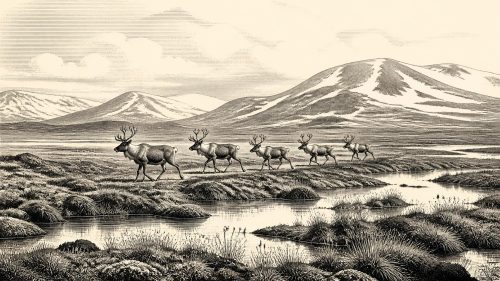
31,292 BCE cannot identify a discrete Irish event, but falls within climatically unstable Marine Isotope Stage 3. Before maximum glaciation, Ireland contained varied, partly ice-free landscapes, although routes from Britain or Europe remain unproven. Derryvree sediments in Fermanagh preserve evidence of treeless, periglacial wetland supporting cold-adapted plants, insects and herbivores between ice advances. Castlepook Cave in Cork contains diverse cold-stage fauna, including mammoth, reindeer and hyaena, accumulated over different periods. A cut-marked reindeer femur may indicate Upper Palaeolithic butchery, but cannot prove settlement. Subsequent glaciation probably destroyed evidence, leaving only a possibility of brief human visits during this remote period.
Read Article
Archived: 18 September 2026
Abstract
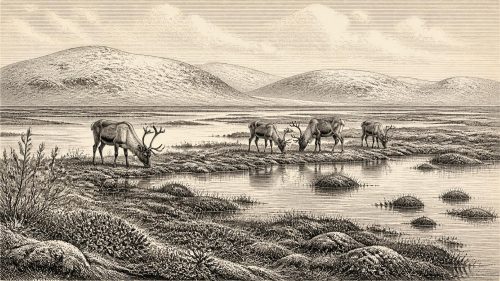
31,318 BCE is a modern label within an uncertain MIS 3 interval, not a recoverable Irish historical year. At Derryvree, County Fermanagh, freshwater organic sediments between glacial tills record an ice-free phase, broadly 36,900–31,700 calibrated years BP. Fossils indicate cold, treeless, wet tundra-like ground, while successive ice advances and retreats made conditions regionally variable. Southern cave deposits show that diverse Ice Age mammals reached Ireland over MIS 3. A cut-marked Castlepook reindeer bone may indicate brief human activity, but proves neither settlement nor continuous occupation. Lower seas changed coastlines, yet travel routes remain uncertain. Later glaciation destroyed or buried evidence.
Read Article

Archived: 17 September 2026
Abstract
31,465 BCE is an imprecise label for a broad late Marine Isotope Stage 3 interval. At Derryvree, County Fermanagh, freshwater sediments and organic remains between glacial tills demonstrate a local ice-free episode, with treeless, wet tundra conditions, sometime roughly 34,950–29,750 BCE. Castlepook Cave, County Cork, preserves diverse cold-climate fauna, including mammoth, reindeer and hyaena, although deposits span separate episodes. A cut-marked reindeer femur may indicate a brief human visit around 33,000 years ago, but proves neither settlement nor occupation. Dynamic ice, shifting coasts and uncertain routes shaped connectivity. Ireland intermittently supported north-west European Ice Age ecosystems, while evidence remains fragmentary.
Read Article

Archived: 15 September 2026
Abstract
At the approximate horizon labelled 31,701 BCE, Ireland lay within the cold, unstable later Marine Isotope Stage 3, with open, largely treeless habitats and changing coastlines. Castlepook Cave near Doneraile preserves Ireland’s foremost cold-stage mammal archive, including mammoth, reindeer, giant deer, hyaena, Arctic fox and lemmings, although disturbed, time-depth deposits prevent their coexistence being assumed. A marked reindeer femur may indicate Upper Palaeolithic butchery, yet provides no secure proof of settlement. As ice expanded towards the Last Glacial Maximum, erosion and reworking obscured earlier evidence. This period is understood chiefly through environmental remains, not political, cultural or social history alone.
Read Article
Archived: 8 September 2026
Abstract
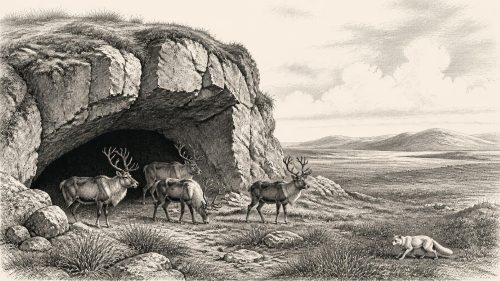
Around 31,955 BCE, Ireland was an unstable Late Pleistocene landscape approaching major glaciation, not a documented historical society. Castlepook Cave, County Cork, preserves important MIS 3 animal remains, including mammoth, reindeer, giant deer, predators and cold-adapted species. A reportedly stone-tool-marked reindeer femur, dated broadly around 33,000 years ago, suggests a possible fleeting human presence, but cannot establish settlement or a specific event. Disturbed deposits, uncertain dating and carnivore activity require caution. As the British–Irish Ice Sheet expanded, changing climates, sea levels and routes shaped animal movement. Future excavation, dating, taphonomic study and ancient-DNA research may clarify Ireland’s earliest human evidence.
Read Article

