mayor of Limerick

Commons Uproar

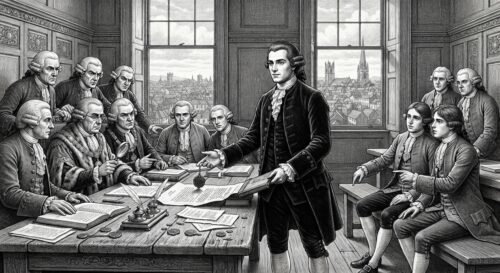
The House of Commons descended into uproar on 2 February 1900 after Colonel Edward Saunderson invoked remarks attributed to John Daly, the Mayor of Limerick, during a fierce attack upon Irish Nationalists. Speaking in a debate on the Government’s conduct of the South African War, the North Armagh Unionist argued that a ministry dependent upon Nationalist votes could not be trusted to prosecute the conflict. Limerick’s political voice therefore entered Westminster at a moment of imperial crisis, exposing the gulf between Irish opposition to the war and Unionist demands for victory and loyalty to the Crown.

Election Violence

The South Mayo by-election of February 1900 drew Limerick directly into a bitter struggle over the direction of Irish nationalism. John Daly, the veteran Fenian then serving as Mayor of Limerick, travelled to County Mayo to support Major John MacBride, whose candidature was promoted while he fought beside the Boers in South Africa. Daly’s intervention carried symbolic importance: a former political prisoner and leading republican, he represented a separatist tradition sharply critical of parliamentary dependence upon Westminster. Reports that he was attacked during the campaign showed how readily political argument could pass into physical intimidation.

Coal Dues

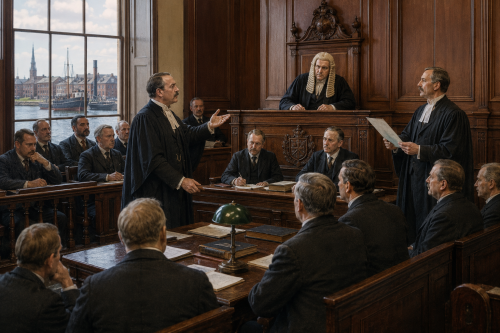
A substantial case before Judge Richard Adams examined the Mayor of Limerick’s asserted right to receive dues upon coal brought into the city. The proceedings, reported on 12 January 1900, required the court to consider whether this inherited privilege rested upon royal charter, lease, long-established prescription or some combination of those authorities. Counsel disputed both the legal foundation of the claim and the capacity in which the Mayor exercised it. What appeared to be an obscure municipal custom therefore became a serious test of whether an ancient commercial right remained enforceable within Limerick’s modern port economy.

Civic Compromise

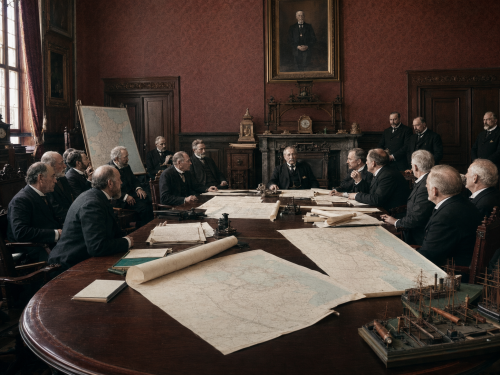
Mayor John Daly was returned unopposed when Limerick Corporation assembled for its quarterly election of civic officers. The council then proceeded to choose three qualified burgesses whose names would be submitted for appointment as City High Sheriff. The principal contest appeared likely to involve the serving sheriff, Thomas H. Cleeve, and John F. Power. Their disagreement arose from the proposed amalgamation of the Waterford, Limerick and Western Railway with the Great Southern and Western Railway, an issue that had united much of the Corporation, harbour administration and commercial community in organised opposition.

Civic Inheritance

Edmond Pery successfully asserted a remarkable inherited privilege in 1677 when he claimed two votes in Limerick’s common council. The right was traced through the Sexten family to the former priors of St Mary’s, whose religious property and privileges had passed into private ownership following the dissolution of the monasteries. Pery argued that succession to those lands carried political rights as well as rents and property. His achievement gave the family an unusual position within Limerick’s civic government, where elections for the mayor and common councillors shaped the distribution of authority among merchants, aldermen and established urban families.

Now Sharing: Articles (154) Images (296) Total Items Archived (450)
Our Mission: 100,000 Items Total Percentage Achieved (0.45%)