Civic Inheritance(c.1670s)

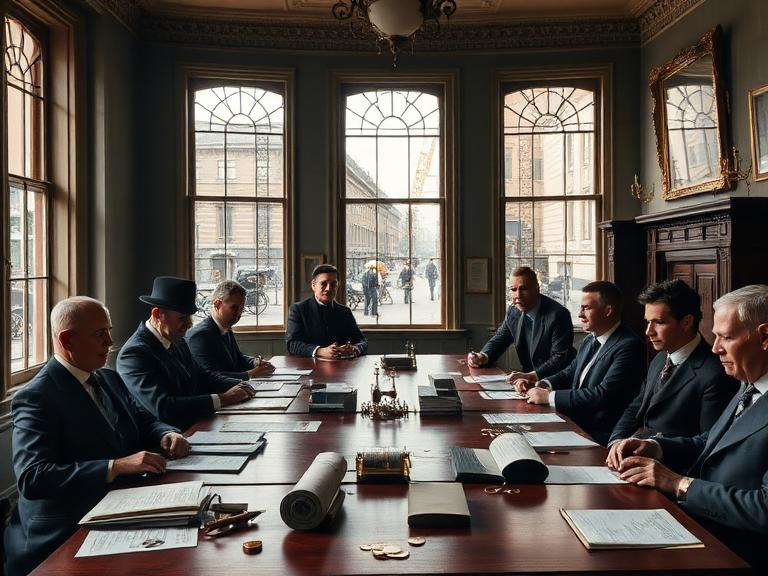
Edmond Pery successfully asserted a remarkable inherited privilege in 1677 when he claimed two votes in Limerick’s common council. The right was traced through the Sexten family to the former priors of St Mary’s, whose religious property and privileges had passed into private ownership following the dissolution of the monasteries. Pery argued that succession to those lands carried political rights as well as rents and property. His achievement gave the family an unusual position within Limerick’s civic government, where elections for the mayor and common councillors shaped the distribution of authority among merchants, aldermen and established urban families.
The claim demonstrated how privileges once attached to a religious office could survive long after the institution itself had disappeared. St Mary’s had ceased to function as a religious house during the Tudor period, yet its former legal standing continued to influence municipal politics more than a century later. Limerick Corporation had repeatedly disputed the exemptions and voting rights claimed by the Sextens and their Pery descendants. The controversy revealed a city still negotiating the consequences of monastic dissolution, as inherited charters, royal grants and private property rights collided with the corporation’s efforts to control elections, taxation and civic administration.
The Reverend Stacpole Pery later attempted to exercise the same right but failed during the years between approximately 1730 and his death in 1737 or 1738. His inability to reproduce his father’s success suggests that inherited privilege required continual legal and political defence rather than automatic recognition. Municipal officeholders could challenge an old claim when circumstances or alliances changed, while the absence of a favourable decision might weaken a family’s influence. Stacpole Pery nevertheless passed the combined Pery, Sexten and Stacpole estates to his elder son, Edmond Sexten Pery, who possessed both the property and ambition required to renew the contest.
In 1748, Edmond Sexten Pery successfully reasserted the family’s civic right and became a member of Limerick’s common council. His entry into municipal government marked the beginning of a political career that carried him far beyond local office. Trained as a barrister, he understood how inherited legal claims could be converted into practical influence. Membership of the council connected him directly with the government of his native city, including its elections, finances, trade and physical development. He later represented Limerick City in the Irish parliament from 1761 until 1785, ensuring that local interests had an exceptionally influential advocate in Dublin.
Pery became Speaker of the Irish House of Commons in 1771 and remained in that office until his retirement in 1785. His national prominence was rooted partly in the civic position recovered in Limerick decades earlier. He also encouraged improvements to the city and the development of the Georgian district later known as Newtown Pery upon his family’s estate. The two votes first claimed through the former priors of St Mary’s therefore belonged to a much longer history connecting dissolved religious property, municipal authority, parliamentary power and urban expansion. An inherited privilege ultimately helped one Limerick family shape both the government and streets of the city.
Primary Sources
- National Library of Ireland, The Limerick Papers, Collection List No. 121, account of Edmond Pery’s successful assertion of two votes in Limerick’s common council in 1677 and the later claims made by his descendants.
- National Library of Ireland, Manuscript 41,678/2, papers concerning the Reverend Stacpole Pery’s unsuccessful attempt to exercise the inherited voting privilege and Edmond Sexten Pery’s later reassertion of the right.
- National Library of Ireland, Pery and Sexten family legal papers, including petitions, grants and documents concerning former property and privileges of St Mary’s in Limerick.
- University of Limerick, Special Collections and Archives, Pery Family Archive, material concerning the Sexten inheritance, Limerick Corporation and the political development of the Pery family.
- Irish parliamentary and municipal records concerning Edmond Sexten Pery’s membership of Limerick’s common council from 1748 and his representation of Limerick City in parliament from 1761 to 1785.