
Valerie French
At a Glance
Law Making
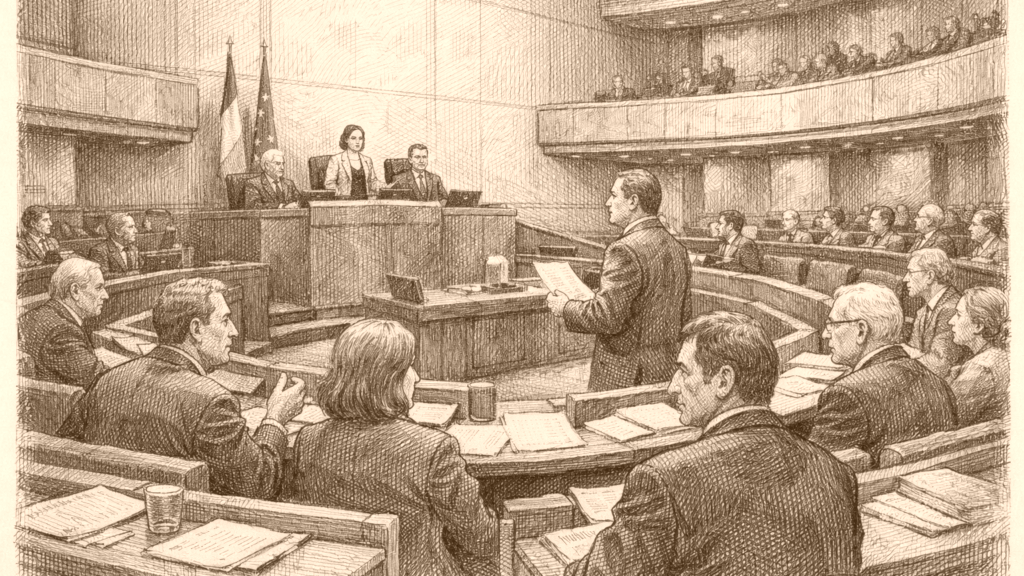
Valerie’s Law was the public title attached to the Guardianship of Infants and Child Care (Amendment) Bill 2026. The online updates show it moving through the Oireachtas in stages: it moved to Second Stage on 21 May, passed Second Stage on 9 June, completed later Dáil stages on 17 June, completed the Seanad stages on 30 June, and was signed into law on 21 July 2026. [2] [5]
Valerie’s Law was signed into law by President Connolly on 21 July 2026 as the Guardianship of Infants and Child Care (Amendment) Act 2026 (No. 30 of 2026), and it was added to the Statute Book on 10 August 2026. It was formally enacted after passage through both Houses of the Oireachtas. The legislation is named in memory of Valerie French. It removes, in certain circumstances, guardianship rights from a parent convicted of the murder or manslaughter of the other parent of their child. [2] [5] [6]
Parliamentary Path
The available updates describe cross-party and committee activity around the bill. One notice credits the Committee for Justice, Home Affairs and Migration, chaired by Matt Carthy TD, and says the measure had welcome cross-party support in both Houses. Another notes that minor amendments were made in the Seanad before the bill returned to the Dáil for consideration. These descriptions are confined to legislative movement and support; they do not set out every amendment in detail. [2]
A separate report on final passage says the legislation completed its journey through the Oireachtas and awaited the President’s signature. It identifies the final stage as 15 July 2026 and describes the measure as widely known as Valerie’s Law. That account matches the campaign website’s later entry noting that it had been signed into law by President Connolly and would soon appear on the Statute Book. [4] [2]
Named Memory
The law was named for Valerie French. One report identifies her as a mother of three from County Mayo who was murdered by her husband James Kilroy in 2019. Another gives her age as 41, states that Kilroy was convicted in 2024, and notes that he received a mandatory life sentence. The naming of the law is therefore tied directly to a specific family homicide, not to a general policy debate alone. [3] [4] [6]
The reports also connect the campaign to her children. One says the bill was intended to end automatic guardianship rights for a parent convicted of killing the child’s other parent. Another notes that the law deals with protecting surviving children, and that Valerie French lived for her boys. These statements make the child-centred purpose of the reform explicit in the contemporary coverage. [4] [6]
Legal Change
The reports are consistent on the core legal change. Valerie’s Law removes automatic guardianship rights, or requires the court to restrict them, where a parent is convicted of murdering or manslaughtering the other parent of the child. One description adds that the court may either restrict powers and duties or remove the guardian from office altogether, with the child’s welfare as the central consideration. The accounts present this as a targeted amendment to guardianship law. [4] [6]
One report says the legislation extends to cases where one guardian seriously injured the other, and applies even where the killing took place before the law’s commencement. That detail broadens the measure beyond the narrowest murder scenario, but it is still presented as a child-protection response to fatal or gravely violent domestic abuse. [4]
Public Campaign
The campaign around the law is described as long-running. One update credits support from ministers, the Oireachtas committee, researchers, domestic violence organisations and the public. Another report says Valerie French’s brother David campaigned for years to change the law, while also noting the difficult legal and financial aftermath facing the family. These accounts show sustained public advocacy but do not provide a full chronology of every campaign event. [2] [4]
The law also appears in a wider cluster of 2026 measures aimed at domestic, sexual and gender-based violence. The updates page places Valerie’s Law alongside Jennie’s Law, new rules on extreme pornography, an offence relating to sex for rent, and a new Oireachtas committee. That comparison is limited to placement in the same update and does not by itself establish any direct legal relationship between the measures. [2]
Historical Frame
The evidence places Valerie’s Law firmly in twenty-first-century Irish family law and criminal justice policy. It is an Act of 2026, signed by the President in July and added to the Statute Book soon after. The law is part of a contemporary legislative response to domestic homicide, especially where children remain legally linked to a convicted parent after the killing of the other parent. [2] [5] [6]
A broader legal background can be observed in a scholarly note on women and the law in early Ireland, which describes marriage, property and legal status in that earlier tradition. Valerie’s Law is the Guardianship of Infants and Child Care (Amendment) Act 2026, a modern guardianship measure. [1] [6]
Source References
Hover over a number to see the source. Select it to open the source.

- [1] List of Published Texts
- [2] Updates
- [3] Bill to curb parental access for those who murder partner
- [4] Valerie's Law set to become law after clearing final Oireachtas stage — NewsRoom.ie
- [5] President | 2026 Legislation | President of Ireland
- [6] Jennie's Law and Valerie's Law Enacted - Advocates(Ad) for Victims(VIC) of Homicide








How did Valerie’s Law move through the Irish Oireachtas in 2026, and what legal change did it make to guardianship after domestic homicide?