
Private Commissions
At a Glance
Early Years
The chronological record of Jobson’s commissions begins with a period labelled private commissions in Ireland and the United Kingdom from 1996 to 1999, followed by a private commission in Wicklow in 1999–2000. The same list places these entries beside education and exhibition milestones, making the private work part of a broader professional timeline rather than a separate career. On the page, the wording is concise and documentary, with no detail about form, subject matter, or patrons.
Those early entries are followed by other dated engagements in 2004 and 2005, including two pieces for a private garden in Dublin, a private house in Kildare, and a large piece for an office in Dublin. The list then records a commissioned large public art piece in County Tyrone. The sequence shows private and public commissions appearing side by side, but the source itself gives only the setting and date, not the circumstances of selection or installation.
Garden Settings
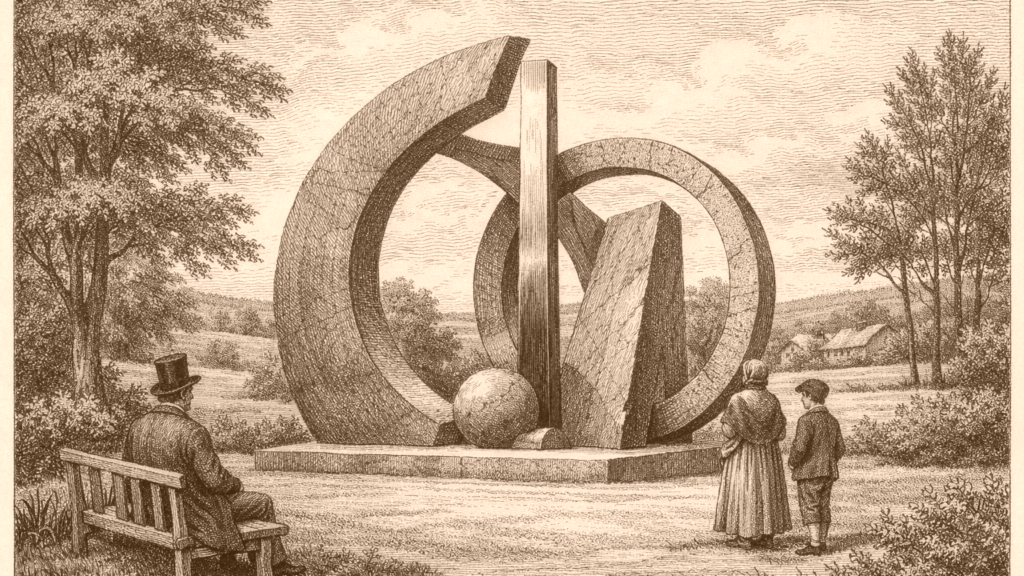
Several of the listed private commissions are tied to gardens. In 2007 there is a private commission in Westmeath and a large sculpture for a private garden in Killiney, County Dublin; in 2008 there is a private commission for a garden in Lismore, County Waterford, and a private commission in Oxford, United Kingdom. In 2022 and 2024 the list again refers to sculptural pieces commissioned for a private garden in County Kilkenny and private commissions in County Kildare.
The repetition of garden and private-house settings is directly observable in the chronology. It shows that these commissions were not isolated entries but a recurring category across years and places. The record also distinguishes them from public art proposals and short-listed competitions, which appear in the same career list but are described in separate phrases. What cannot be recovered from this page is the scale of each work beyond the brief labels provided.
Public Contrast
The same commission list places private work beside public competitions and public art proposals. In 2004 Jobson was shortlisted for public art commissions in Wicklow and Longford; in 2008 she was shortlisted for a public art commission at Castle Espie in Northern Ireland; in 2009 and 2011 she produced public art work proposals in Mayo and Laois. These entries make a clear contrast in the wording of the record, which separates private commission from public commission and proposal.
The contrast is documentary rather than explanatory. The record does not say why certain commissions were private and others public, nor does it describe any shift in technique between those settings. It simply preserves the sequence of commissions, competitions, exhibitions, and installations. Within that sequence, private commissions recur from the late 1990s through the 2020s, while public opportunities appear intermittently as shortlists or proposals rather than completed works in the brief wording available.
Geographic Spread
The places named in the commission list show a wide geographic spread. Private commissions are recorded in Wicklow, Dublin, Kildare, Westmeath, Waterford, Oxford, and County Kilkenny, while other commissions and exhibitions place Jobson in Tyrone, Dublin, Suffolk, Scotland, Toronto, and elsewhere. The pattern is one of repeated movement across Ireland and beyond, but the source remains a list of locations and dates rather than a narrative of travel or institutional support.
Because the record is a curriculum-style list, it allows direct comparison of place names but not fuller reconstruction of each commission site. The private entries are often paired with short descriptive labels such as garden, house, or commission, and these labels are the only basis for comparison here. No dimensions, materials, or subject themes are given for the works in the commission chronology, so the evidence supports geography more securely than iconography.
Institutional Records
A different institutional source describes the remit of the Irish Manuscripts Commission as founded on dissemination, preservation, and promotion of original source materials in public and private ownership. This wording is about archival policy rather than sculpture, but it provides a useful documentary parallel to the language of private and public holdings. In another related publication notice, the Irish Manuscripts Commission is identified as issuing historical material in book form, showing its role as a publisher of records.
The archive-related sources are useful mainly for terminology, not for the sculptural commission chronology itself. One source distinguishes public and private ownership of source materials; another describes a letterbook whose letters are mostly private, unofficial communications on government matters. Together they show that private status can function as a classification in different historical records, but they do not explain Jobson’s commissions. For that subject, the commission list remains the primary evidence and the most direct witness.
Career Sequence
Taken as a sequence, the commission list presents private work as a steady part of Jobson’s career from the 1990s into the 2020s. The earliest private entries are followed by recurring commissions for gardens, private houses, and private commission labels in different counties and countries. Public proposals and shortlisted competitions appear alongside them, but the private work is the most consistently repeated category named with that exact wording in the available chronology.
What can be stated with confidence is limited to the record’s wording: private commissions were frequent, geographically dispersed, and interwoven with exhibitions and public proposals. What cannot be stated from this page is the artistic intention behind those works, the identity of clients, or the visual style of each sculpture. The evidence therefore supports a concise historical outline of commission activity, not a fuller interpretation of the artworks themselves.
