
Tax Changes
At a Glance
Budget Scope
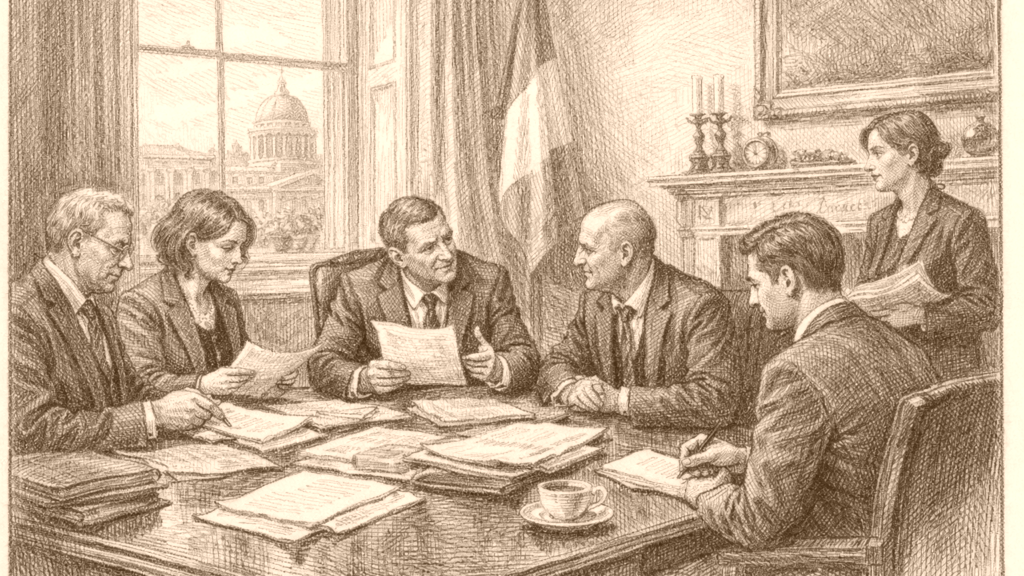
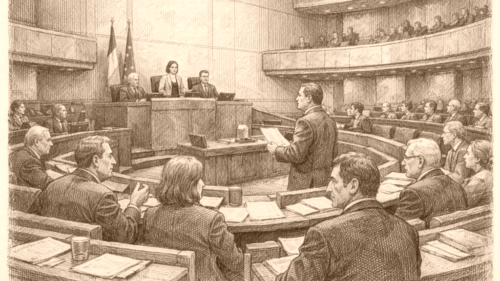
Official notices state that the Minister for Finance presented the Budget Statement to Dáil Éireann on 6 October 2026. The same notice says the statement outlined Government taxes and spending proposals for 2027, that the Oireachtas would be asked to amend legislation where needed, and that a Finance Bill would be introduced and debated. A separate government spending page gives total expenditure for 2027 as €143.0 billion, compared with €133.0 billion in 2026. [1] [3]
The enterprise summary presents Budget 2027 as a set of named allocations rather than a single undifferentiated amount. It gives a total of €1.3485 billion for the Department of Enterprise, Tourism and Employment, split into current expenditure of €638.5 million and capital funding of €710 million. The same material links that allocation to enterprise growth, innovation, digital transformation, tourism development, and job creation and retention. [2] [6]
Tax Changes
The department summary for Budget 2027 lists several tax and cost measures. It says carbon tax on kerosene and natural gas is reduced to €48.50 per tonne, capital gains tax falls from 33% to 31%, and Ireland’s national minimum wage rises to €14.94 an hour for those aged 20 or over. It also states that the employer PRSI threshold rises from €552 to €600 per week for 2027. [5] [4]
The same summaries also record extensions and alterations to business-related rules. They say Vehicle Registration Tax relief for electric vehicles continues until 31 December 2028, that from January 2028 employers can make monthly returns to Revenue about non-taxable payments, and that the existing Employment Investment Incentive, Start-Up Capital Incentive, Start-Up Relief for Entrepreneurs, angel investor relief, corporation tax, and small company start-up relief are being extended. The National Enterprise Hub also notes a change to the Professional Services Withholding Tax arrangement. [4] [5]
Enterprise Support
The enterprise allocation is broken into a series of specific supports. These include €3 million for Start Up Ireland, €20 million for the Growth and Sustainability Loan Scheme, €2.3 million for the National AI Office, €4.5 million for Local Enterprise Offices, and €13 million for Irish companies engaging with the European Space Agency. The summary also assigns €7.5 million more to technology centres and €6.5 million to the Disruptive Technologies Innovation Fund. [2] [6]
Several entries show a regional and sectoral spread within the same budget package. The Department of Enterprise, Tourism and Employment summary lists €6.65 million for Fáilte Ireland product and destination development in the regions, €2.5 million for Tourism Ireland marketing in new and high-growth markets, and €1.2 million for the National Standards Authority of Ireland to support housing-related standards work. It also includes €800,000 for the Register of Beneficial Ownership. [2] [6]
Public Finance
The budget pages show how the 2027 package was framed against current public spending and labour-market conditions. The spending portal records total expenditure of €143.0 billion for 2027, and the enterprise department says its own allocation was intended to support growth, innovation, tourism development, and high-quality jobs. A separate ministerial statement from August 2026 notes record employment of 2.84 million and says Government was preparing for Budget 2027 with a focus on competitiveness and public services. [3] [6] [8]
The official language is descriptive rather than analytical. It says the budget would be implemented through legislation where necessary, and it uses phrases such as strengthening competitiveness, accelerating artificial intelligence adoption, and supporting businesses through targeted investments. Those claims appear in department releases, but the excerpts do not set out detailed outcomes, and they do not provide evidence here of what effects followed after publication. [1] [6] [8]
Official Framing
The enterprise material repeatedly presents Budget 2027 as a competitiveness package. In one summary, the minister says the budget is about strengthening Ireland’s competitiveness and keeping the country attractive for starting, investing in, innovating, creating jobs, and visiting. Another page adds that the measures are meant to support businesses at every stage, from start-up to scale-up, while investing in infrastructure, research capability, and talent. [2] [6]
These official descriptions also show how the budget was presented across different government channels. Revenue’s budget page provides the procedural notice for the Finance Minister’s statement, the Department of Finance overview supplies the broad fiscal frame, and the National Enterprise Hub offers shorter summaries for business audiences. Taken together, the excerpts document a budget announced on one date, translated into sectoral allocations, and repeated in simplified form for public use. [1] [4] [5] [6]
Budget Record
The clearest directly evidenced record from these excerpts is administrative and numerical. Budget 2027 appears as a package first presented to Dáil Éireann, then restated through departmental and enterprise summaries, with figures for overall expenditure, departmental allocations, and named schemes. The documents identify where money was directed, but they do not, in these excerpts, give a full line-by-line estimate for every department or a final enacted Finance Bill. [1] [3] [6] [7]
That limited record is still enough to establish the shape of the budget as it was publicly described. It combined general fiscal management with business taxes, labour-cost adjustments, and targeted enterprise support, especially for start-ups, innovation, tourism, and regional development. Beyond those points, the excerpts offer no direct evidence here about parliamentary debate, later amendments, or implementation results, so those matters remain outside this account. [2] [5] [6] [8]
Source References
Hover over a number to see the source. Select it to open the source.

- [1] Budget information
- [2] Budget 2027 delivers €1.3 billion for Enterprise, Tourism and Employment - DETE
- [3] Where Your Money Goes
- [4] Budget 2027 | National Enterprise Hub
- [5] Budget 2027: Department of Finance Press Release | National Enterprise Hub
- [6] Budget 2027 delivers €1.3 billion for Enterprise, Tourism and Employment | National Enterprise Hub
- [7] What's New | National Enterprise Hub
- [8] Minister Peter Burke and Tánaiste Simon Harris welcome latest figures showing further employment growth in second quarter of 2026 - DETE


How did Budget 2027 allocate public spending and revise tax and business supports across Ireland, according to the official government summaries published in October 2026?