
Year by Year
Explore Year by Year articles from the most modern historical year back to the oldest.
3,307 Articles Archived

Aquatic Tundra
Archived: 19 September 2026
31,172 BCE cannot denote a specific Irish event, but falls within unstable Marine Isotope Stage 3, before the Last Glacial Maximum. Northern Ireland’s Derryvree sediments indicate cold, open tundra wetlands with sedges, mosses, aquatic plants and cold-adapted insects, although conditions varied regionally. Southern caves contain MIS 3 remains of reindeer, mammoth, giant deer and predators, showing intermittent habitats for fauna. A cut-marked Castlepook reindeer bone suggests occasional Upper Palaeolithic visitors, not proven settlement. Sea levels may have altered connections with Britain, but routes remain uncertain. Expanding ice later destroyed evidence, leaving fragmentary environmental records rather than detailed secure human history.
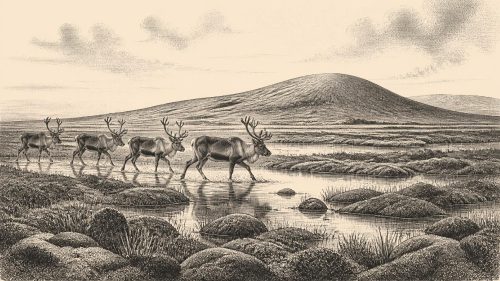
Reindeer Carcass
Archived: 19 September 2026
Around 31,173 BCE, Ireland lay in the unstable cold conditions of Marine Isotope Stage 3, with episodic glaciation and temporary habitable areas. Organic sediments at Derryvree record freshwater tundra-like wetlands, though only across broad dated ranges. Castlepook Cave preserves diverse pre-Last Glacial Maximum fauna, including reindeer, mammoth, predators and cold-adapted mammals, demonstrating intermittent connections to north-western Europe when lower sea levels exposed land. A cut-marked reindeer femur may indicate early human carcass processing, but cannot establish settlement or continuous occupation. Later ice destroyed much evidence, leaving a fragmentary picture of changing wetlands, mobile animals and uncertain human presence in Ireland.
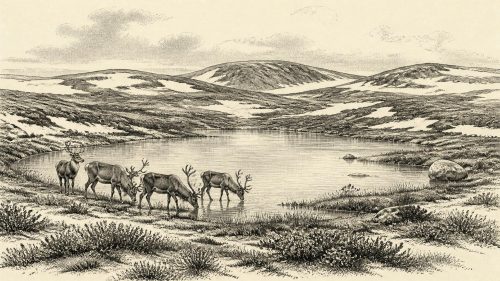
Castlepook Bone
Archived: 19 September 2026
Around 33,000 calendar years before present, Ireland experienced fluctuating Late Pleistocene conditions rather than a single identifiable historical year. Derryvree in Fermanagh preserves freshwater sediments between glacial deposits, indicating cold, treeless wetlands during an ice-free interval. Crag Cave suggests occasional milder episodes. As the British–Irish Ice Sheet expanded, habitats changed and evidence was frequently destroyed. Castlepook Cave in Cork yielded remains of mammoth, reindeer, giant deer, predators and cold-adapted species. A marked reindeer bone may indicate human carcass processing, but cannot prove settlement. The period reveals a dynamic landscape, possibly visited briefly by mobile people, not an established Irish society.
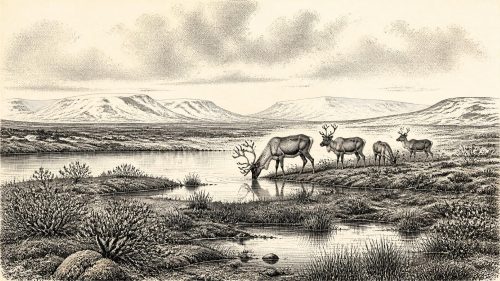
Treeless Wetlands
Archived: 19 September 2026
Around 31,175 BCE, Ireland lay within a changing Late Pleistocene landscape, not a recordable historical year. Derryvree in County Fermanagh preserves freshwater organic sediments between tills, dated broadly to an interval including this notional date. Its pollen, plants and insects indicate a treeless, cold wetland with tundra vegetation. Ireland was regionally varied as ice expanded towards its later maximum, while lower sea levels altered surrounding geography. Castlepook Cave yielded reindeer, mammoth, giant deer and predators, showing connections with wider European ecosystems. A possibly cut-marked reindeer bone suggests human presence, but cannot prove permanent settlement or occupation. Evidence therefore documents change.

Cork Scavengers
Archived: 19 September 2026
Around 31,176 BCE, Ireland experienced unstable Late Pleistocene conditions rather than a datable historical year. Derryvree, County Fermanagh, preserves organic sediments between glacial tills, indicating episodic ice-free cold wetlands with tundra vegetation, freshwater and insects. Castlepook Cave, County Cork, accumulated mixed animal remains over millennia, including mammoth, reindeer, giant deer, wolves and spotted hyenas, demonstrating changing links to wider European faunas. A reported stone-tool incision on a reindeer femur, approximately 33,000 years old, may indicate brief human butchery, but remains unconfirmed. No settlements, institutions or continuous population are evidenced. Later ice expansion substantially reshaped and obscured this fragile prehistoric record.
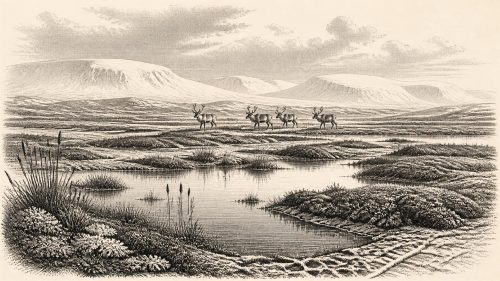
Periglacial Hollows
Archived: 19 September 2026
31,177 BCE is not a recoverable Irish historical year, but falls within a broad late-Pleistocene radiocarbon calibration range. At Derryvree, County Fermanagh, freshwater silts rich in organic evidence lie between glacial tills, recording a locally ice-free periglacial wetland with tundra vegetation, insects and shallow water before renewed glaciation. The site demonstrates environmental change, not island-wide conditions or annual events. Growing British-Irish ice sheets created varied local landscapes, while lowered seas did not ensure a land bridge. Castlepook Cave, County Cork, preserves cold-adapted fauna and a possibly tool-marked reindeer bone, suggesting only an unconfirmed, brief human visit, not settlement or continuity.

Organic Wetlands
Archived: 19 September 2026
31,178 BCE is a modern label within a broad Late Pleistocene range, not a datable Irish event. At Derryvree, County Fermanagh, freshwater sands and organic silts between glacial tills record an ice-free MIS 3 interval, later sealed by renewed ice. Fossils indicate cold, open wetlands with pools, mosses, sedges, herbs and tundra vegetation. Castlepook Cave, County Cork, preserves time-averaged remains of diverse mammals, including reindeer, mammoth, giant deer and predators, but not a single community. A marked reindeer bone may suggest human carcass processing, yet cannot prove settlement. Together, these fragmentary archives reveal climatically volatile, environmentally varied Ice Age Ireland.

Derryvree Ecosystem
Archived: 19 September 2026
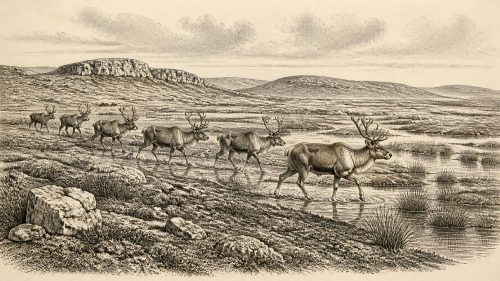
Around 31,179 BCE, Ireland lay within the unstable MIS 3 phase of the Late Pleistocene, not a precisely datable historical year. At Derryvree, County Fermanagh, freshwater deposits between glacial tills preserve evidence of cold, treeless tundra, wetlands and Arctic-alpine plants during an ice-free interval. Greenagho provides comparable evidence. Cave faunas from Castlepook, County Cork, show that reindeer, mammoth, hyaena and other cold-stage animals reached Ireland. A possibly cut-marked reindeer bone suggests, but does not prove, episodic Upper Palaeolithic human presence. Later ice advances buried or destroyed much evidence, leaving a fragmentary record of locally habitable, severe environments before wider glaciation.
Dubious Reindeer
Archived: 19 September 2026
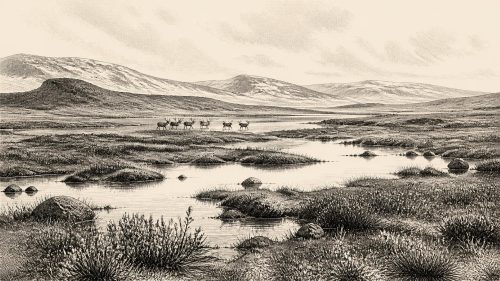
About 31,180 BCE, Ireland lay within the cold, unstable conditions of Marine Isotope Stage 3, rather than a datable historical year. Derryvree, County Fermanagh, preserves freshwater sediments indicating treeless tundra, wet hollows and seasonal periglacial environments. Castlepook Cave, County Cork, contains a mixed fauna including reindeer, mammoth, hyaena, wolf and giant deer, demonstrating intermittent access for large mammals. A cut-like mark on a dated reindeer femur may indicate Palaeolithic butchery, but cannot prove settlement or identify its maker. Approaching the Last Glacial Maximum, later ice expansion obscured much evidence, leaving reconstructions dependent on ranges, landscapes and probabilities rather than certainties.
Mossy Hollows
Archived: 19 September 2026
Although 31,181 BCE is a modern, misleadingly precise label, evidence from Marine Isotope Stage 3 shows Ireland experienced fluctuating Ice Age conditions. At Derryvree, County Fermanagh, freshwater sediments between tills preserve tundra wetland plants and small animals, proving local ice-free conditions between glacial episodes. Crag Cave stalagmites indicate recurrent milder phases in south-west Ireland. Castlepook Cave contains a time-mixed fauna including reindeer, mammoth and hyaena, demonstrating intermittent animal access. A possibly stone-cut reindeer bone suggests, but does not establish, brief human visits. No evidence supports permanent settlement, politics or beliefs. The period is understood through sediments, fossils, water and uncertainty.
Some records do not yet have a verified historical year and are awaiting chronological placement.