
Year by Year
Explore Year by Year articles from the most modern historical year back to the oldest.
3,307 Articles Archived
Palaeolithic Possibility
Archived: 18 September 2026
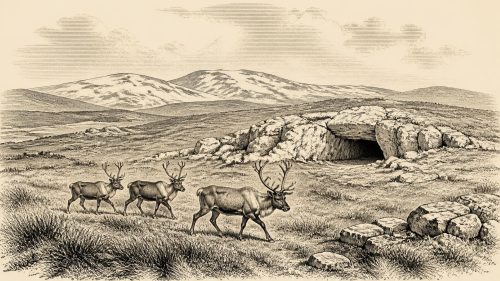
Around 31,252 BCE, Ireland lay within the variable cold conditions of Marine Isotope Stage 3, without recorded peoples, settlements or institutions. Cave fauna at Castlepook, County Cork, including reindeer, mammoth and hyaena, indicates diverse cold-stage habitats. A reindeer femur bears an incision interpreted as a possible stone-tool cut, suggesting a brief Upper Palaeolithic human visit, but not permanent occupation. Poor early excavation records and absent associated tools require caution. Fermanagh wetland sediments and Kerry speleothems show fluctuating climates before expanding ice sheets. Secure evidence of human presence comes far later, while sustained settlement began in the Mesolithic after 8000 BCE.

Aghnadarragh Insects
Archived: 18 September 2026
Around 33,200 cal BP, Ireland lay within the climatically unstable MIS 3 period, with changing ice margins, low sea levels and diverse open, wetland habitats. Intertill deposits at Derryvree, Greenagho and Aghnadarragh preserve evidence of freshwater environments, plants and insects. Southern caves, especially Castlepook, contain mammoth, reindeer, giant deer, carnivores and other Ice-Age fauna, demonstrating connections with north-west Europe. A possibly cut-marked reindeer femur from Castlepook may indicate brief Upper Palaeolithic human activity, but cannot prove settlement, hunting traditions or continuous occupation. No evidence supports reconstructed politics, society, ritual, agriculture or trade. Later ice expansion destroyed or concealed much evidence.
Derryvree Seed
Archived: 18 September 2026
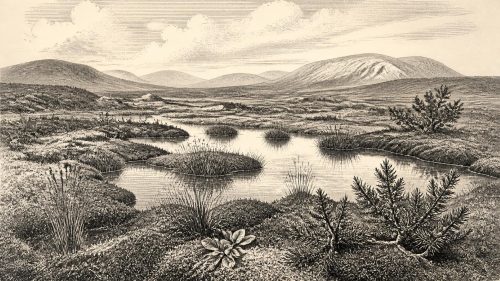
31,254 BCE is a modern label within MIS 3, not a recorded Irish year. At Derryvree, County Fermanagh, organic freshwater silts between glacial tills, radiocarbon dated broadly to 36,900–31,700 calibrated years before present, show an ice-free local basin before later glaciation. Pollen, plants, insects and a bogbean seed indicate open, treeless tundra wetland with pools, sedges, herbs, juniper and mosses. Southern cave deposits at Castlepook document mammoths, deer, reindeer, predators and cold-adapted mammals, though not contemporaneous individuals. A possibly cut-marked reindeer bone suggests transient Upper Palaeolithic human presence, but lacks secure contextual evidence. Later ice destroyed and sealed this archive.
Fermanagh Stratigraphy
Archived: 18 September 2026
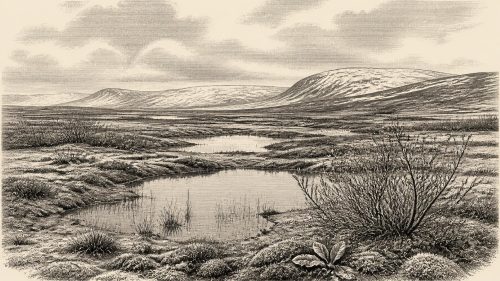
31,255 BCE is a chronological label, not a datable event. Derryvree, County Fermanagh, preserves freshwater sediments between two glacial tills, radiocarbon-dated broadly to a period encompassing this date. Its pollen, plants, mosses and insects indicate cold, treeless tundra wetlands with pools, seasonal productivity and severe periglacial conditions. Castlepook Cave in County Cork records MIS 3 fauna including mammoth, reindeer, giant deer, hyena and Arctic species, although its deposits are mixed. A marked reindeer bone may signal early human butchery, but cannot prove settlement. Ireland's history here is reconstructed from fragmentary environmental evidence amid changing ice, uncertain routes and no polities.
Derryvree Grasslands
Archived: 18 September 2026
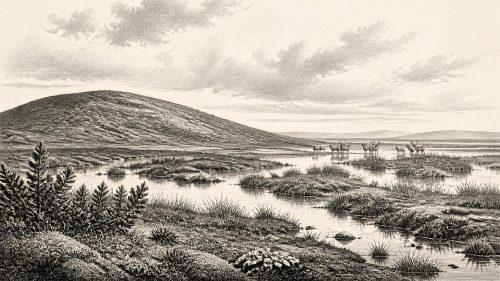
31,256 BCE cannot be identified precisely in Ireland’s archaeological record, but falls within Middle Midlandian MIS 3. At Derryvree, County Fermanagh, organic sediments between till sheets document an ice-free interval before later glaciation, with cold, open wetlands supporting grasses, sedges, juniper, mosses, aquatic plants and beetles. Comparable northern deposits indicate episodic periglacial, rather than continuously ice-covered, conditions. Castlepook Cave, County Cork, preserves diverse cold-stage fauna, including mammoth, reindeer, giant deer, hyena and Arctic fox, although dates and depositional contexts are broad. A possibly butchered reindeer bone suggests transient human activity, not settlement. Subsequent ice expansion erased much evidence from Ireland.
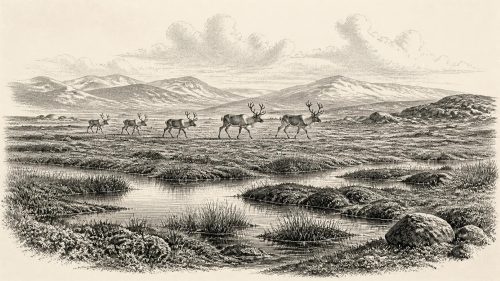
Glacial Overprint
Archived: 18 September 2026
At 31,257 BCE, Ireland was experiencing an unstable Late Pleistocene climate before the Last Glacial Maximum, rather than a recoverable historical year. Freshwater sediments at Derryvree, County Fermanagh, dated broadly to this period, show a locally ice-free, treeless tundra wetland later overridden by ice. Castlepook Cave, County Cork, preserves evidence of a diverse cold-adapted fauna, including mammoth, reindeer, giant deer, predators and small mammals, accumulated over time. A cut-marked reindeer bone may indicate brief human activity, but no settlement evidence exists. Growing ice sheets subsequently reshaped landscapes, obscuring earlier remains and leaving deep-time history necessarily uncertain in Ireland's geological record.
Southern Flowstones
Archived: 18 September 2026
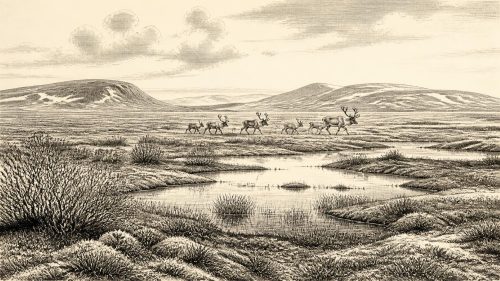
Around 31,258 BCE, Ireland lay within the unstable MIS 3 phase of the Late Pleistocene. Derryvree, County Fermanagh, preserves freshwater sediments between glacial tills, dated broadly to 36,900–31,700 calibrated years ago, indicating an ice-free tundra wetland with sedges, mosses, insects and seasonal liquid water. Cave and speleothem evidence from Cork and Kerry confirms recurring animal activity and intermittent unfrozen conditions elsewhere. Castlepook Cave yielded mammoth, reindeer, giant deer, bear and hyena remains, though these represent accumulated deposits rather than one community. A possibly cut-marked reindeer bone suggests human visitation, but permanent settlement remains unproven. Later ice expansion destroyed much evidence.
Cork Menagerie
Archived: 18 September 2026
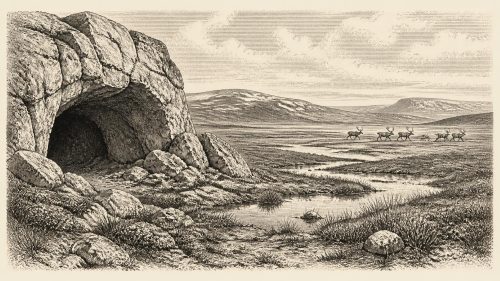
31,259 BCE is a modern chronological reference within Marine Isotope Stage 3, not a recorded Irish year. Ireland then experienced fluctuating cold conditions as ice sheets expanded, while some lowland refuges supported open tundra and steppe. Castlepook Cave, County Cork, preserves a fauna including reindeer, mammoth, giant deer, wolves, Arctic foxes, lemmings and spotted hyaenas, demonstrating cold-stage ecosystems. Derryvree, County Fermanagh, records sedges, herbs, mosses, insects and wetland tundra beneath glacial deposits. A cut-marked reindeer femur may indicate brief human activity, but lacks secure context. No evidence establishes settlement, social organisation, routes, or population; the period remains an ecological frontier.
Moss Wetland
Archived: 18 September 2026
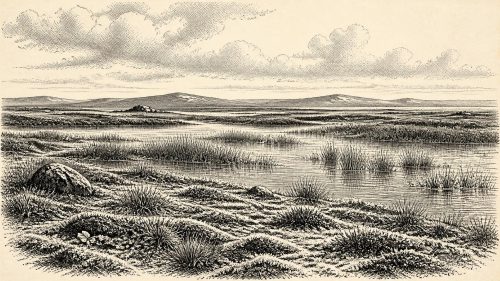
31,260 BCE is a chronological label, not a precise Irish date, within climatically unstable MIS 3. Derryvree, County Fermanagh, preserves freshwater sediments beneath later glacial till, radiocarbon dated broadly to 36,900–31,700 calibrated years BP. Mosses, herbs, sedges and bogbean indicate open tundra wetlands with severe seasonal conditions, not continuous woodland. Ireland's ice cover was variable, though major expansion approached. Castlepook Cave, County Cork, records diverse Ice Age fauna, but mixed deposits prevent reconstructing one contemporary community. A possibly tool-cut reindeer bone suggests human presence, yet lacks secure context. No settlement or history is established; sediments and ice define this past.
Derryvree Greenery
Archived: 18 September 2026
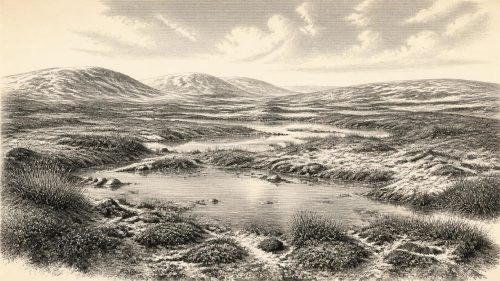
31,261 BCE is a modern label within unstable Marine Isotope Stage 3, not a precisely datable Irish event. At Derryvree, County Fermanagh, freshwater sediments between tills indicate a temporary ice-free interval, supporting tundra vegetation, pools, mosses and cold, frost-affected ground. Castlepook Cave, County Cork, preserves diverse Ice Age fauna, including reindeer, mammoth, predators and cold-adapted species, though dates and contexts require caution. A possibly cut-marked reindeer bone suggests, but cannot prove, early human visits. Ireland lacked evidenced settlements, polities or trade. Changing ice, sea levels and ecological routes shaped Ireland’s fragmentary landscape before later extensive glaciation and erased older evidence.
Some records do not yet have a verified historical year and are awaiting chronological placement.