
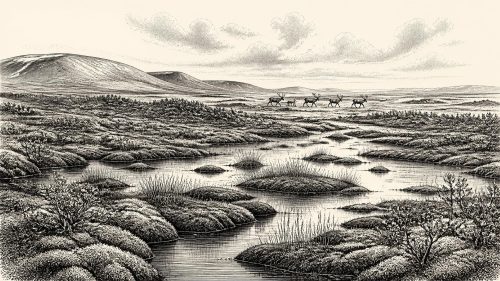
BIRM-166’s Organic Bed
Although 31,273 BCE is a modern label rather than a precise lived date, Derryvree in County Fermanagh preserves evidence of an ice-free interval during late MIS 3. Its organic bed, deposited between glacial sediments, records open wetland with tundra plants, insects and freshwater pools. Ireland’s ice history was regionally uneven, with later maximum glaciation and climatic fluctuations indicated by Crag Cave. Castlepook Cave’s fauna demonstrates the presence of mammals and predators in southern Ireland; a cut-marked reindeer bone may indicate human butchery. These fragmentary archives suggest habitable landscapes and mobile people, but not settlement, polities, trade or annual historical events.
View Record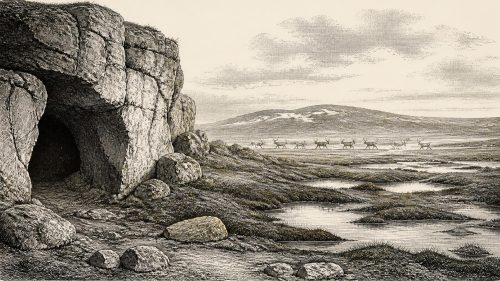
Castlepook’s Closing Corridor
Around 31,274 BCE, Ireland experienced late Marine Isotope Stage 3 climatic deterioration before the Last Glacial Maximum. Open, treeless tundra, freshwater pools and periglacial conditions are evidenced at Derryvree, County Fermanagh. Castlepook Cave, County Cork, preserves remains of reindeer, mammoth, giant deer, brown bear, wolf and spotted hyaena, indicating intermittent animal movement through changing Ice Age landscapes. A marked reindeer bone may suggest early human butchery, but remains insufficient proof of occupation. Later ice advances destroyed or buried much evidence. This period therefore represents an uncertain environmental horizon, reconstructed through caves, sediments and re-dated animal remains rather than human history.
View Record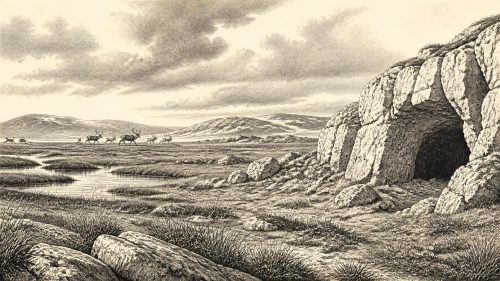
Castlepook’s Reindeer Margin
Around 33,224 calibrated years before present, Ireland occupied a volatile Late Pleistocene landscape of low seas, changing ice margins and largely treeless steppe-tundra. Its precise ice cover and connections to neighbouring lands remain uncertain. Castlepook Cave in north Cork preserves re-dated Marine Isotope Stage 3 remains of mammoth, reindeer, giant deer, carnivores and cold-adapted small mammals, though disturbed cave deposits cannot show they lived together. A marked reindeer femur may indicate human butchery around 33,000 years ago, but lacks secure archaeological context. No evidence supports settled population or social detail. Castlepook instead underscores cautious dating, taphonomic study and renewed excavation.
View Record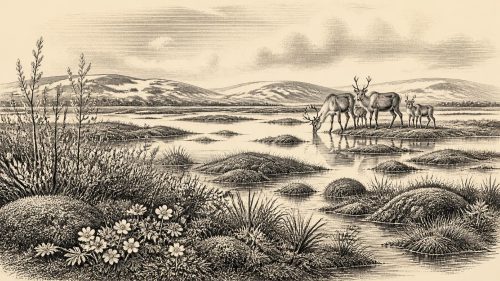
BIRM-166’s Dwarf Willow
About 31,276 BCE, Ireland lay within the unstable later Marine Isotope Stage 3, not a datable historical year. Derryvree, County Fermanagh, preserves freshwater sediments between glacial tills, indicating an ice-free tundra wetland with sedges, grasses, dwarf willow, mountain avens, bogbean, water-milfoil and cold-adapted insects. Other northern deposits suggest recurrent open conditions. Castlepook Cave fauna indicates large mammals, including mammoth, reindeer and giant deer, but complex deposits limit precise dating. Ice was expanding before the Last Glacial Maximum. A possibly cut-marked reindeer bone suggests fleeting human presence, not settlement. Evidence supports a changing, resource-bearing landscape, while excluding claims of organised society.
View Record
Derryvree’s Silted Pond
Around 31,277 BCE, Ireland lay in the unstable later Marine Isotope Stage 3, approaching the Last Glacial Maximum, rather than within recoverable written history. Ice expanded unevenly across the region, leaving temporary exposed, wetland or marine environments. At Derryvree, County Fermanagh, freshwater silts between tills preserve pollen, plants and beetles indicating shallow water, tundra-like ground and severe seasonal conditions before later ice advance. Cave remains from Castlepook suggest cold-open-country fauna, including reindeer, mammoth and predators, but accumulated across long periods. A possibly cut-marked reindeer bone offers uncertain evidence of early people; permanent settlement, politics, trade and social life remain unproven.
View Record
Cork’s Reindeer Window
31,278 BCE is a modern label, requiring interpretation through Late Pleistocene ranges rather than a dated Irish event. During climatically unstable Marine Isotope Stage 3, Ireland varied regionally between ice-affected and open environments. Derryvree sediments preserve a cold, treeless freshwater wetland supporting plants and insects between glacial episodes. Castlepook Cave in County Cork contains mixed, disturbed remains of reindeer, mammoth, giant deer and carnivores, demonstrating cold-stage fauna but not a single contemporaneous community. A cut-marked reindeer bone may indicate brief human butchery, although this remains debated. No evidence supports settlement, polity, ritual or trade; glaciation and sea-level change erased evidence.
View Record
Castlepook’s Human Question
31,279 BCE is a modern chronological label, not an identifiable Irish historical year. During Marine Isotope Stage 3, Ireland experienced severe, fluctuating glacial conditions, altered coastlines and open tundra-wetland habitats. Derryvree, County Fermanagh, preserves organic sediments indicating mosses, grasses, sedges, herbs, juniper, pools and cold-phase biodiversity between glacial advances. Castlepook Cave, County Cork, accumulated fauna over millennia, including mammoth, giant deer, reindeer and hyaena, shaped by carnivore activity and disturbance. A marked reindeer femur, tentatively interpreted as stone-tool butchery, may indicate human presence, but proves neither settlement nor society. The evidence reveals ecological opportunity, climatic instability and uncertain human visitation.
View Record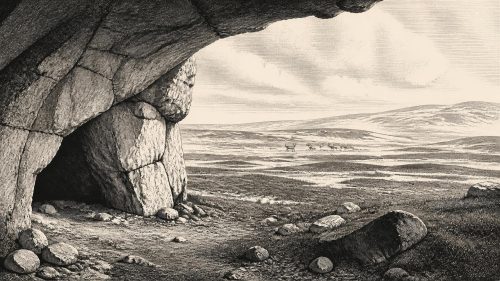
Castlepook’s Vanishing Reindeer
Around 33,200 calibrated years before present, Ireland lay within the climatically unstable Late Pleistocene, although no evidence can identify conditions in 31,280 BCE precisely. Ice sheets, sea levels and coastlines changed unevenly, while later glaciation destroyed much terrestrial evidence. Castlepook Cave in County Cork preserves Ireland’s richest relevant fauna, including mammoth, giant deer, reindeer, bear and hyena, accumulated across extended periods rather than a single moment. Redating places some remains in MIS 3, supporting intermittent animal occupation. A reportedly cut-marked reindeer bone may indicate human visitation, but remains contested and cannot demonstrate settlement. Evidence remains fragmentary, not an annual narrative.
View Record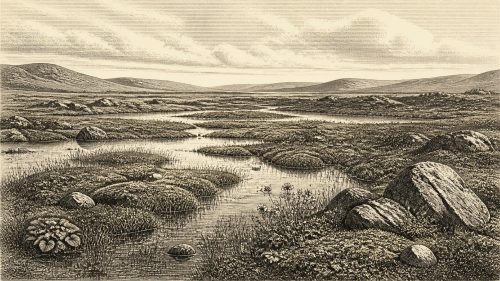
Derryvree’s Ancient Bogbean
31,281 BCE is a modern label for a poorly resolved Late Pleistocene interval, rather than a recoverable Irish year. At Derryvree, County Fermanagh, freshwater sediments between glacial tills, dated broadly to 36,900–31,700 calibrated years BP, reveal treeless tundra wetland with bogbean, mountain avens and sedges. Castlepook Cave, County Cork, preserves evidence of diverse cold-climate fauna, including reindeer, mammoth, giant deer, predators and smaller mammals, demonstrating connectivity with north-west Europe. A marked, dated reindeer bone may indicate human butchery, but remains inconclusive. Ireland was an unstable frontier of ice-free habitats and advancing glaciers, without evidence for settled communities, polities or culture.
View Record
Fermanagh Silt, Cork Bone
Approximately 31,282 BCE represents a broad Late Pleistocene horizon, not a precise date, within unstable MIS 3 conditions preceding the Last Glacial Maximum. At Derryvree, County Fermanagh, organic freshwater deposits between glacial tills record cold, open tundra-steppe wetlands, although their dated range cannot define island-wide conditions. Lower sea levels connected Ireland ecologically with neighbouring regions, but routes varied. Castlepook Cave, County Cork, preserves diverse Ice Age fauna and a reindeer femur dated near this period, whose possible stone-tool cut mark may indicate human carcass processing. Disturbed contexts prevent certainty. Later ice erased evidence, leaving environmental change and possible human visitation.
View Record