
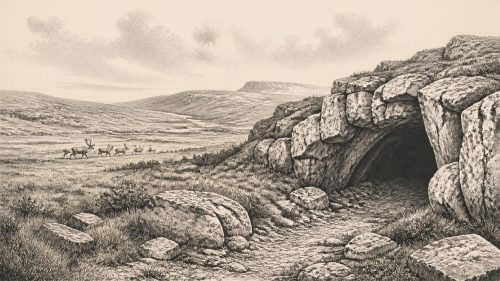
Cork Cave Reindeer Femur
Around 31,285 BCE, Ireland lay within the fluctuating cold conditions of Marine Isotope Stage 3, before the Last Glacial Maximum. Southern landscapes probably comprised open tundra and steppe supporting reindeer, mammoth, giant deer, predators and smaller mammals. Castlepook Cave, County Cork, preserves a disturbed, repeatedly accumulated fauna rather than a single contemporary scene. A reindeer femur, dated approximately 31,000 BCE, bears a mark interpreted as possible stone-tool butchery, potentially Ireland’s earliest evidence of human activity. Yet no sealed occupation, tools, hearths or human remains confirm settlement. Later glaciation and sea-level change destroyed evidence; further dating and excavation remain especially essential.
View Record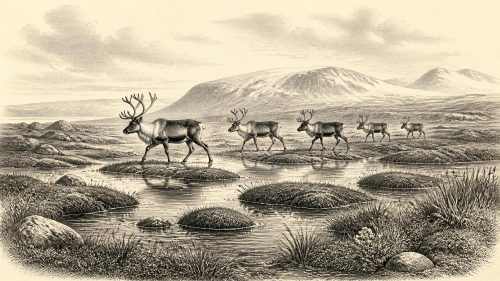
Castlepook’s Hyena Coprolites
About 33,235 years ago, during Marine Isotope Stage 3, Ireland experienced fluctuating cold conditions rather than a single climate. At Derryvree, County Fermanagh, freshwater sediments between glacial tills preserve evidence of open tundra, wet muskeg, pools, mosses and cold-adapted life during an ice-free interval. Crag Cave records episodic milder phases. Castlepook Cave, County Cork, yielded abundant remains of mammoth, giant deer, reindeer, bears, hyaenas and other Ice Age animals; coprolites and crushed bones indicate hyaena denning. Faunal evidence shows intermittent European connectivity, though routes remain uncertain. No secure evidence demonstrates human settlement then; Ireland’s earliest accepted human activity dates later.
View Record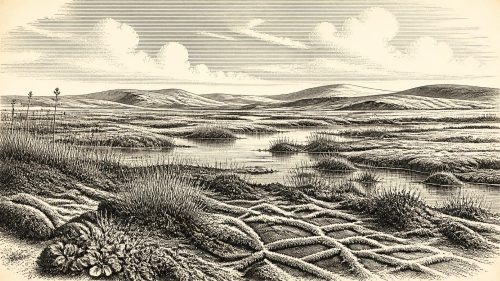
Derryvree’s Middle Midlandian
At the notional date of 31,287 BCE, Ireland lacked annual historical evidence; reconstruction relies on Late Pleistocene deposits. Derryvree, County Fermanagh, records a broadly dated, locally ice-free MIS 3 interval between glacial advances, with freshwater sediments, tundra vegetation, wetlands and periglacial conditions. Castlepook Cave, County Cork, preserves time-averaged remains of mammoth, reindeer, giant deer, bear and hyaena, demonstrating varied cold-stage fauna. A marked reindeer femur may indicate Upper Palaeolithic carcass processing, but remains contested and cannot prove settlement. Ireland faced climatic instability and impending wider glaciation, while evidence reveals neither polities nor established economy or human population at this time.
View Record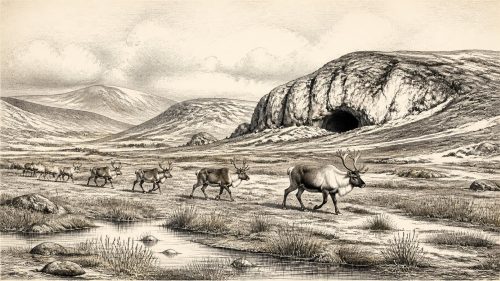
The Doneraile Reindeer Line
At roughly 33,200 years before present, Ireland lay within the climatically volatile later Marine Isotope Stage 3. Derryvree deposits indicate tundra wetlands and periglacial conditions, while Crag Cave stalagmites record recurrent milder intervals. Castlepook Cave near Doneraile preserves a mixed Ice Age fauna including reindeer, mammoth, giant deer, hyaena and bears. A reindeer femur reportedly dated to about 33,000 years ago bears a possible stone-tool butchery mark, perhaps Ireland’s earliest direct human trace. However, no associated tools, hearths or settlements confirm occupation. Changing ice, sea levels and habitats shaped animal and potential human movement. Later glaciation may have erased evidence.
View Record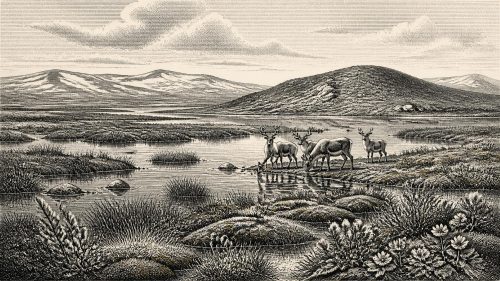
BIRM-166’s Sedge Waters
Around 31,289 BCE, Ireland’s history is reconstructed from uncertain Pleistocene environmental evidence, not recorded events. Derryvree in Fermanagh preserves organic freshwater sediments between glacial tills, indicating a cold, treeless, periglacial wetland with sedges, mosses, aquatic plants and seasonal frost. Comparable northern deposits demonstrate repeated ice advances and ice-free intervals. Castlepook Cave in Cork yielded MIS 3 fauna, including reindeer, mammoth, giant deer and hyaena. A possibly cut-marked reindeer bone suggests human carcass processing, but does not prove settlement. No identifiable societies, institutions, beliefs or continuous human occupation can be established; the evidence securely depicts a changing, wildlife-rich Ice Age landscape.
View Record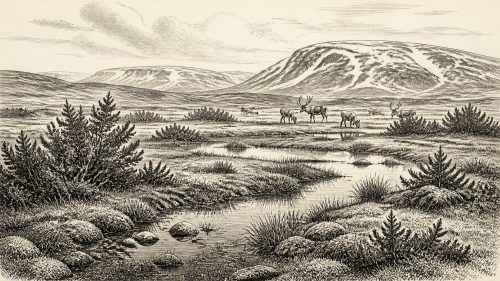
Derryvree Beneath Renewed Ice
At 31,290 BCE, Ireland cannot be described through a precisely dated historical event, but through a Late Pleistocene environmental horizon. Derryvree, County Fermanagh, preserves freshwater sediments and organic remains between glacial tills, indicating an ice-free periglacial mosaic of tundra, wetlands, grasses, sedges and juniper during MIS 3. Its radiocarbon date spans a broad calibrated range, including this notional year. Crag Cave records milder episodic conditions, while Castlepook Cave documents cold-adapted fauna, including mammoth, reindeer, giant deer, hyaena and Arctic fox. Human presence remains possible, based on a potentially butchered reindeer bone, but settlement is unproven. Evidence reveals ice and water.
View Record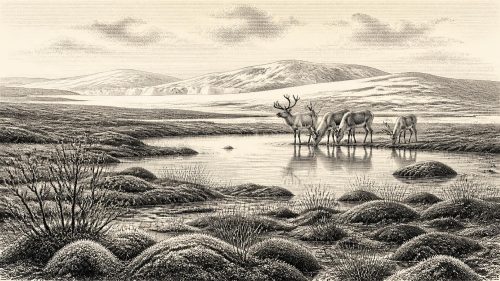
Fermanagh’s Sedge Marsh
At approximately 33,240 cal BP, corresponding broadly to 31,291 BCE, Ireland experienced the climatically unstable Marine Isotope Stage 3. Ice-free and glacial conditions alternated, while lower sea levels reshaped coasts without guaranteeing land bridges. At Derryvree, County Fermanagh, freshwater sediments dated 36,900–31,700 cal BP preserve evidence of sedges, grasses, mosses and cold-adapted wetland plants in a treeless landscape. Castlepook Cave, County Cork, records a time-averaged fauna including reindeer, mammoth, giant deer, predators and lemmings. Possible cut marks on reindeer bone suggest unconfirmed human visitation. Later glaciation destroyed much evidence, leaving environmental change, rather than recorded society, as this period’s history.
View Record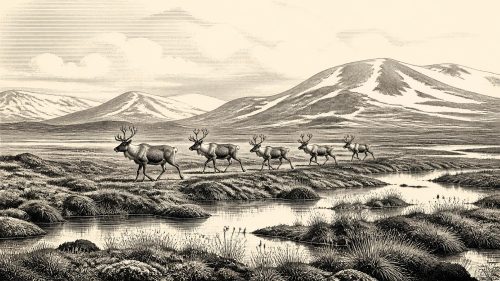
Doneraile’s Ice-Age Femur
31,292 BCE cannot identify a discrete Irish event, but falls within climatically unstable Marine Isotope Stage 3. Before maximum glaciation, Ireland contained varied, partly ice-free landscapes, although routes from Britain or Europe remain unproven. Derryvree sediments in Fermanagh preserve evidence of treeless, periglacial wetland supporting cold-adapted plants, insects and herbivores between ice advances. Castlepook Cave in Cork contains diverse cold-stage fauna, including mammoth, reindeer and hyaena, accumulated over different periods. A cut-marked reindeer femur may indicate Upper Palaeolithic butchery, but cannot prove settlement. Subsequent glaciation probably destroyed evidence, leaving only a possibility of brief human visits during this remote period.
View Record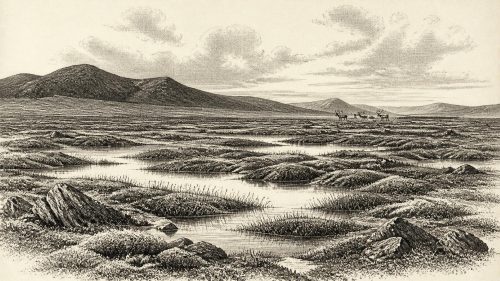
Fermanagh’s Ice-Free Window
Around 33,000 years ago, later Marine Isotope Stage 3 Ireland experienced an unstable transition towards wider glaciation, not a precisely datable historical year. At Derryvree, County Fermanagh, freshwater deposits beneath glacial sediments show a locally ice-free periglacial landscape of tundra, wetlands, mosses, sedges and shallow pools. Ice expanded unevenly, with the British-Irish Ice Sheet reaching its maximum only later. Castlepook Cave, County Cork, preserves varied fauna, including mammoth, reindeer, giant deer, bears, wolves, foxes, lemmings and hyenas, demonstrating episodic ecological connectivity. A possibly tool-marked reindeer bone may indicate brief human presence, but no evidence establishes settlement, chronology, or resident communities.
View Record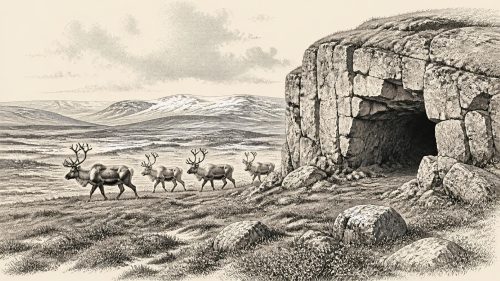
Doneraile’s Palaeolithic Question
31,294 BCE is best treated as an approximate point within Ireland’s late Marine Isotope Stage 3, not a recoverable historical year. Cold, changing landscapes, lowered seas and expanding ice shaped an uncertain geography. Castlepook Cave, County Cork, preserves fauna including mammoth, giant deer, reindeer, bear and spotted hyena, demonstrating links with wider northern European ecosystems over millennia. A reindeer femur dated about 31,000 BC bears a possible stone-tool cut mark, suggesting brief Upper Palaeolithic human activity. However, no associated tools, hearths or settlements exist. Excavation disturbed evidence, but renewed dating, analyses and fieldwork may identify intact deposits, clarifying human presence.
View Record