
Castlepook’s Cutmark Debate
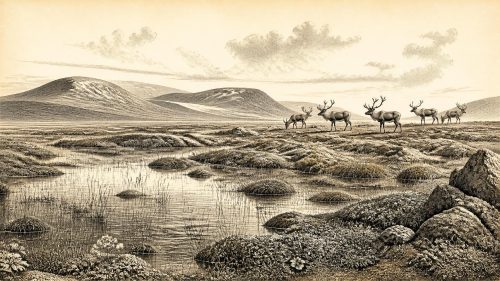
Although 31,263 BCE cannot denote a precise Irish historical year, it falls broadly within MIS 3, before the Last Glacial Maximum. Ireland experienced fluctuating ice, low sea levels and patchy, cold open environments. Derryvree sediments in Fermanagh record an ice-free freshwater wetland between glacial advances, supporting tundra-like vegetation, insects and seasonal water. Castlepook Cave in Cork preserves re-dated MIS 3 fauna including mammoth, reindeer, giant deer, predators and lemmings, demonstrating rich cold-stage ecosystems. A purported stone-tool cutmark on a reindeer bone may indicate human butchery, but remains contested. No secure evidence establishes settlement, institutions; environmental change is the clearest history.
View Record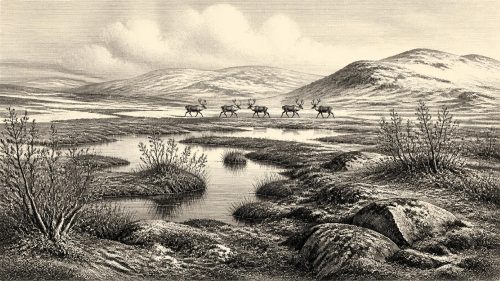
Ballyhoura Reindeer Carcass
About 31,264 BCE, Ireland lay within the unstable cold conditions of Marine Isotope Stage 3, before the Last Glacial Maximum. Evidence cannot reconstruct a single year or prove permanent human settlement. At Derryvree, County Fermanagh, sediments between glacial tills preserve a treeless tundra wetland of mosses, sedges, insects and freshwater pools. Castlepook Cave, County Cork, contains a long, mixed assemblage of cold-stage animals, including reindeer, mammoth, giant deer, bear and hyaena. A cut-marked reindeer femur may indicate carcass processing by people, but lacks associated occupation evidence. Ireland was thus an ecologically varied, intermittently habitable, poorly documented Ice Age frontier overall.
View Record
Derryvree Before the Till
31,265 BCE is a modern notional date within Ireland’s Late Pleistocene MIS 3, not a recordable year. At Derryvree, County Fermanagh, organic silts between tills document an ice-free interval, dated broadly to 36,900–31,700 calibrated BP, when tundra-like wetland supported grasses, sedges, mosses, juniper, insects and freshwater plants. Cave remains, especially at Castlepook, show mammoth, reindeer and hyaena reached Ireland. A marked reindeer femur may indicate Upper Palaeolithic butchery, but cannot prove permanent settlement. Evidence reveals no institutions or communities. Changing sea levels, ice and uncertain routes shaped access before the expanding British–Irish Ice Sheet transformed habitats and obscured earlier traces.
View Record
Maguirebridge’s Silt Lens
The label 31,266 BCE cannot identify a precise event, but falls within MIS 3, a climatically unstable phase of the Midlandian cold stage. At Derryvree near Maguiresbridge, freshwater silts between glacial tills record an ice-free interval dated broadly to 36,900–31,700 years BP. Wetlands, tundra-like vegetation, insects and aquatic plants indicate severe periglacial conditions. Castlepook Cave preserves a long-accumulated fauna including mammoth, giant deer, reindeer, bear and hyena, demonstrating intermittently productive habitats. A possibly cut-marked reindeer bone suggests early human activity, but without associated tools or settlements it cannot prove occupation. The evidence depicts shifting ice, water, vegetation and animal movement.
View Record
Derryvree’s Moss Macrofossils
Around 31,267 BCE, Ireland was in the climatically variable later Last Glacial Period, not an era of recorded events. Freshwater deposits sealed between tills at Derryvree, County Fermanagh, preserve mosses, plants, insects and sediments indicating open, treeless tundra-like wetlands with cold-adapted vegetation. Castlepook Cave, County Cork, contains a long, mixed assemblage of Ice Age mammals, including mammoth, reindeer, giant deer, predators and lemmings, demonstrating intermittent animal movement. A possibly cut-marked reindeer bone suggests, but cannot confirm, early human contact. These fragmentary archives predate the later expansion of the British–Irish Ice Sheet and reveal changing cold-stage environments rather than settled society.
View Record
Mammoth Cave’s Reindeer Mark
Around 31,268 BCE, Ireland lay in the unstable Marine Isotope Stage 3, before the Last Glacial Maximum. Radiocarbon and sedimentary evidence provide broad ranges, not precise events. Freshwater deposits at Derryvree, County Fermanagh, demonstrate intervals of ice-free, cold wetlands supporting hardy plants, insects and animals between glacial advances. Castlepook Cave, County Cork, preserves a mixed fauna including mammoth, reindeer, giant deer, predators and Arctic species, indicating open, rigorous environments. A marked reindeer femur, dated roughly 33,000 years ago, may record stone-tool butchery and Ireland’s earliest human activity. However, without associated evidence, it cannot prove permanent settlement, society or sustained occupation.
View Record
Derryvree’s Open-Pool Tundra
At 31,269 BCE, Ireland lay within the unstable Late Pleistocene MIS 3, not a calendar year. Derryvree, County Fermanagh, preserves freshwater silts between tills, showing cold, treeless periglacial wetlands and open pools during an ice-free interval before later glaciation. Ireland’s ice cover was regionally variable; maximum expansion followed later. Cave deposits and landforms reveal climates, sea levels and possible animal routes. Castlepook Cave, County Cork, yielded reindeer, hyena, mammoth and cold-adapted fauna. A marked reindeer bone may record human butchery around 33,000 years ago, but no settlement evidence exists. The period represents a volatile, intermittently habitable landscape, not a society.
View Record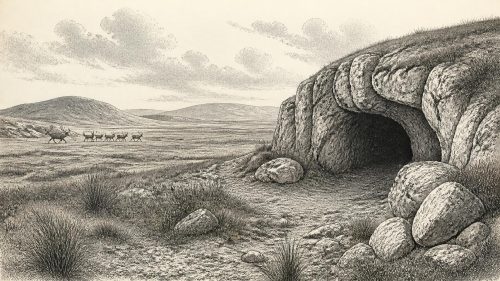
Doneraile’s Single Cutmark
Around 31,270 BCE, Ireland had no recoverable historical record or securely dated human settlement. During Marine Isotope Stage 3, before the Last Glacial Maximum, its environments were severe, variable and increasingly affected by ice and periglacial processes. Castlepook Cave, County Cork, preserves mixed late Pleistocene fauna, including mammoth, reindeer, giant deer, predators and lemmings, but its deposits are disturbed and chronologically complex. A reindeer femur bears a possible stone-tool cutmark, suggesting human butchery, yet lacks associated artefacts or secure context. It may indicate a brief Upper Palaeolithic incursion, not permanent occupation. Environmental change, rather than social history, defines this period.
View Record
Derryvree’s Arctic Waterline
31,271 BCE is not a recoverable Irish year but falls within Marine Isotope Stage 3, before the Last Glacial Maximum. At Derryvree, County Fermanagh, sediments between glacial tills record wetlands during an ice-free interval, dated broadly to 34,950–29,750 BCE. Plant and insect remains indicate cold, open tundra-like terrain with wet habitats. Ireland supported varied fauna, including reindeer, giant deer, mammoth and predators, though species were not necessarily contemporaneous. Castlepook Cave offers a stone-tool butchery mark on reindeer bone, suggesting fleeting human activity, not settlement. Ice margins, sea levels and access routes changed; no evidence supports societies, farming, trade or beliefs.
View Record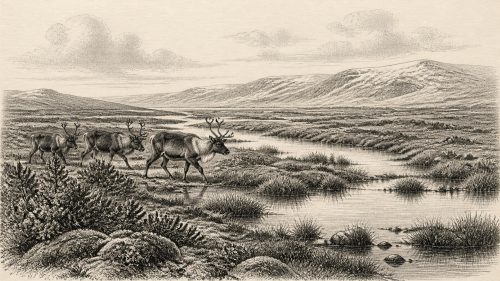
Derryvree’s Open Pools
31,272 BCE is a notional date within uncertain Late Pleistocene chronologies, roughly 33,200 years before 1950. Derryvree, County Fermanagh, preserves freshwater organic deposits between glacial tills, indicating an open, treeless, sedge- and moss-rich wetland with pools, short growing seasons and periglacial cold during unstable MIS 3 conditions. Castlepook Cave, County Cork, contains remains of mammoth, reindeer, giant deer, hyaena and other fauna, showing intermittent habitats for cold-stage animals. A cut-marked reindeer bone may indicate early human butchery, but cannot prove settlement. No political, cultural or economic institutions are evidenced; Ireland’s recoverable history is environmental and fragmentary rather than event-based narrative.
View Record