

Derryvree’s Cold-Water Biota
Circa 31,350 BCE, Ireland lay within the climatically unstable Late Pleistocene MIS 3, not a recordable historical year. At Derryvree, County Fermanagh, freshwater sediments between glacial tills, dated broadly to 36,900–31,700 cal BP, reveal treeless periglacial wetlands supporting grasses, sedges, juniper, mosses, aquatic plants and insects. Castlepook Cave, County Cork, preserves MIS 3 fauna including mammoth, reindeer, giant deer, bear, wolf, hare, lemmings and hyaena, indicating open habitats and ecological links abroad. A possibly cut-marked reindeer bone suggests fleeting human activity, but no settlement is proven. Later ice advances destroyed or buried much evidence, leaving only a fragmentary environmental record.
View Record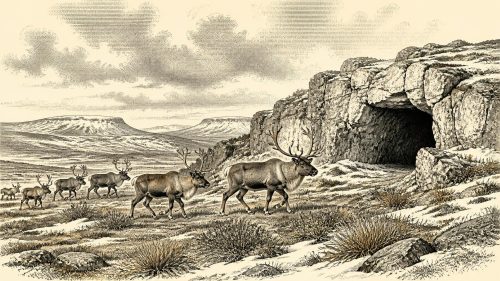
Doneraile’s Marked Reindeer
31,351 BCE is a modern label for a broad MIS 3 interval, not a recoverable Irish year. Castlepook Cave, County Cork, preserves Pleistocene fauna including reindeer, mammoth, giant deer, carnivores and cold-adapted species, indicating fluctuating open environments and repeated animal access. A roughly 33,000-year-old reindeer femur bears a possible fresh-bone stone-tool mark, potentially Ireland’s earliest human evidence. However, its historic collection context, uncertain modification and lack of associated tools or occupation deposits prevent claims of settlement or continuous habitation. Lower sea levels do not establish a land bridge. Recent investigations and redating emphasise mixed deposits, earlier dating errors, requiring analysis.
View Record
Castlepook’s Butchery Scar
31,352 BCE is a modern approximation within late Marine Isotope Stage 3, not a precisely datable Irish year. Derryvree sediments in Fermanagh, preserved between glacial tills, record local treeless tundra wetlands with cold-adapted plants and insects. Castlepook Cave in Cork contains Late Pleistocene bones of mammoth, hyaena, reindeer and other fauna, demonstrating episodic animal dispersal across changing Ice Age geography. A marked reindeer femur may indicate stone-tool butchery by visiting Upper Palaeolithic people, but lacks secure context and cannot prove settlement. No polities, religion or continuous population are evidenced. Environmental instability, glacial change and fragmentary archives define this period overall.
View Record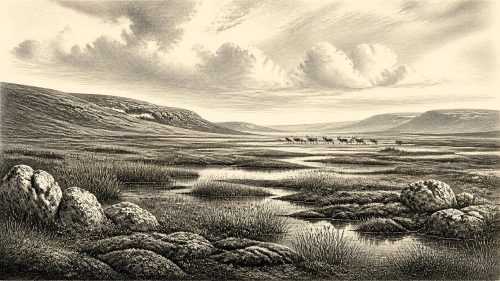
Castlepook’s Incised Reindeer
Circa 31,353 BCE, Ireland lay within an unstable Late Pleistocene cold phase, not a datable historical year. Derryvree, County Fermanagh, preserves a wetland between glacial tills, dated broadly enough to encompass this period, indicating open, treeless tundra with freshwater habitats, grasses, sedges, mosses and cold-adapted plants. Castlepook Cave, County Cork, yielded mammoth, reindeer, giant deer and predators, demonstrating intermittent cold-open habitats and ecological links with north-western Europe. An incised reindeer femur may record stone-tool butchery and brief Upper Palaeolithic human presence, but cannot prove settlement. Glaciation, erosion and sea-level change likely destroyed evidence, requiring cautious interpretation of Ireland's early record.
View Record
BIRM-166’s Periglacial Wetland
Around 31,354 BCE, Ireland lay within the unstable MIS 3 Ice Age, although no event can be assigned to that year. Derryvree, County Fermanagh, provides the best local evidence: organic sediments dated broadly to 36,900–31,700 calibrated years before present record an ice-free, treeless periglacial wetland between glacial advances. Sedges, mosses, hardy herbs, insects and shallow pools formed a varied tundra-like landscape. Castlepook Cave reveals that mammals including mammoth, reindeer, giant deer, bears and hyaenas reached Ireland during MIS 3, but not necessarily together. Human presence remains unproven. Ireland was approaching renewed extensive glaciation, with no evidence of society or trade.
View Record
Castlepook’s Reindeer Threshold
Around 31,355 BCE, Ireland formed a climatically unstable, regionally varied landscape during Marine Isotope Stage 3, not a precisely datable historical moment. Ice advances and retreats created mosaics of tundra, freshwater basins and exposed ground; Derryvree in Fermanagh demonstrates ice-free, treeless ecosystems supporting plants and insects. Castlepook Cave, County Cork, produced Ice-Age fauna and a reindeer femur bearing a possible stone-tool cut mark, tentatively suggesting early human carcass processing. Poor stratigraphic records and uncertain mark interpretation prevent claims of settlement or cultural affiliation. Firmly dated human activity in Ireland still remains much later, making Castlepook an important but unconfirmed threshold.
View Record
Derryvree’s Lemming Pools
31,356 BCE is not a recorded year but falls within MIS 3 during the Last Glacial Period. At Derryvree, County Fermanagh, inter-till freshwater sediments radiocarbon dated broadly to 36,900–31,700 calendar years before present preserve evidence of treeless, cold, wet tundra, pools and herb-rich vegetation during an ice-free interval. Southern caves, especially Castlepook, indicate a diverse cold-stage fauna including mammoth, reindeer, giant deer, predators and lemmings, although dates and occupations varied. A possibly cut-marked reindeer bone suggests transient Upper Palaeolithic human activity, not settlement. Lower sea levels and fluctuating ice created shifting access and habitats, leaving Ireland environmentally dynamic but elusive.
View Record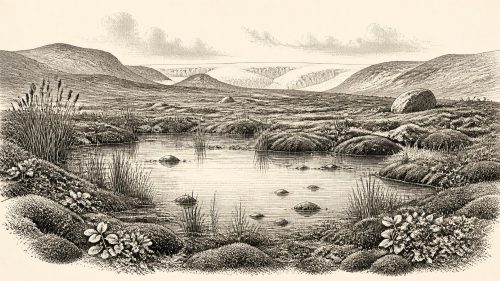
Derryvree’s Sub-Till Bogbean
31,357 BCE is an imprecise label for a Late Pleistocene interval, not a date for a recoverable Irish event. At Derryvree, County Fermanagh, organic freshwater silts between two glacial tills document an ice-free phase during MIS 3. Radiocarbon evidence broadly places them between 36,900 and 31,700 calibrated years BP. Mosses, sedges, bogbean and cold-adapted insects indicate a wet, treeless tundra-like wetland, while conditions elsewhere remained uncertain amid shifting ice and sea levels. Castlepook Cave’s reindeer femur may bear a butchery cut, suggesting possible human presence, but cannot prove settlement. No evidence supports Irish polity, society, economy, ritual or sustained occupation.
View Record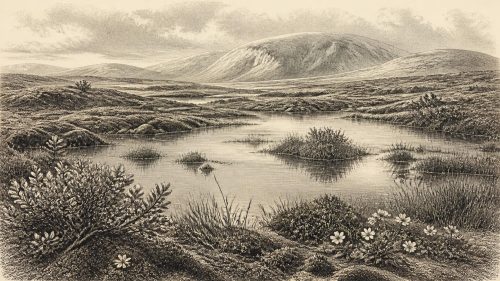
BIRM-166’s Freshwater Tundra
31,358 BCE is a modern reference within a broad calibrated range derived from Derryvree’s BIRM-166 radiocarbon date, not a recoverable Irish year. Organic silts beneath a Fermanagh drumlin show that, between glacial advances, freshwater wetlands occupied locally ice-free, open tundra. Pollen, plants and insects indicate sedges, grasses, mosses, juniper, bogbean, water-milfoil, dwarf willow and mountain avens in harsh periglacial conditions. Cave faunas demonstrate that cold-adapted mammals and predators reached Ireland during MIS 3, although not necessarily simultaneously. Human presence remains unproven: a possibly cut reindeer bone is insufficient evidence. Later ice sheets obscured records, leaving environmental, rather than societal, history.
View Record
Castlepook’s Hyaena Range
At c. 33.3 ka cal BP, Ireland experienced unstable MIS 3 cold-stage environment rather than a datable year. Derryvree, County Fermanagh, preserves organic wetland sediments between tills, showing ice-free intervals with open, treeless tundra vegetation, freshwater pools and periglacial conditions. Castlepook Cave, County Cork, yielded mammoth, reindeer, giant deer, hyaena and other fauna, demonstrating intermittent ecological links with north-west Europe, though deposits span time and are biased. Revised dating places some fauna earlier than believed. A marked reindeer bone may indicate human butchery around 33,000 years ago but cannot prove settlement. Evidence supports changing landscapes, animals and possible human visits.
View Record