
Archived: 20 September 2026
Abstract
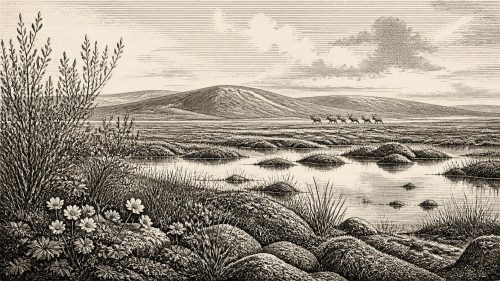
Around 31,023 BCE, Ireland lay within the Midlandian glacial cycle, and evidence describes environments rather than datable events. Derryvree, County Fermanagh, preserves freshwater sediments between till layers, indicating a local ice-free interval with treeless, waterlogged tundra, mosses, insects and short growing seasons. Castlepook Cave, County Cork, contains a long-accumulated, disturbed assemblage of mammoth, reindeer, giant deer, bear, hyena and other cold-stage fauna, demonstrating intermittent links with Britain and Europe. A possible stone-tool mark on a reindeer bone suggests brief human presence, but remains unconfirmed. No evidence supports permanent settlement, society or culture. Changing ice, sea levels and routes governed access.
Read Article
Archived: 20 September 2026
Abstract
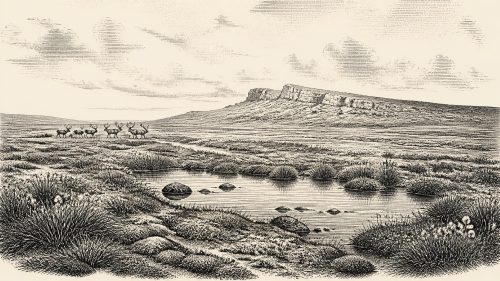
Around 31,024 BCE, Ireland lacked written history and preserves fragmentary Late Pleistocene evidence. During climatically unstable Marine Isotope Stage 3, ice, periglacial conditions and low sea levels repeatedly reshaped landscapes and access routes. At Derryvree, County Fermanagh, organic sediments between glacial tills record an ice-free freshwater wetland, dated broadly to this period, supporting tundra vegetation. Castlepook Cave, County Cork, preserves mixed remains of reindeer, mammoth, lemmings, carnivores and other cold-stage fauna, demonstrating animal presence. A marked reindeer bone may indicate human butchery, but lacks secure context. No settlements, tools, burials, institutions or human occupation are established; later ice erased evidence.
Read Article
Archived: 20 September 2026
Abstract
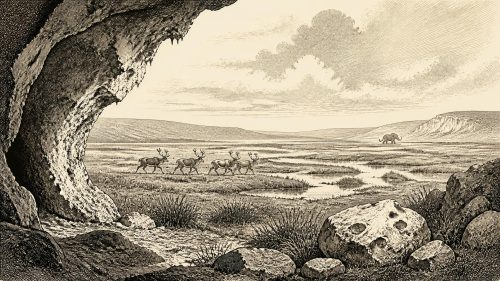
Around 31,025 BCE, Ireland cannot be described through annual events, but evidence from Marine Isotope Stage 3 reveals a cold, changing environment before maximum glaciation. Freshwater sediments at Derryvree, County Fermanagh, preserve pollen and plants from open, treeless wetlands supporting mosses, sedges and aquatic species. Castlepook Cave, County Cork, contains remains of reindeer, mammoth, giant deer, hyaena and other animals accumulated over extended periods. A reindeer femur, broadly dated to this time, bears a possible stone-tool incision, suggesting a brief Upper Palaeolithic human visit. However, no settlement, route, culture or continuous population can be established; later ice destroyed much evidence.
Read Article
Archived: 20 September 2026
Abstract
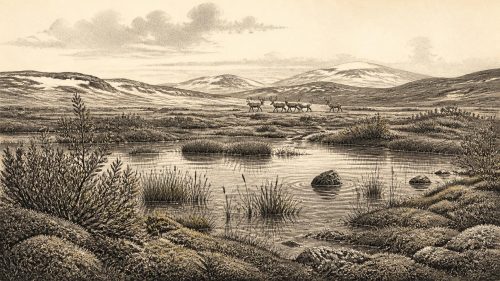
Around 31,026 BCE, Ireland was a cold, environmentally unstable Upper Palaeolithic landscape, not a documented human society. Before the Last Glacial Maximum, shifting ice, low sea levels and changing terrain shaped access and preservation. Castlepook Cave, County Cork, contains remains of reindeer, mammoth, giant deer and predators, indicating open, treeless habitats. A marked reindeer femur may record early human butchery, but its interpretation cannot prove permanent settlement. Derryvree, County Fermanagh, preserves freshwater deposits between glacial tills, showing tundra-like wetlands during an ice-free interval. Together, sites demonstrate changing ecosystems and possible transient human visits, leaving political and cultural history largely unknown.
Read Article
Archived: 20 September 2026
Abstract
Around 31,027 BCE, Ireland’s evidence records broad Late Pleistocene conditions rather than a particular year. At Derryvree, County Fermanagh, freshwater silts between glacial tills preserve bogbean, dwarf willow, mosses, insects and other remains from an open, treeless, tundra-like wetland during MIS 3. Southern caves, especially Castlepook in County Cork, demonstrate the presence of animals including reindeer, mammoth, giant deer and hyaena across extended, uncertain periods. A marked reindeer bone may indicate human butchery, yet no secure Palaeolithic settlement is known. Advancing ice, altered coasts and later erosion restricted habitats and destroyed evidence, leaving a fragmented record of intermittently habitable landscapes.
Read Article

Archived: 20 September 2026
Abstract
31,028 BCE is not a recoverable Irish historical year but a broad Late Pleistocene interval within Marine Isotope Stage 3. Derryvree, County Fermanagh, preserves freshwater sediments between two tills, demonstrating locally ice-free, cold wetland conditions between glacial advances. Its plants, insects and sediments indicate treeless muskeg, pools and short growing seasons. Castlepook Cave, County Cork, records varied fauna, including mammoth, reindeer and hyaena, showing intermittent animal migration during favourable phases. Cave remains need not be contemporaneous. A possibly tool-marked reindeer bone suggests, but cannot confirm, early human activity. No evidence supports settlement, politics or later prehistoric practices; archives reconstruct environments.
Read Article

Archived: 20 September 2026
Abstract
Around 31,029 BCE, Ireland experienced unstable Late Pleistocene conditions before the Last Glacial Maximum. Derryvree, County Fermanagh, preserves evidence of an ice-free interval containing cold freshwater wetlands, tundra vegetation and periglacial environments, later buried by renewed glaciation. Castlepook Cave, County Cork, contains a long, mixed fauna record including reindeer, mammoth, giant deer, hyaena and bear, demonstrating connections with wider north-west European cold-climate ecosystems. A marked reindeer bone, dated near 33,000 years ago, may indicate human handling, but cannot prove settlement or organised hunting. Lower sea levels altered surrounding landscapes, although access routes remain uncertain. Evidence remains local, fragmentary and provisional.
Read Article

Archived: 20 September 2026
Abstract
Labelled 31,030 BCE, this period is known only through broad archaeological and environmental evidence, not annual events. Derryvree, County Fermanagh, preserves freshwater deposits between glacier tills, indicating an ice-free interval within a fluctuating Midlandian glacial landscape. Fossils reconstruct wet, treeless tundra with cold-adapted plants, pools and seasonal thaw. Elsewhere, deposits and cave formations demonstrate changing regional climates. Castlepook Cave, County Cork, contains remains of mammoths, reindeer, predators and other cold-stage fauna, though its assemblage is chronologically complex. A possibly tool-cut reindeer bone suggests transient human contact, but no settlement is proven. Ireland’s record chiefly documents ice, ecosystems and human possibilities.
Read Article

Archived: 20 September 2026
Abstract
Around 31,031 BCE, Ireland’s history is reconstructed from uncertain geological and biological evidence rather than recorded events. Derryvree, County Fermanagh, preserves freshwater silts between glacial tills, indicating locally ice-free, cold tundra wetlands during part of MIS 3. Pollen, insects and sediments suggest treeless, waterlogged terrain shaped by severe seasonal conditions. Crag Cave confirms wider climatic instability. Castlepook Cave, County Cork, contains Late Pleistocene fauna, including reindeer, mammoth and predators, although its deposits are time-mixed. A possibly cut-marked reindeer bone may signal early human activity, but cannot prove settlement. Ice expansion destroyed evidence, leaving no basis for societies, trade or polities.
Read Article

Archived: 20 September 2026
Abstract
Around 31,032 BCE, Ireland’s history is environmental rather than documentary. Derryvree, near Maguiresbridge, preserves freshwater silts between glacial tills, indicating a temporarily ice-free, treeless wetland during a broadly dated MIS 3 interval. Mosses, sedges, aquatic plants and insects occupied shallow pools amid severe, variable cold. Comparable deposits confirm shifting conditions between glacial advances. Ireland’s ice extent, coastlines and access routes remained uncertain as the British–Irish Ice Sheet fluctuated and sea levels fell. Cave faunas included reindeer, mammoth, deer, bear and hyaena, but were accumulated over different episodes. No secure evidence establishes human settlement, society, trade or political organisation at all.
Read Article


