

BIRM-166 and Crag Cave
31,380 BCE is not a recoverable Irish historical year but a broad Late Pleistocene MIS 3 horizon. At Derryvree, County Fermanagh, organic deposits between glacial tills, including BIRM-166, indicate an ice-free interval with cold, open freshwater tundra environments, though radiocarbon calibration prevents precise dating. Crag Cave, Kerry, records milder episodes allowing calcite growth. Castlepook Cave, Cork, preserves diverse Ice Age fauna, demonstrating varied cold-climate ecosystems. A reportedly butchered reindeer bone may signal early human visitation, but remains disputed and cannot establish settlement or continuity. Subsequent expansion of the British–Irish Ice Sheet transformed and obscured this fragile environmental record in Ireland.
View Record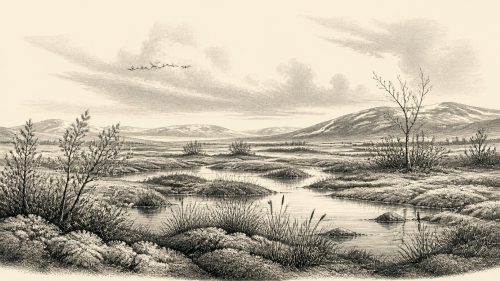
Derryvree’s Beetle Marsh
Around the notional date 31,381 BCE, Derryvree, County Fermanagh, preserves evidence of a freshwater wetland occupying an ice-free interval between glacial advances during MIS 3. Radiocarbon calibration places its organic sediments broadly between 34,950 and 29,750 BCE, precluding annual precision. Mosses, sedges, aquatic plants and twenty-eight cold-adapted beetle species indicate open, periglacial tundra with shallow water and short growing seasons. Wider Irish sites show climatically unstable conditions and varied cold-fauna. A cut-marked reindeer bone from Castlepook Cave tentatively suggests early human presence, but cannot prove settlement or continuity. The record documents ecological complexity, not political or social history in detail.
View Record
Derryvree’s Coldwater Sedges
Around 31,382 BCE, Ireland lay within the unstable later Marine Isotope Stage 3, although no event can be dated precisely to that year. Derryvree, County Fermanagh, preserves freshwater sediments between glacial tills, indicating cold, open periglacial terrain with sedges, mosses, aquatic plants and insects during an ice-free interval. Other deposits confirm that Ireland was not continuously ice-covered. Castlepook Cave, County Cork, contains remains of mammoth, giant deer, reindeer, hyaena and other cold-adapted animals. A marked reindeer bone may indicate human butchery, but no secure settlement evidence exists. Later glaciation destroyed much earlier evidence, limiting reconstruction to environmental and faunal traces.
View Record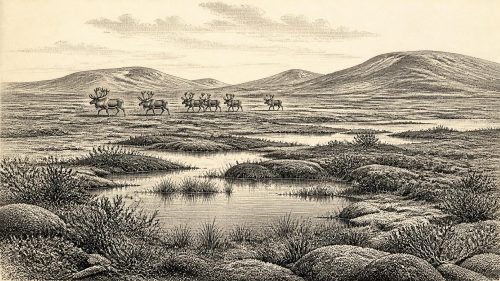
Greenagho’s Tundra Archive
At the notional date of 31,383 BCE, Ireland was within the climatically unstable MIS 3 of the Late Pleistocene, not a historically documented society. Buried deposits at Greenagho and Derryvree in County Fermanagh indicate locally ice-free freshwater wetlands, tundra vegetation and periglacial conditions before later ice-sheet expansion. Plant, insect and sediment evidence reveals cold but productive, varied habitats. Castlepook Cave in County Cork preserves remains of mammoth, reindeer, giant deer, predators and scavengers, accumulated across long periods. A cut-marked reindeer bone suggests possible transient human activity, but cannot prove settlement. Mobile ice, changing seas and remains preclude conclusions about settlement.
View Record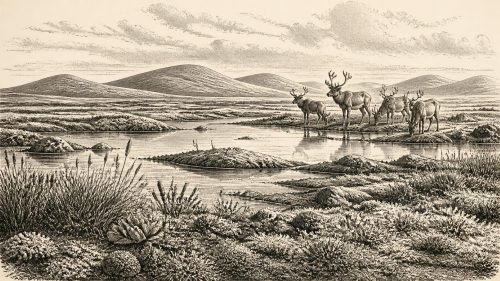
Derryvree’s Periglacial Ponds
Although 31,384 BCE is a modern label rather than a recoverable Irish year, evidence from MIS 3 reveals fluctuating Ice-Age environments. At Derryvree, County Fermanagh, freshwater organic sediments between glacial tills, dated broadly to 36,900–31,700 calibrated years BP, record cold, treeless periglacial wetlands with seasonal liquid water and sparse vegetation. Cave evidence complements this local picture: Crag Cave indicates milder interstadials, while Castlepook Cave preserves fauna including mammoth, reindeer, giant deer, hyaena, Arctic fox and lemmings. A possibly human-made cutmark on reindeer bone suggests, but cannot prove, Upper Palaeolithic visits. Later glaciation buried or destroyed much evidence, requiring cautious conclusions.
View Record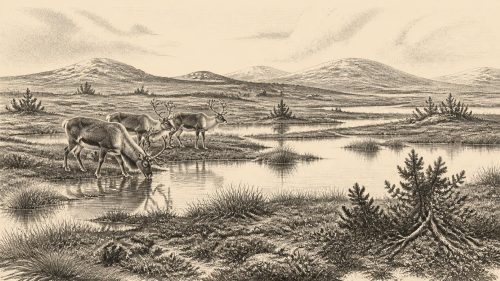
Crag Cave’s Winter Calcite
Around 31,385 BCE, Ireland lay within Marine Isotope Stage 3, an unstable phase of the last Ice Age rather than a precisely datable historical moment. Derryvree, County Fermanagh, preserves freshwater sediments between glacial tills, indicating cold, open, tundra-like wetland during an ice-free interval. Calcite growth in Kerry’s Crag Cave demonstrates episodic conditions permitting liquid water, while ice sheets remained dynamic elsewhere. Southern caves yielded mammoth, reindeer and hyaena remains, showing links to wider European fauna. A cut-marked Castlepook reindeer bone may indicate early human activity in Ireland, but disturbed context and absent settlements preclude claims of permanent occupation or society.
View Record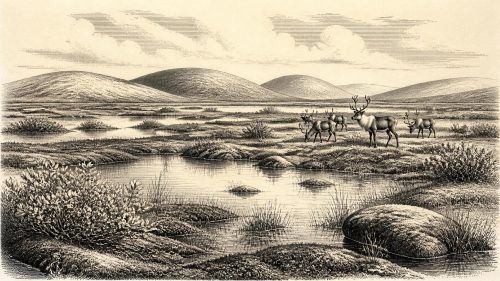
Derryvree’s Tundra Reedbed
Around 31,386 BCE, Ireland cannot be described through annual events, but Late Pleistocene evidence reveals a cold, unstable region with intermittent ice-free habitats. At Derryvree, County Fermanagh, organic sediments between glacial tills preserve a tundra wetland of sedges, mosses, aquatic plants and sparse herbs, formed during a less glaciated phase. Southern cave deposits, especially Castlepook, record reindeer, mammoth, bear, fox, hare, lemming and hyaena, though not necessarily contemporaneously. A cut-marked reindeer femur may indicate Upper Palaeolithic butchery, but cannot prove settlement. Later glaciation destroyed much evidence; no political, cultural or social history can be securely reconstructed at this precise date.
View Record
BIRM-166’s Bogbean Layer
Circa 31,387 BCE, Ireland lacked written history and precise annual chronology. At Derryvree, County Fermanagh, organic sediments between glacial tills record an ice-free MIS 3 interval, broadly dated to 36,900–31,700 calendar years BP. The site preserved a treeless, cold wetland of pools, sedges, mosses, herbs, insects and plants including bogbean, amid seasonal periglacial conditions. Ireland was approaching greater glaciation, although conditions varied regionally and no certain land bridge is known. Castlepook Cave, County Cork, contains time-averaged remains of mammoth, hyaena, reindeer and other fauna. A possibly cut-marked reindeer bone suggests, but cannot confirm, possible early human visitation or settlement there.
View Record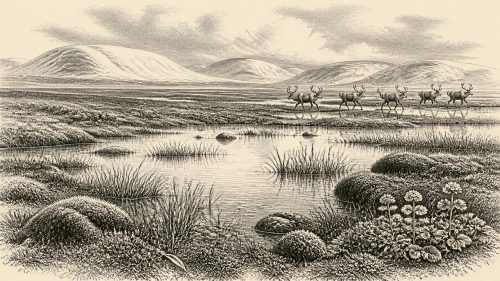
Maguirebridge’s Tundra Ledger
Around 31,388 BCE, Ireland lay within the climatically unstable Late Pleistocene MIS 3, not a precisely datable historical year. At Derryvree, County Fermanagh, freshwater organic deposits between glacial tills record an ice-free interval of open, periglacial tundra, wet hollows and seasonal cold. Castlepook Cave, County Cork, preserves remains of mammoth, reindeer, giant deer, bears, hyaenas and other fauna, demonstrating a living but distinctive insular ecosystem. A marked reindeer bone may indicate human butchery around 33,000 years ago, but remains contested and cannot prove settlement. No evidence supports Irish polities, agriculture or established communities; environmental archives provide the principal record today.
View Record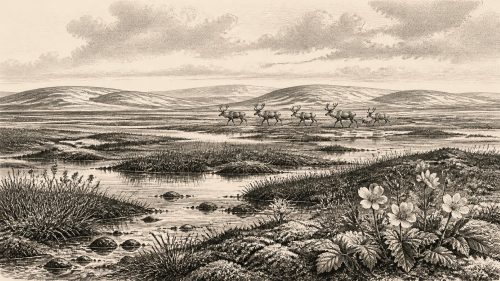
Castlepook’s Pre-Glacial Fauna
Around 31,389 BCE, Ireland lay within the fluctuating cold conditions of Marine Isotope Stage 3, not a recoverable historical year. Derryvree deposits in Fermanagh record treeless, wet tundra with sedges, mosses, shallow pools and cold-adapted plants, later buried by ice. Castlepook Cave in Cork preserves mixed faunal remains, including mammoth, reindeer, giant deer, hyaena and lemmings, demonstrating a cold, open ecosystem. A marked reindeer femur may indicate early human activity, but disturbed context and uncertain interpretation prevent firm conclusions. No evidence supports permanent settlement, politics or culture. Fragmentary archives reveal changing climates, expanding ice and possible transient visitors to Ireland.
View Record