Phelim O’Neill
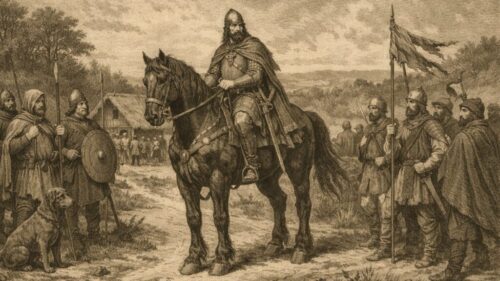
On 22 October 1641, Sir Phelim O’Neill surprised Charlemont, and Sir Con Magenis took the Newry and other places. Contemporary accounts place these actions against the wider alarm among Roman Catholics in Ulster after reports that a Puritan army might be sent into Ireland under General Leslie. In that climate, a convocation of leading gentlemen in the province discussed their safety and sought support from Irish officers abroad. O’Neill was then chosen commander in chief, described as the most considerable person of his name in Ulster. As commander, O’Neill moved from local seizure to wider campaigning.
Dateline
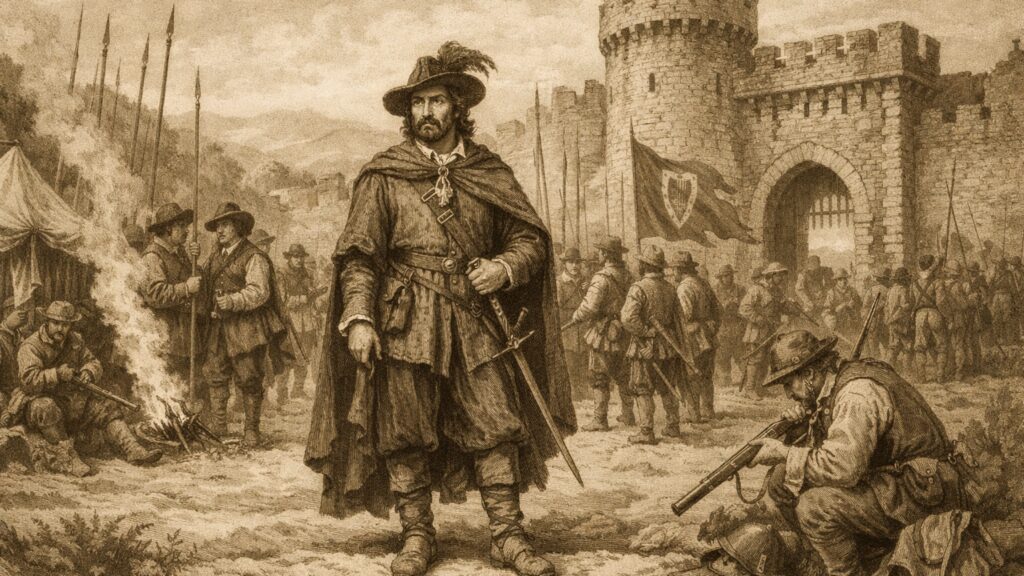
On 22 October 1641, Sir Phelim O’Neill surprised Charlemont, and Sir Con Magenis took the Newry and other places. Contemporary accounts place these actions against the wider alarm among Roman Catholics in Ulster after reports that a Puritan army might be sent into Ireland under General Leslie. In that climate, a convocation of leading gentlemen in the province discussed their safety and sought support from Irish officers abroad. O’Neill was then chosen commander in chief, described as the most considerable person of his name in Ulster.
Ulster Rising
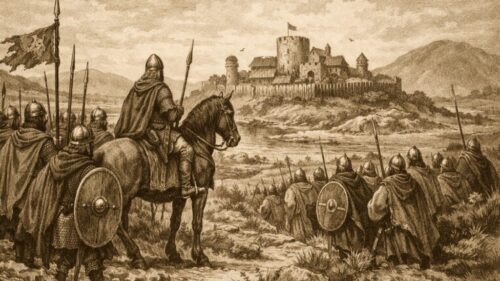
As commander, O’Neill moved from local seizure to wider campaigning. He went to besiege Drogheda, but after being forced to withdraw his men he besieged Lisnagarvy, now Lisburn, in County Antrim. That effort also failed, and he was driven away by Sir Arthur Terringham and Major Rawdon, whose defence was said to be vigorous. Another engagement in this period left him routed at Glanmaquin in County Donegal. These episodes show repeated attempts to hold or extend northern ground, alongside reverses that curtailed them.
Command Authority
In June 1642, Sir Phelim O’Neill was obliged to retire into Charlemont Castle after Lord Montgomery captured Kinard and he was defeated near the Blackwater. He then yielded to Owen Roe O’Neill’s superior claims to command the northern forces. He was later elected a representative of Ulster on the supreme council of the confederation, and on 1 November 1642 he was appointed to a committee to consider and lay down a model of civil government.
Later Honors
He was elected a representative of Ulster on the supreme council of the confederation, and on 1 November 1642 was appointed one of the committee to consider and lay down a model of civil government. He had earlier been chosen commander in chief in Ulster, after the surprise of Charlemont in October 1641, and was active in the struggles around Drogheda, Lisburn, Glanmaquin, and Charlemont.
Source Notes
He was closely involved in the Confederate government of Ireland, and his position in Ulster remained important as the war continued. According to one account, he later aligned himself more closely with the confederation after feeling eclipsed by Owen Roe O’Neill, and he was associated with General Preston through marriage.
Source References
Hover over a number to see the source. Select it to open the source.