Silken Thomas
Silken Thomas was the sobriquet later attached to Lord Thomas Fitzgerald, who appears in the record as a central figure in the Kildare rebellion of the 1530s. He was then in his twenty-first year. In February 1534, before his father left Ireland for England, he was appointed vice-deputy. The appointment placed him in a position of authority during a period when the Fitzgerald affinity was under severe pressure, and it made his response to events in Dublin especially consequential. In early June, rumours spread in Ireland that his father had been executed in the Tower and that threats had been made against him and his uncles.
Dateline
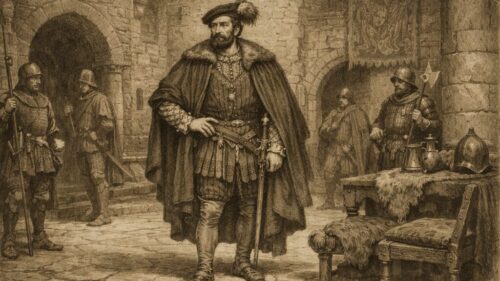
Silken Thomas was the sobriquet later attached to Lord Thomas Fitzgerald, who appears in the record as a central figure in the Kildare rebellion of the 1530s. He was then in his twenty-first year. In February 1534, before his father left Ireland for England, he was appointed vice-deputy. The appointment placed him in a position of authority during a period when the Fitzgerald affinity was under severe pressure, and it made his response to events in Dublin especially consequential.
Deputy Authority
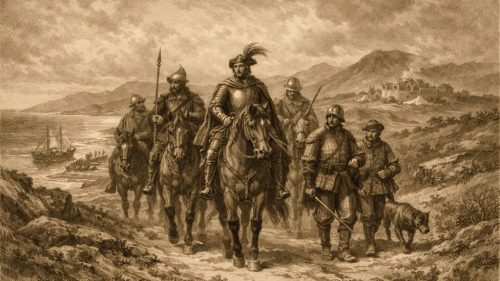
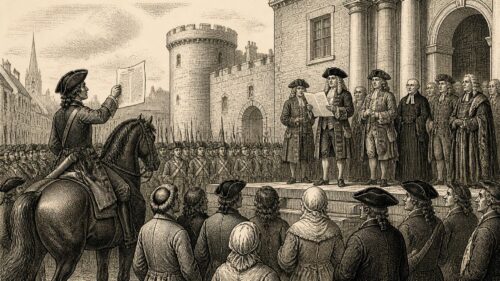
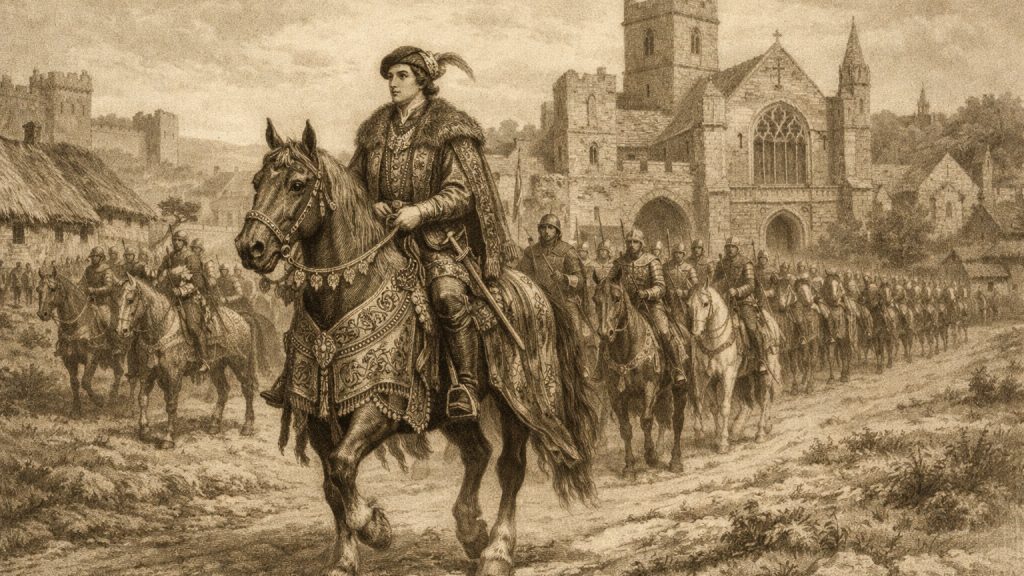
In early June, rumours spread in Ireland that his father had been executed in the Tower and that threats had been made against him and his uncles. Acting on what he took to be betrayal, Thomas summoned the council to St Mary’s Abbey in Dublin. On 11 June he rode into the city with a guard of 140 horsemen. At the council meeting he publicly repudiated his allegiance to Henry VIII and formally declared war on the government. He then returned to Oxmantown and placed himself at the head of his army.
The nickname by which he is remembered was connected with that display. One account explains that a Gaelic bard, de Nelan, gave him the sobriquet “Silken Thomas”. Another explains the name through the silken fringes or embroidered trappings associated with his horsemen. The sources agree that the title belonged to his public appearance and retinue, and that it became the name by which he was remembered.
War Begins
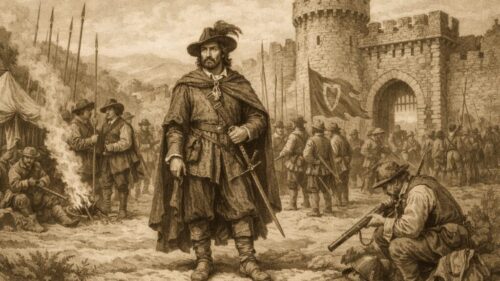
Once he had broken with the government, Thomas acted with speed. Dublin Castle, his chief object, was besieged on 27 July. His opponents withdrew into the castle or fled. Archbishop Allen was not among them. He had tried to escape by sea, but was driven ashore near Clontarf and brought to Artaine. There, according to the account preserved, Thomas ordered him to be brought before him. The servants who attended him then killed the archbishop. Thomas afterwards sent his chaplain to Rome to obtain absolution for the crime. The sources do not present this as a settled question of intent, but they do connect his camp with the murder and with the subsequent need for pardon.
During the same struggle he sought to strengthen his position. He was joined by several Irish chiefs, and he continued to oppose the Dublin government. His marriage is recorded as being to Frances, youngest daughter of Sir Adrian Fortescue. Later, when he saw his situation worsening, he sent her into England and declared that he would have nothing to do with English blood.
Fortunes Fade
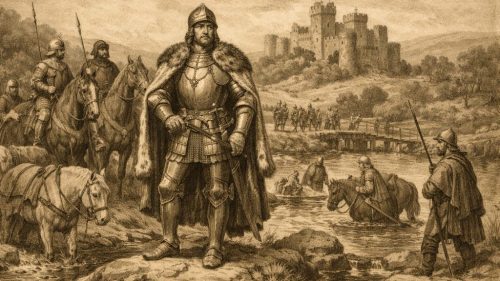
The military balance turned sharply against him. Maynooth, his principal fortress, fell in March 1535. The fall of that place was a serious blow to his cause. Afterward he saw his forces weaken and the support around him diminish. He still maintained sporadic resistance, but his prospects narrowed. He then wrote from O’Conor’s Castle to Lord Leonard Grey, apologising for what he had done and asking pardon “for his life and lands”. He also asked Grey to interest himself in his behalf. Grey guaranteed his personal safety and persuaded him to submit unconditionally to the king’s mercy.
Thomas was conveyed to England and sent prisoner to the Tower at the beginning of October. One later account says that he was left there for about eighteen months in great misery. A surviving letter attributed to him in the Tower asks for money to buy food and clothing, and describes his want of hose, doublet, shoes, shirt, and other garments. That letter provides a stark picture of his condition during imprisonment, without adding anything beyond the words of the text itself.
Tower End
The final act of the story came in 1537. The attainder of Thomas and his uncles was followed by their execution at Tyburn. The sources state that the whole six were executed there. That outcome ended the rebellion associated with his name and closed the career of the man remembered as Silken Thomas. The surviving record preserves his brief rise, his public defiance at St Mary’s Abbey, his involvement in the fighting around Dublin, his surrender to Lord Leonard Grey, and the grim end that followed in English custody.
Source References
Hover over a number to see the source. Select it to open the source.