Dan Breen
Early Life Dan Breen was born in Donohill, South Tipperary, in 1894. He grew up in poverty, and his father died young. He was working by the age of 11, and by 1913 he was working on the railways. During the 1913 Labour Lockout, he was in Dublin, where the events around him helped shape his political outlook. A later documentary account also says that he joined the Irish Republican Brotherhood in 1912, and that Sean Treacy swore him in. Soloheadbeg Action Breen later remembered his frustration that there was no uprising in Tipperary in 1916.
Dateline
Early Life
Dan Breen was born in Donohill, South Tipperary, in 1894. He grew up in poverty, and his father died young. He was working by the age of 11, and by 1913 he was working on the railways. During the 1913 Labour Lockout, he was in Dublin, where the events around him helped shape his political outlook. A later documentary account also says that he joined the Irish Republican Brotherhood in 1912, and that Sean Treacy swore him in.
Soloheadbeg Action
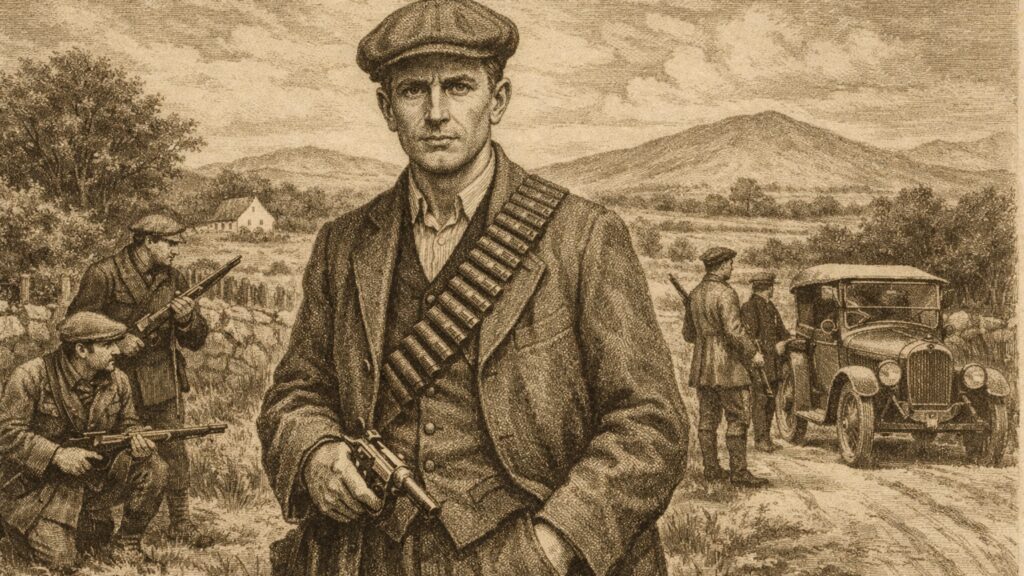
Breen later remembered his frustration that there was no uprising in Tipperary in 1916. On 21 January 1919, two RIC men escorted gelignite to Soloheadbeg quarry, and the IRA killed RIC men Pat O’Connell and James McDonnell there. After that, Breen, Sean Treacy, Sean Hogan and Seamus Robinson went on the run. The same account identifies Breen as one of the men linked with the opening violence of the Irish War of Independence.
Later Years
Breen and Treacy were wounded in the Knocklong train ambush, and later Breen was injured again but escaped in the Fernside House shootout in Dublin in October 1920.
Source References
Hover over a number to see the source. Select it to open the source.