Glenravel
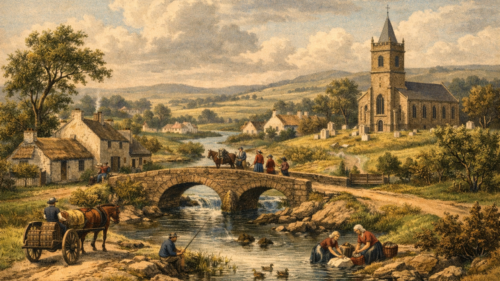
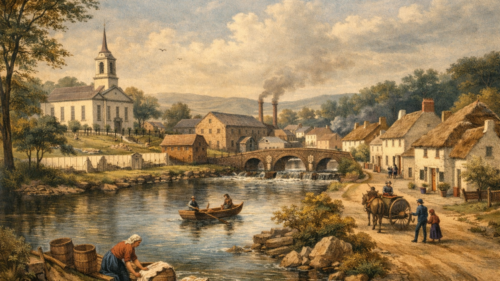
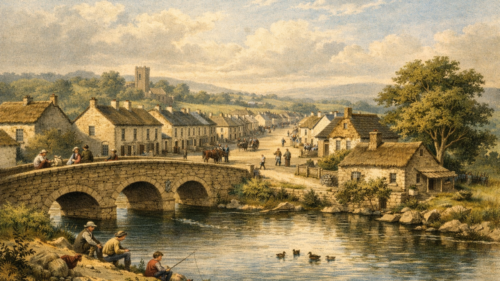
Glenravel is securely identifiable in historical reference works as a settlement and Roman Catholic district in County Antrim. In Samuel Lewis’s Topographical Dictionary of Ireland (1837), Glenravel appears as the head of a “union or district” in the R.C. divisions of the parish, with the chapel “at Glenravel, near the bridge over the Ravel.” Lewis also notes a Presbyterian place of worship at Clough and describes schools, sepulchral monuments, and ancient earthworks in the area, showing that Glenravel was already a named local centre rather than a purely modern label 1.
Dateline
Historical settlement
Glenravel is securely identifiable in historical reference works as a settlement and Roman Catholic district in County Antrim. In Samuel Lewis’s Topographical Dictionary of Ireland (1837), Glenravel appears as the head of a “union or district” in the R.C. divisions of the parish, with the chapel “at Glenravel, near the bridge over the Ravel.” Lewis also notes a Presbyterian place of worship at Clough and describes schools, sepulchral monuments, and ancient earthworks in the area, showing that Glenravel was already a named local centre rather than a purely modern label 1.
Name, spelling, and Irish form
The place-name authority Logainm records Glenravel in Irish as Gleann Fhreabhail, and lists it as a sub-unit within Antrim. That gives a reliable modern standard spelling and an official Irish-language form. The Irish form corresponds to the Ravel river valley, matching Lewis’s nineteenth-century description of the chapel “near the bridge over the Ravel” 2.
Historical development
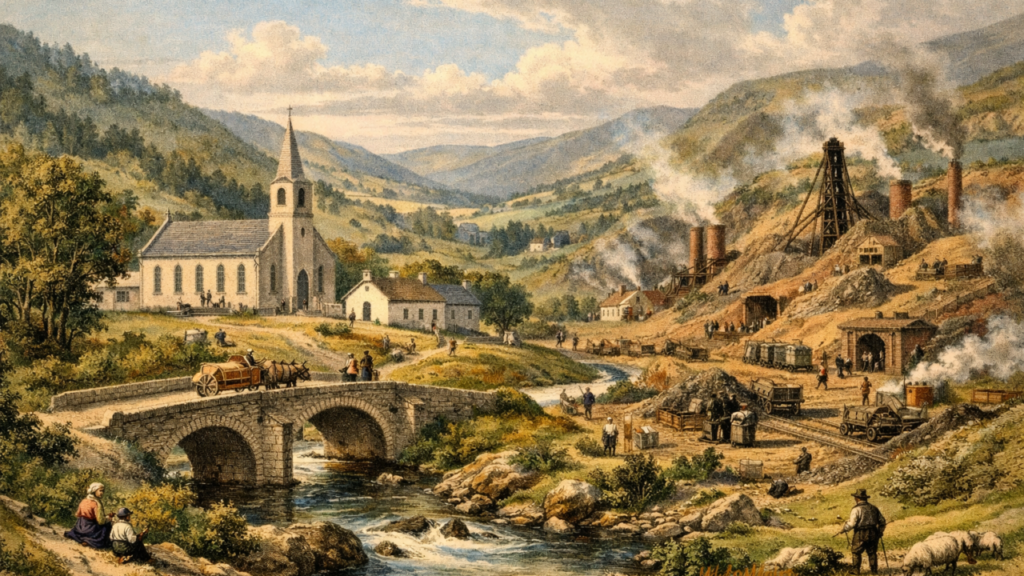
The historical record shows Glenravel as a parish-centered rural district with religious, educational, and industrial life. Lewis’s account places it in the parish system of County Antrim and mentions weaving, agriculture, and local antiquities, suggesting a mixed upland-and-valley economy in the early nineteenth century 1. Later local history emphasizes the iron-mining industry of Glenravel; a Glens of Antrim Historical Society article cites nineteenth-century mine development, and identifies Glenravel House and Edward Benn as part of that industrial history. This supports Glenravel’s later reputation as an iron-ore district as well as a parish settlement 3.
By the twentieth century, Glenravel remained a distinct named locality in County Antrim, and later Irish-language and local-heritage usage continued to treat it as a recognisable place name rather than a mere district label 23.