
Archived: 26 September 2026
Abstract
In 2009, Ireland’s property-led collapse prompted State intervention, including Anglo Irish Bank’s nationalisation, pension deductions and NAMA legislation. Employment and construction fell sharply, while unemployment and household insecurity increased. Voters approved Lisbon Treaty after EU guarantees addressed earlier concerns. Dissident republican killings tested Northern Ireland’s peace settlement, though leaders condemned them. Ryan and Murphy reports exposed institutional and clerical abuse, accelerating demands for accountability and reform. Civil partnership legislation was introduced but not enacted. H1N1 influenza and severe flooding compounded hardship, whereas Ireland’s Six Nations Grand Slam provided national celebration. The year reshaped relations between State, society, Church and Europe.
Read Article
Archived: 10 October 2026
Abstract
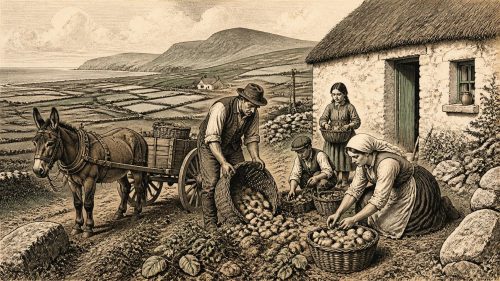
In 1877, Charles Stewart Parnell and Joseph Gillis Biggar used prolonged Commons obstruction to challenge Westminster’s neglect of Irish concerns, weakening Isaac Butt’s constitutional leadership. A poor potato harvest and falling agricultural prices increased hardship among tenants, especially in western districts, foreshadowing but not yet constituting the Land War. Dublin saw centralising prison reform, creation of the Science and Art Museum, and medical licences for Sophia Jex-Blake, Mary Edith Pechey and Louisa Atkins. Dom Pedro II of Brazil toured Ireland, highlighting international connections. Meanwhile, the Ballymena and Larne Railway opened goods traffic, illustrating uneven regional economic development within Ireland clearly.
Read Article

Archived: 10 October 2026
Abstract
In 1875, Irish politics exposed emerging strains within constitutional nationalism. John Mitchel’s two Tipperary victories, followed by parliamentary disqualification and his death, made elections vehicles for protest. Charles Stewart Parnell entered Parliament for Meath, while Joseph Biggar’s resistance to coercion foreshadowed new Westminster tactics. Thomas Croke became archbishop of Cashel, initially concentrating on diocesan affairs. Population decline, emigration and livestock dependence reflected post-Famine economic change, while Dublin’s whiskey fire revealed urban industrial danger. Railway expansion, Ireland’s first rugby international, and Hibernian Football Club’s foundation demonstrated widening commercial, sporting and migrant connections, anticipating later political and agrarian conflicts across Irish society.
Read Article
Archived: 10 October 2026
Abstract
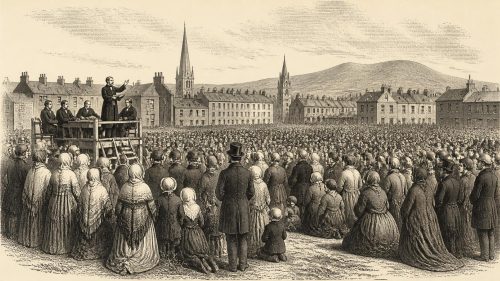
In 1859, post-Famine Ireland displayed religious revival, political restriction, migration and uneven modernisation. The Ulster Evangelical revival, rooted in earlier prayer meetings, reached peak visibility through mass gatherings, conversions and controversy, strengthening Protestant culture while provoking clerical criticism. Westminster elections operated under a narrow property franchise, leaving most people excluded. Dublin saw the launch of The Irish Times and the National Gallery’s foundation stone. The Pomona’s wreck off Wexford killed 424, highlighting emigrants’ perils. Railways reached Enniskillen and linked Tralee with Killarney, yet rural hardship deepened. Meanwhile, Fenian reorganisation abroad connected secret republicanism with Ireland’s diaspora and future political conflict.
Read Article
Archived: 11 October 2026
Abstract
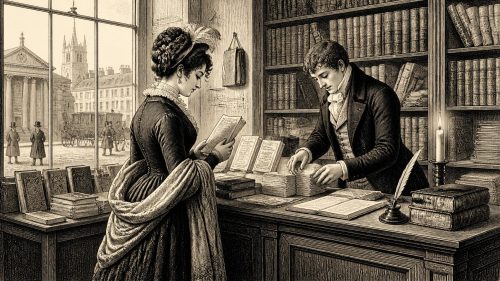
In 1806, five years after the Union, Ireland was governed increasingly through Westminster, while Catholic emancipation remained unrealised despite Lord Grenville’s sympathetic ministry. The United Kingdom election returned Irish MPs through restricted, patronage-driven constituencies, and wartime administration integrated Irish finance, trade and defence into imperial structures. Legislation regulated butter exports, excise, and charitable hospitals, illustrating expanding state oversight without comprehensive poor relief. Coastal defences reflected continuing fear of French invasion. Dublin retained elite social importance, marked by Arthur Wellesley’s marriage. Literary publishing proved significant: Sydney Owenson’s The Wild Irish Girl articulated Gaelic cultural survival, alongside satire and Ulster vernacular verse.
Read Article
Archived: 11 October 2026
Abstract
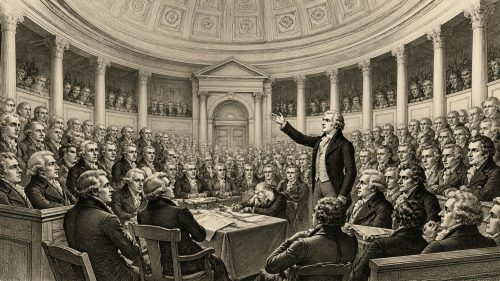
In 1800, Ireland remained a separate kingdom with its own parliament, courts and administration, but the Acts of Union passed in Dublin and London, ending its legislature from 1 January 1801. Cornwallis and Castlereagh secured support amid patronage, compensation and opposition led by Henry Grattan. The Union transferred limited Irish representation to Westminster, preserved the established Protestant church, and left Catholic emancipation unresolved. Post-rebellion repression continued, including Roddy McCorley’s execution, while food scarcity prompted controls on distilling and exports. Parliament also regulated trade, institutions and local improvements. Dublin retained political activity yet faced loss of its resident legislature and disruption.
Read Article
Archived: 11 October 2026
Abstract
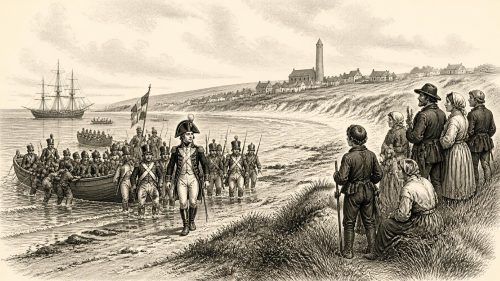
In 1798, the United Irishmen attempted a national revolution against British rule, seeking a representative Irish republic uniting Catholics, Presbyterians and reforming Anglicans with French support. Arrests, coercion and weak coordination fragmented the rising into regional conflicts. Wexford rebels captured Enniscorthy and Wexford town, but atrocities including Scullabogue accompanied fighting before defeat at Vinegar Hill. Ulster risings at Antrim and Ballynahinch failed. In August, General Humbert’s French force landed at Killala, won at Castlebar, then surrendered at Ballinamuck. Repression, executions and transportations followed. The rebellion’s violence and French intervention strengthened arguments for union, reshaping Irish politics and leaving divisive legacy.
Read Article
Archived: 11 October 2026
Abstract
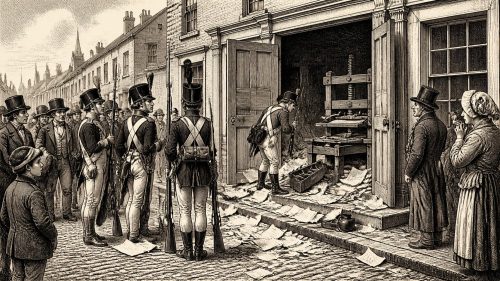
In 1797, Ireland faced mounting tension between the clandestine United Irishmen and a government anticipating rebellion and French invasion. General Gerard Lake’s Ulster disarmament campaign seized weapons, intimidated communities and weakened northern radical networks. After Monaghan militiamen implicated in United Irish activity were executed at Blaris, fellow soldiers destroyed Belfast’s Northern Star, silencing a major radical newspaper. Arrests also disrupted Cork organisers, while calls for constitutional conciliation gained little ground. William Orr’s contested conviction and hanging made him a powerful martyr. Meanwhile, parliamentary limitations and bank restrictions exposed wider political and economic insecurity, foreshadowing the 1798 rebellion in Ireland itself.
Read Article
Archived: 12 October 2026
Abstract
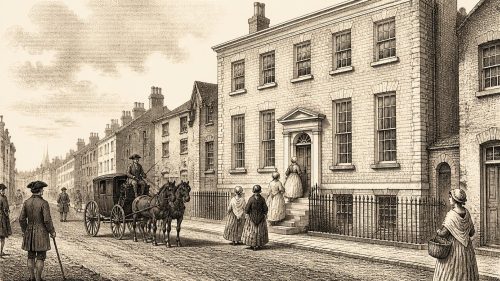
In 1765, Ireland’s contrasting institutions exposed mid-Georgian inequalities and efforts at control. Francis Seymour-Conway, earl of Hertford, became lord lieutenant as ministers sought resident rule, while parliamentary debates over septennial parliaments and grain exports revealed Ireland’s restricted autonomy under Poynings’ Law. The Whiteboy movement’s aftermath prompted coercive legislation, though the Whiteboy Act received assent only in 1766, reflecting conflicts over land, tithes and subsistence. In Dublin, Lady Arabella Denny founded the Magdalen Asylum for unmarried mothers and other stigmatised women, combining relief with discipline. In County Antrim, Gracehill’s Moravian church and Sisters’ House embodied ordered, transnational religious community in Ireland.
Read Article
Archived: 12 October 2026
Abstract
In 1764, Ireland's Protestant-led parliament enacted wide-ranging legislation on linen, fisheries, roads, urban regulation, prisons, trade and public order. Measures promoted manufacture, navigation and turnpikes while regulating coal, food, markets, charitable gifts and civic administration. Linen exports demonstrated economic importance but also dependence on imperial constraints. Acts concerning land burning, salmon, tithes, Protestant property and riots reflected rural conflict, environmental pressures and the continuing Whiteboy movement. Government operated through Dublin Castle, Lord Lieutenant Northumberland and powerful undertakers, as George Stone and Henry Boyle died. Cultural developments included Old Moore's Almanac, William Ashford's arrival, and births of Emmet, O'Conor and Hope.
Read Article

Archived: 12 October 2026
Abstract
In 1749, Irish tensions appeared in political print, official measures, economic debate and religious conflict. Dublin apothecary Charles Lucas used The Censor and civic addresses to challenge municipal corruption, defend Protestant constitutional rights and question Dublin Castle’s authority. Parliament denounced his publications as seditious, ordered his arrest, and forced his flight. Government proclamations addressed quarantine, coin clipping and rural crime, reflecting administrative reliance on local institutions and military power. Thomas Waite’s account emphasised linen, restricted woollen trade and military spending, while improvement schemes favoured elite direction. In Cork, Charles Wesley’s Methodism provoked unrest, exposing intersecting confessional, civic and social rivalries.
Read Article
Archived: 13 October 2026
Abstract
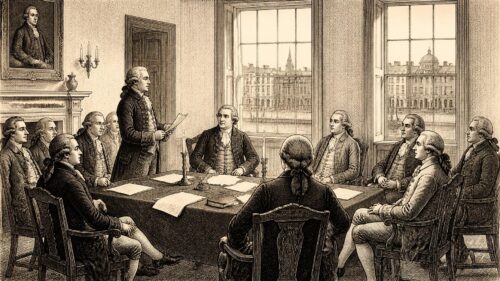
In 1725, Ireland’s significance lay in institutional and political tensions rather than a single decisive event. Lord Carteret suspended William Wood’s contested halfpence patent, demonstrating the force of opposition mobilised by Jonathan Swift while leaving Ireland subordinate to Westminster. His administration exposed a treasury deficit and renewed reliance on parliamentary patronage. The Synod of Ulster created the Presbytery of Antrim for non-subscribing ministers, deepening Presbyterian divisions over conscience and confessional authority. Dublin’s first surviving Grand Lodge meeting recorded freemasonry’s organisation. These developments unfolded within a rural, unequal Protestant state, where Catholics and Presbyterians faced disabilities and economic life remained vulnerable.
Read Article
Archived: 13 October 2026
Abstract
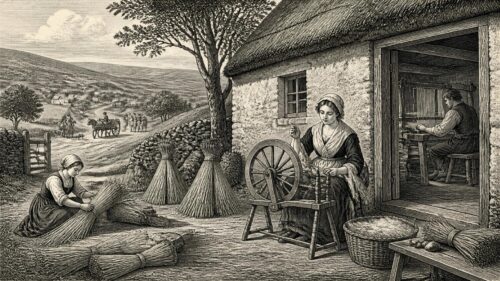
In 1711, Ireland experienced political division, legal persecution, economic initiative and insecurity. Under Queen Anne’s Tory administration, Lord Lieutenant Ormond and Lord Chancellor Phipps reshaped offices, while Dublin’s disputed mayoral succession exposed conflict between Castle authority and civic self-government. At Carrickfergus, eight Islandmagee women, and later William Sellor, were convicted of witchcraft, Ireland’s last known proceedings under the statute. Parliament appointed trustees for linen and hemp manufacture, formalising state support for an expanding export industry. Wartime proclamations addressed naval recruitment, privateers and quarantine. Late-year orders against cattle houghing, alongside Catholic disarmament, reflected rural conflict, property fears and confessional security policies.
Read Article
Archived: 13 October 2026
Abstract
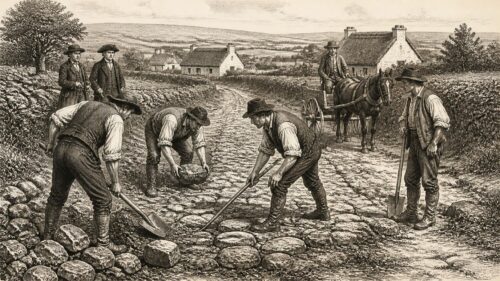
In 1710, Ireland’s Protestant parliament, operating under Queen Anne amid changing Whig and Tory influence, passed measures affecting revenue, property, trade and local administration. Its roads act required rural householders and tenants to provide up to six days’ unpaid labour, reflecting reliance on communal maintenance rather than modern infrastructure. Legislators promoted linen, regulated cattle, rents and timber, and imposed duties on consumer goods. Dublin Castle also suppressed Catholic assemblies in Meath, punished damage to William III’s statue, pursued tobacco thieves, and managed Palatine refugee settlement. Quarantine regulations for Baltic shipping showed Ireland’s exposure to continental war, migration, commerce and disease.
Read Article

Archived: 14 October 2026
Abstract
In 1698, enforcement of the Bishops’ Banishment Act required Catholic bishops, regular clergy and religious superiors to leave Ireland by 1 May, weakening Catholic leadership while secular priests often continued clandestine ministry. Hundreds of regular clergy were transported, though enforcement varied. The policy entrenched Protestant rule after the Williamite war without creating religious equality. In April, Protestant lawyer and parliamentarian William Molyneux published The Case of Ireland, challenging Westminster’s authority to bind Ireland and linking constitutional autonomy to disputes over appeals and trade. English concern over Irish woollens foreshadowed restrictions. Thomas Molyneux’s Giant’s Causeway observations connected Ireland to scientific inquiry.
Read Article
Archived: 14 October 2026
Abstract
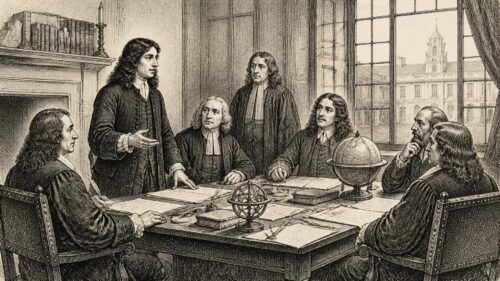
In 1683, Restoration Ireland reflected vigilant government, Protestant consolidation, Catholic resilience and emerging scientific enquiry. Following England’s Rye House Plot, Lord Deputy Arran and Ormond monitored suspected dissenters, linking officeholding to Church of Ireland conformity; Richard Talbot’s return also signalled Catholic court influence. Randal MacDonnell’s death ended the Antrim marquessate amid indebted estate arrangements. William Molyneux convened Dublin’s first philosophical society, promoting observation and practical knowledge. Archbishop Boyle’s new Blessington church embodied Anglican landlord power, while Dominic Maguire’s selection as Catholic primate demonstrated ecclesiastical continuity. Trade remained pastoral, Greatrakes died, and the severe winter threatened livelihoods across the island’s communities.
Read Article
Archived: 14 October 2026
Abstract
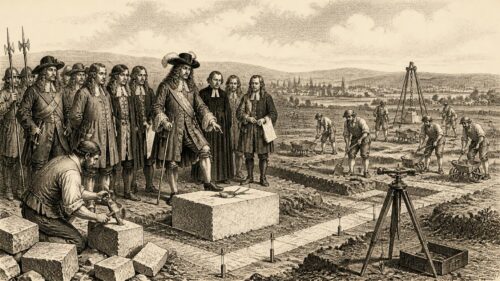
In 1680, Popish Plot fears shaped Irish government despite no rebellion. Ormond sought English approval for proposed legislation, including measures against Catholic clergy, but no parliament met. He laid the foundation stone of the Royal Hospital at Kilmainham, a home for retired soldiers. At Dundalk, the prosecution of Archbishop Oliver Plunkett collapsed when witnesses failed to appear; he was nevertheless sent to London, while Archbishop Peter Talbot died untried in Dublin prison. Gaelic learning endured through the copying of Leabhar Cloinne Aodha Buidhe in Antrim. Borlase’s history of 1641 reinforced Protestant fears, demonstrating how memory, coercion and institutions governed Ireland.
Read Article

Archived: 14 October 2026
Abstract
In 1664, Restoration Ireland was reshaped through administrative and cultural initiatives rather than decisive events. Dublin Corporation divided the marshy St Stephen’s Green common into ninety-six building plots, retaining a reduced central green to generate revenue. Land settlement negotiations continued without resolution, as Ormond and rival claimants sought to reconcile confiscated estates; legislation followed in 1665. Londonderry Corporation gained responsibility for its Foyle port, while Portmore Castle symbolised elite estate improvement in Antrim. Sir James Ware published Latin annals of Ireland, and Roger Boyle’s plays reached London. These developments strengthened corporate and proprietary control amid Protestant ascendancy and Catholic exclusion.
Read Article
Archived: 16 October 2026
Abstract
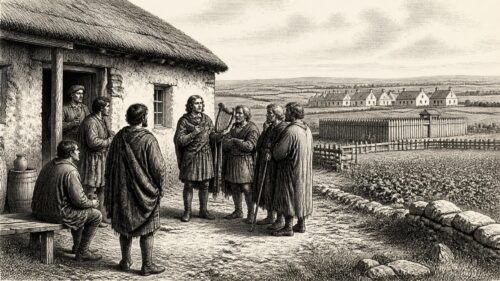
In 1615, Chichester’s government confronted the abortive Macosquin conspiracy amid Ulster Plantation’s insecure transformation. Alleged Gaelic plotters lacked arms, coordination and foreign support, yet officials feared renewed war and used torture, trials and executions; eleven of seventeen defendants were acquitted. Plantation surveys revealed incomplete settler obligations and continuing dependence on Irish tenants, while landholding and local life were nonetheless changing profoundly. The final 1613 parliament passed a highways measure before dissolution, as proclamations regulated markets and currency. Church convocation adopted 104 strongly Calvinist Irish Articles, probably shaped by James Ussher, while visitation exposed the established church’s weak reach. Coercion persisted.
Read Article

Archived: 17 October 2026
Abstract
In 1590, Hugh Roe MacMahon’s execution after a manipulated Monaghan trial signalled the Tudor government’s determination to replace Gaelic lordship with courts, garrisons and Crown-controlled landholding. Sir Richard Bingham’s campaigns in Connacht and Breifne secured hostages, devastated O’Rourke territory and established a strategic fort, though resistance revived. In Tyrconnell, Donnell O’Donnell’s death at Doire Leathan strengthened Hugh Roe’s eventual claim while he remained imprisoned. Sorley Boy MacDonnell died, prompting renewed territorial conflict, and Hugh O’Neill eliminated a dynastic rival. Despite warfare, learned culture and commercial development persisted. Ireland remained politically fragmented, as Crown expansion encountered resilient local powers across Ireland.
Read Article
Archived: 17 October 2026
Abstract
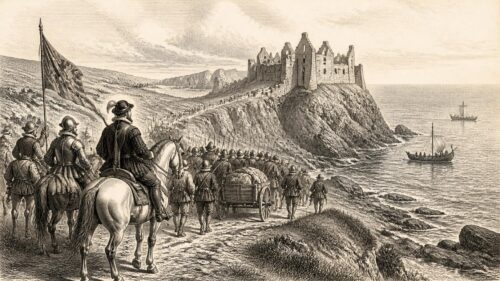
In 1584 Sir John Perrot became lord deputy, pursuing Elizabethan efforts to convert military victory into durable government. He appointed Richard Bingham in Connacht and John Norris in Munster, where the Peyton Survey prepared forfeited Desmond lands for plantation amid famine and displacement. Negotiations revived towards the Composition of Connacht, while O’Reilly territory was organised as County Cavan. Perrot captured Dunluce but failed to subdue Sorley Boy MacDonnell or secure Ulster. Dermot O’Hurley’s execution highlighted confessional repression. Galway extended harbour defences, and Stanihurst published Latin history. Crown authority expanded through surveys, counties and garrisons, yet remained contested, costly and insecure.
Read Article

Archived: 19 October 2026
Abstract
Ireland in 1503 was shaped by overlapping lordships, kin groups, towns and church jurisdictions rather than a national government. The death of Seán Mag Uidhir, lord of Fermanagh, at Enniskillen on 26 March provides the year’s most precisely dated event. Annalistic accounts also record Kildare’s northern campaign, conflict among O’Neill and O’Donnell rulers, warfare in Connacht and important deaths elsewhere. Castles, marriages, fosterage, military followings and control of routes underpinned political authority. The evidence reveals a landscape of regional bargaining and rivalry, where changing leadership could disturb alliances and alter relations between Gaelic rulers and the English crown’s limited administration.
Read Article
Archived: 24 October 2026
Abstract
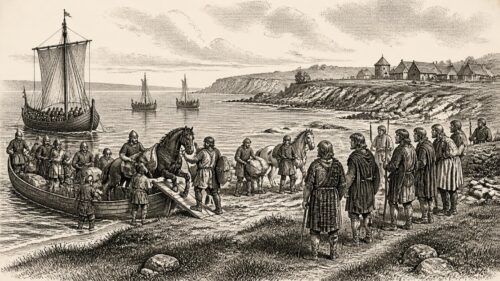
In May 1315 Edward Bruce, brother of Robert Bruce, landed near Larne with a Scottish army, exploiting divisions among Irish rulers, Anglo-Irish magnates and officials. Supported by some Ulster Gaelic lords, he claimed Irish kingship, captured Carrickfergus town and besieged its castle. His forces devastated settlements and supplies, defeated Richard de Burgh at Connor, and advanced into Meath, where opposition faltered amid local rivalries. The invasion also intensified Connacht dynastic conflict. Neither Ireland nor Ulster was unified behind Bruce: Dublin, Trim and Carrickfergus castle remained hostile. Warfare, crop destruction, requisitioning and weather worsened the Great Famine, causing hardship and disorder.
Read Article

Archived: 26 September 2026
Abstract
In 1099, Ireland remained politically divided as Muirchertach Ua Briain and Domnall Ua Lochlainn confronted one another at Sliabh Fuaid. Armagh brokered a year-long truce, preventing battle without resolving their rivalry. Domnall then defeated Ulaid at Cráeb Telcha, took hostages, burned its camp and felled its inauguration tree. Midland warfare killed Tethba leaders, while Airthir’s king died. A nationwide epidemic and fires at Kells, Kildare and Ardstraw compounded disruption. Church institutions continued through episcopal appointment and clerical deaths. Ireland’s communities and Dublin’s trade sustained wider Irish Sea connections, including Norse activity and Welsh exiles. The year combined restraint with violence.
Read Article

Archived: 6 October 2026
Abstract
Around 30,170 BCE, Ireland lay in the Late Pleistocene, but no precise historical event can be reconstructed. Derryvree, County Fermanagh, preserves freshwater organic sediments between glacial tills, dated broadly to 34,950–29,750 BCE. Mosses, sedges, aquatic plants and cold-adapted insects indicate locally ice-free, treeless wetlands amid unstable periglacial conditions. Comparable Fermanagh deposits suggest intermittent open habitats, while advancing ice repeatedly transformed landscapes. Castlepook Cave's animal remains, including reindeer, mammoth, bear and hyaena, demonstrate varied Ice-Age fauna but cannot represent one moment. A possibly tool-marked reindeer bone hints at early human presence, yet proves neither settlement nor occupation. Environmental evidence is strongest.
Read Article

Archived: 6 October 2026
Abstract
30,187 BCE is a modern label within climatically unstable Marine Isotope Stage 3, not a recoverable Irish year. Derryvree, County Fermanagh, preserves freshwater silts beneath later glacial till, indicating treeless, cold wetland habitats with hardy plants and local biological productivity between ice advances. Castlepook Cave, County Cork, contains diverse late-Pleistocene fauna, including mammoth, reindeer, giant deer, hyaena and horse, though remains need not be contemporaneous. Ice expansion later erased much evidence. A marked reindeer femur may indicate Upper Palaeolithic butchery, but cannot demonstrate settlement or permanent population. No named communities, political structures, culture, routes or beliefs can be securely reconstructed.
Read Article

Archived: 5 October 2026
Abstract
At 30,260 BCE, Ireland lay in a volatile later MIS 3 glacial environment, approaching maximum ice cover but not uniformly frozen. Changing ice margins, sea levels and climates created open tundra, wetlands and hazardous routes for animals and possible people. Castlepook Cave in County Cork preserves a long-accumulated MIS 3 fauna, including mammoth, giant deer, reindeer, hyena and wolf, reflecting carnivore activity rather than a single occupation. Its dates span millennia, preventing reconstruction. An incised reindeer femur may record stone-tool butchery around 31,000 BCE, suggesting fleeting Upper Palaeolithic human presence, but no settlement, tools, hearths or social history is evidenced.
Read Article
Archived: 4 October 2026
Abstract
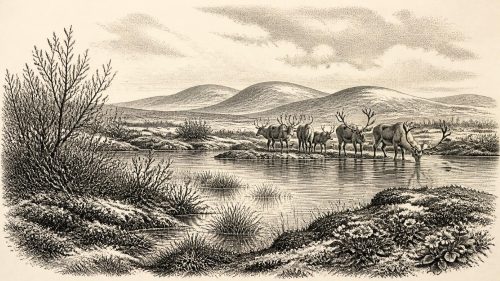
Labelled 30,275 BCE, this interval cannot be tied to a specific Irish event or year. Derryvree, County Fermanagh, preserves freshwater organic deposits between glacial tills, indicating a locally ice-free or ice-margin phase within MIS 3, broadly dated to 34,950–29,750 BCE. Its plants and animals reveal cold, open tundra wetland, not permanent ice cover. Castlepook Cave, County Cork, documents fauna including reindeer, mammoth and giant deer, but not a single contemporaneous community. A butchered reindeer bone suggests human visits, yet no evidence demonstrates settlement. The record instead reveals dynamic, biologically active Ireland, while requiring caution over climate, geography and human activity.
Read Article
Archived: 4 October 2026
Abstract
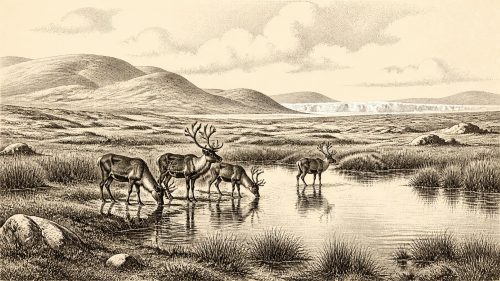
30,297 BCE is an imprecise modern label for a Late Pleistocene interval, reconstructed through deposits, fauna and probabilities rather than records. At Derryvree, County Fermanagh, freshwater organic sediments between tills show a cold, treeless wetland phase between glaciations; radiocarbon dates provide only broad calibrated ranges. Castlepook Cave, County Cork, preserves diverse cold-stage fauna, including mammoth, reindeer, hyaena and lemmings, although its accumulated bones cannot represent one moment. A possibly cut-marked reindeer bone suggests Upper Palaeolithic visitors may have reached Ireland, but proves neither settlement nor culture. No evidence supports agriculture, permanent communities, trade, institutions or a simple permanent land bridge.
Read Article
Archived: 2 October 2026
Abstract
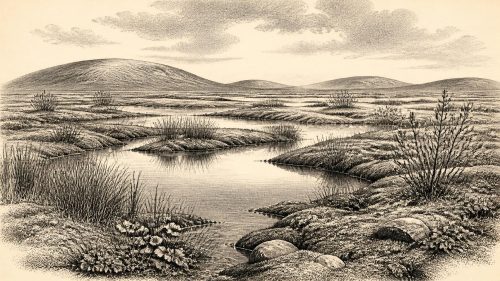
At the modernly assigned date of 30,379 BCE, Ireland has no year-specific historical record. Derryvree, County Fermanagh, preserves organic freshwater sediments between two glacial tills, dated broadly to 34,950–29,750 BCE. They show that north-central Ireland was locally ice-free during Marine Isotope Stage 3 before renewed glaciation buried the wetland. Macrofossils indicate shallow water, mossy margins, sedges and sparse arctic-alpine tundra vegetation under severe periglacial conditions. Comparable deposits confirm changing regional ice cover. Castlepook Cave records cold-stage fauna over millennia, but not a contemporary local census. Possible early human evidence remains uncertain; no settlements, systems or year-specific events can be reconstructed.
Read Article

