306th Century Ireland BCE

Archived: 29 September 2026
Abstract
At roughly 30,501 BCE, Ireland lay within the climatically unstable Late Pleistocene, not a precisely knowable historical year. Derryvree, County Fermanagh, preserves freshwater sediments between glacial tills, indicating a temporary ice-free, periglacial landscape of wetlands, open ground and tundra vegetation. Its radiocarbon date spans a broad calibrated range, underscoring chronological uncertainty. Ice extent varied regionally before the later Last Glacial Maximum. Castlepook Cave, County Cork, contains mixed faunal remains, including mammoth, giant deer, reindeer, bear and hyaena, from different periods. A possibly cut-marked reindeer bone suggests brief human activity, but no settled population, farming, society or permanent occupation is established.
Read Article

Archived: 29 September 2026
Abstract
Around 30,502 BCE, Ireland was in the Late Pleistocene, not a period of recorded history. Derryvree, County Fermanagh, provides key evidence: freshwater sediments, dated broadly to this interval, formed between glacier advances. Their plants and insects indicate cold, treeless tundra with shallow water, mosses, sedges and dwarf shrubs. Castlepook Cave, County Cork, preserves Ice-Age animal remains, including mammoth, reindeer, giant deer, predators and cold-adapted species, though not as a single community. No secure evidence proves human occupation at this date; possible earlier visits remain uncertain. Environmental change, shifting ice, low sea levels and intermittent habitats define this sparse prehistoric landscape.
Read Article

Archived: 29 September 2026
Abstract
30,503 BCE is best understood through broad calibrated ranges rather than an annual event. Derryvree, County Fermanagh, preserves freshwater silts between glacial tills, indicating treeless tundra wetlands of sedges, mosses, bogbean, dwarf shrubs and cold-adapted insects during the Middle Midlandian. Ireland experienced shifting ice, permafrost, low sea levels and seasonal ice-free terrain before the Last Glacial Maximum. Castlepook Cave in County Cork records a diverse, changing fauna including mammoth, reindeer, giant deer and predators. No secure evidence establishes human settlement; a possibly cut-marked reindeer bone suggests only a tentative brief visit. The period is an environmental history from geological evidence.
Read Article
Archived: 29 September 2026
Abstract
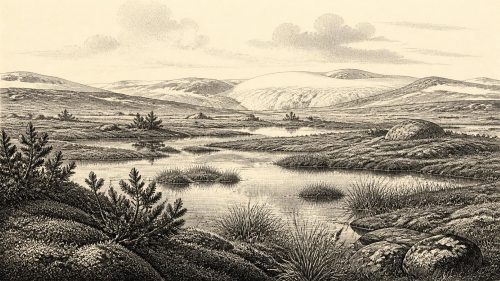
Around 30,504 BCE, Ireland's history is reconstructed from uncertain environmental and archaeological evidence. At Derryvree, County Fermanagh, organic sediments between glacial tills, including radiocarbon sample BIRM-166, record a cold, treeless freshwater wetland formed during an ice-free interval before later ice burial. Mosses, sedges, herbs and aquatic plants indicate periglacial conditions. Castlepook Cave, County Cork, preserves remains of cold-adapted mammals, though its disturbed deposits cannot define a single community. A marked reindeer bone may indicate Upper Palaeolithic human activity around 33,000 years ago, but proves neither permanent settlement nor continuous population. Ireland was a dynamic Pleistocene landscape, not a documented society.
Read Article

Archived: 29 September 2026
Abstract
At approximately 30,505 BCE, Ireland has no recoverable annual history, but Derryvree, County Fermanagh, preserves evidence of an ice-free interval during Marine Isotope Stage 3. Freshwater silts and organic deposits, enclosed between tills, indicate that glacier ice retreated locally before returning. Radiocarbon dating broadly places the deposit within the relevant millennia. Mosses, sedges, herbs, insects and shallow-water remains portray an open, cold, waterlogged, periglacial landscape, not woodland. Pleistocene fauna demonstrate wider ecological connections, but evidence for human visits remains uncertain; securely dated human activity is much later. Derryvree therefore reveals environmental change, whilst precluding claims about communities, politics or events.
Read Article

Archived: 29 September 2026
Abstract
Around 30,506 BCE, Ireland experienced unstable Late Pleistocene conditions rather than a datable historical year. At Derryvree near Maguiresbridge, Fermanagh, freshwater silts between glacial tills record an ice-free interval before renewed glaciation. Pollen, seeds, mosses and beetles reveal treeless tundra with sedges, dwarf willow, mountain avens, bogbean, pools and wet ground, supporting seasonal life despite severe winters. Castlepook Cave in Cork preserves remains of mammoth, reindeer, giant deer, hyaena and other cold-adapted animals. A possibly butchered reindeer bone may indicate an early human visit, but cannot prove settlement. These fragmentary deposits demonstrate changing environments, not continuous occupation or precise events.
Read Article

Archived: 29 September 2026
Abstract
Around 30,507 BCE, Ireland has no recoverable record of human events; the date denotes a broad later Pleistocene interval. At Derryvree near Maguiresbridge, Fermanagh, organic silts between glacial tills preserve evidence of an ice-free or locally ice-free periglacial wetland. Plants, mosses, pollen and insects indicate treeless tundra, freshwater pools and severe seasonal conditions. Later ice sheets altered Ireland. Castlepook Cave, Cork, contains diverse cold-stage animal remains, including mammoth, reindeer and hyaena, but its deposits span long periods. A possibly cut-marked reindeer bone suggests early human presence, yet proves neither settlement nor continuity. Environmental evidence remains stronger than evidence for people.
Read Article

Archived: 29 September 2026
Abstract
Around 30,508 BCE, Ireland was entering severe Late Pleistocene glaciation, though ice extent and dating remain uncertain. Derryvree, County Fermanagh, preserves moss-rich freshwater sediments between tills, proving an interval of treeless, cold wetland habitat between glacial advances. Its radiocarbon result cannot date a single calendar year. Castlepook Cave, County Cork, produced cold-climate animal remains, including mammoth, reindeer and hyaena, and a possibly butchered reindeer bone suggesting, but not confirming, early human visits. No evidence establishes permanent settlement, politics or culture. Lower seas altered routes without guaranteeing a land bridge. Ireland was a precarious ecological frontier shaped by repeatedly advancing ice.
Read Article
Archived: 29 September 2026
Abstract
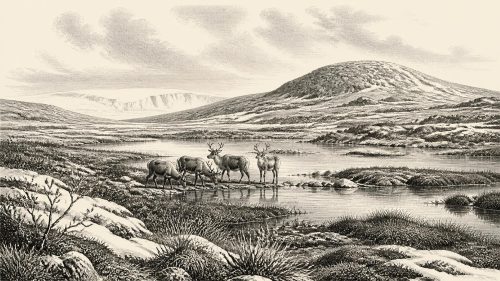
Around 30,509 BCE, a label rather than a precise date, Ireland experienced unstable cold conditions before the Last Glacial Maximum. At Derryvree, County Fermanagh, freshwater silts and organic deposits between glacial tills show that local ice-free wetland supported tundra plants and insects during a limited interval. Castlepook Cave, County Cork, preserves bones of mammoth, giant deer, reindeer, bears, wolves, foxes and hyaenas, documenting changing Pleistocene fauna rather than a single ecosystem. A possibly butchered reindeer bone suggests a brief human visit, but permanent settlement remains unproven. Evidence reveals shifting landscapes and animals, not societies, institutions or a detailed year-by-year history.
Read Article
Archived: 28 September 2026
Abstract
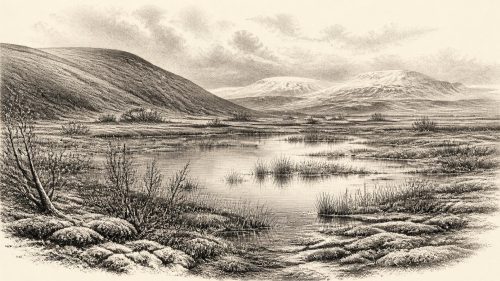
About 30,510 BCE, Ireland lay within the fluctuating cold of Marine Isotope Stage 3, approaching the Last Glacial Maximum. It was not uniformly ice-covered: organic sediments at Derryvree, Fermanagh, between glacial tills, record an ice-free freshwater wetland with mosses, sedges and cold-adapted insects. Similar regional deposits indicate open, varied tundra or steppe-tundra habitats. Castlepook Cave, Cork, preserves a mixed record of Ice Age mammals, including mammoth, reindeer, giant deer, predators and small cold-climate species, demonstrating intermittent faunal connectivity. A possibly cut-marked reindeer bone may indicate brief human presence, but remains disputed. Evidence supports neither settlement, farming, trade nor political organisation.
Read Article
Loading more articles…




