307th Century Ireland BCE
Archived: 27 September 2026
Abstract
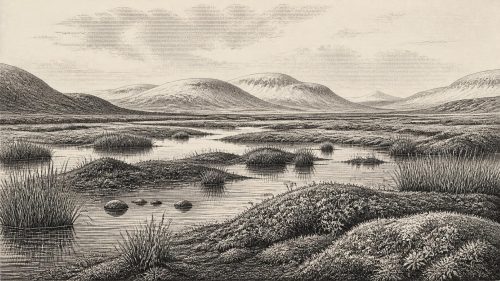
The nominal date 30,601 BCE cannot identify an Irish event, but falls within the broad age range of Derryvree’s freshwater deposits in modern County Fermanagh. Sediments between two till layers record a cold, locally ice-free interstadial wetland before renewed glaciation. Mosses, sedges, bogbean and Arctic-alpine plants indicate open, treeless tundra-like conditions, although seasonal liquid water sustained life. Cave remains at Castlepook reveal varied Ice-Age fauna, but accumulated over long periods and cannot reconstruct one moment. A cut-marked reindeer bone may indicate human activity, yet proves neither settlement nor society. Environmental change, culminating in ice-sheet expansion, is the period’s clearest story.
Read Article
Archived: 27 September 2026
Abstract
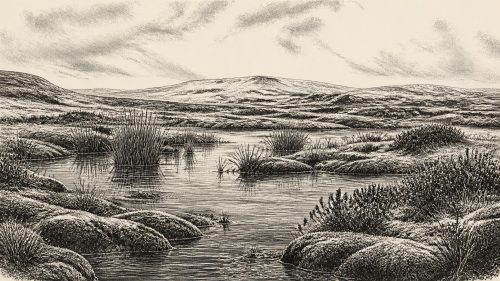
Thirty thousand six hundred and two BCE denotes an uncertain Late Pleistocene horizon, rather than a documented Irish year. At Derryvree, County Fermanagh, organic freshwater sediments, trapped between glacial tills, date broadly to this period and demonstrate a local ice-free wetland phase. Pollen, plants and insects indicate treeless, cold, waterlogged terrain with open water and sparse vegetation. Southern cave deposits record mammals including mammoth, reindeer, giant deer, hyaena and wolf, but not a simultaneous fauna. A possible butchered reindeer bone suggests early human presence, without proving settlement. Climate, shifting ice and ecology dominate the fragmentary evidence before the glacial maximum.
Read Article
Archived: 27 September 2026
Abstract
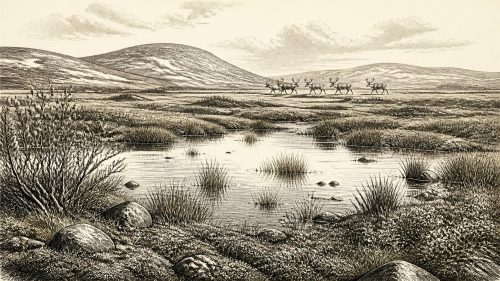
Thirty thousand six hundred and three BCE is not archaeologically identifiable as a single Irish year, but falls within a fluctuating Late Pleistocene interval. Derryvree, County Fermanagh, preserves freshwater silts beneath later ice, indicating open tundra-steppe vegetation, wetlands and seasonal cold conditions. Castlepook Cave, County Cork, contains Marine Isotope Stage 3 remains of mammoth, reindeer, giant deer, predators and other fauna, demonstrating ecological links with Ice Age Europe. A marked reindeer femur may represent early human butchery, though no associated tools or settlement exist. Ireland was neither settled nor uniformly frozen: varied habitats later suffered extensive glacial transformation, leaving evidence.
Read Article
Archived: 27 September 2026
Abstract
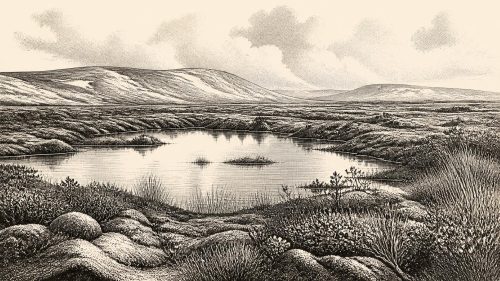
Thirty thousand six hundred and four BCE is not archaeologically recoverable as a specific Irish year, but falls within late Marine Isotope Stage 3. Derryvree, County Fermanagh, preserves freshwater sediments between glacial tills, radiocarbon dated broadly to 35,050–29,750 BCE. Its pollen, plants and insects indicate a cold, open, wetland tundra mosaic during an interval between ice advances. Castlepook Cave, County Cork, records reindeer, mammoth, giant deer and predators from the wider period, not a single contemporary fauna. A cut-marked reindeer bone may indicate Upper Palaeolithic human activity, but cannot demonstrate settlement. Environmental change, ice expansion and fragmentary preservation define history.
Read Article
Archived: 27 September 2026
Abstract
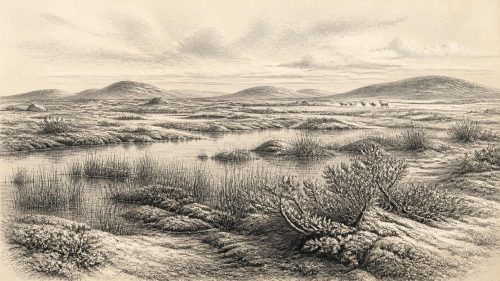
Thirty thousand six hundred and five BCE is not recoverable as an Irish year, but falls within the volatile Marine Isotope Stage 3. Derryvree, County Fermanagh, preserves freshwater sediments between glacial tills, indicating a temporary local ice-free, treeless periglacial wetland with sedges, mosses, bogbean and cold-adapted plants. Castlepook Cave, County Cork, provides faunal evidence including mammoth, reindeer, giant deer, hyaena and lemmings, though its mixed deposits do not represent one moment. A marked reindeer femur may suggest butchery, but cannot establish occupation. Later glaciation and sea-level change erased evidence. Ireland was a changing, open Ice Age environment, not settled country.
Read Article

Archived: 27 September 2026
Abstract
Around 30,606 BCE, Ireland lay within the unstable late-Pleistocene climate of Marine Isotope Stage 3. Derryvree, County Fermanagh, preserves freshwater sediments between glacial tills, indicating a temporary ice-free wetland with cold-adapted, open vegetation. Castlepook Cave in County Cork demonstrates that mammoth, reindeer, giant deer, predators and other cold-steppe fauna inhabited parts of Ireland during this broader period. Growing ice, permafrost, altered drainage and lower sea levels created changing routes and habitats. Possible early human visits remain unproven, despite a potentially cut-marked reindeer bone. No evidence supports permanent settlement, social institutions or cultural identities. Surviving evidence is chiefly geological and ecological.
Read Article
Archived: 27 September 2026
Abstract
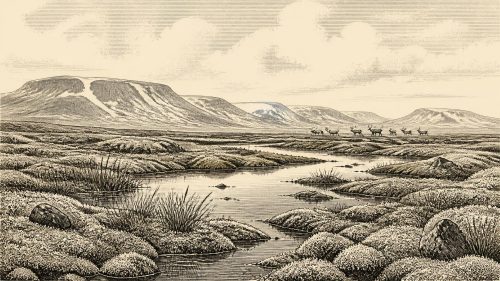
About 30,607 BCE, Ireland lay within a cold, unstable Late Pleistocene landscape, but the date is a modern filing device rather than a precise historical year. Radiocarbon, stratigraphy and environmental records indicate variable ice growth, lowered seas, altered coasts and open periglacial habitats. Inter-till deposits at Derryvree, County Fermanagh, preserve freshwater plants and cold-adapted insects, demonstrating local non-glacial intervals. Cave finds confirm large mammals, including reindeer and mammoth, occurred in Ireland. A marked reindeer femur from Castlepook Cave may indicate human butchery around 31,000 BC, yet cannot prove settlement, society or continuous occupation. Evidence remains fragmentary, local and uncertain overall.
Read Article
Archived: 27 September 2026
Abstract
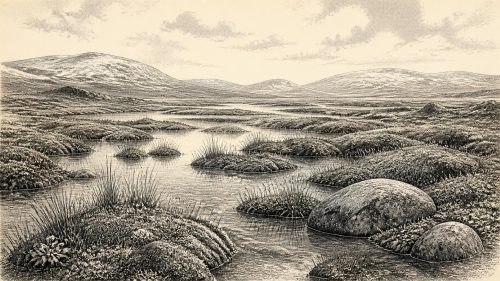
30,608 BCE is not a recorded Irish year but falls within a broad Late Pleistocene climatic interval. At Derryvree, County Fermanagh, freshwater silts and organic deposits, bracketed by glacial tills, indicate a temporary ice-free, cold wetland environment before renewed glaciation. BIRM-166 radiocarbon evidence calibrates broadly, preventing precise dating or island-wide conclusions. Vegetation suggests treeless tundra, pools and wet ground. Castlepook Cave fauna, including mammoth, reindeer, giant deer and hyaena, reveal open-country habitats, though dating and deposition remain uncertain. A possibly tool-marked reindeer bone hints at human presence, not settlement. Changing ice and sea levels continually reshaped Ireland’s landscapes over millennia.
Read Article

Archived: 27 September 2026
Abstract
30,609 BCE is not a recoverable Irish historical year but falls within a broad calibrated range for Derryvree, County Fermanagh. Sediments between two till sheets show an ice-free interval during Marine Isotope Stage 3, when treeless, waterlogged tundra supported pools, mosses, insects and seasonal wildlife. Crag Cave records intermittent milder conditions, while Castlepook Cave preserves diverse cold-adapted fauna, including mammoth, reindeer and hyaena. A possibly cut-marked reindeer bone may indicate human carcass processing, but proves neither settlement nor culture. Lower sea levels altered routes as ice expanded. These fragmentary archives describe climatic change, not directly an ancient Irish society there.
Read Article

Archived: 27 September 2026
Abstract
At Derryvree, County Fermanagh, freshwater silts sealed between glacial tills record a locally ice-free episode during Marine Isotope Stage 3. Radiocarbon dating of organic material, though incapable of fixing events to 30,610 BCE, places the deposit broadly within 36,900–31,700 calibrated years before present. Its wetland flora, insects and sediments reveal treeless tundra, cold shallow water and short growing seasons. Castlepook Cave, County Cork, preserves fauna including mammoth, reindeer, hyaena and Arctic fox, indicating cold open habitats. A possibly cut-marked reindeer bone suggests, but does not prove, fleeting human activity. Evidence supports an intermittently habitable, environmentally unstable Ireland, without settled communities.
Read Article
Loading more articles…

