313th Century Ireland BCE
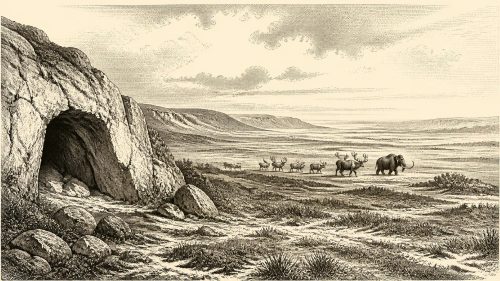
Archived: 19 September 2026
Abstract
Castlepook Cave in County Cork preserves Ireland’s richest disturbed record of vertebrate fauna before the Last Glacial Maximum, during the climatically unstable later Marine Isotope Stage 3. Around 34,000–32,000 calibrated years ago, Ireland contained shifting cold, open habitats, developing ice and altered coastlines, rather than a uniformly frozen landscape. Mammoth, reindeer, giant deer, bear, wolf, hyena, lemmings and Arctic fox demonstrate connections with wider north-west European ecosystems. A tool-marked reindeer femur suggests fleeting Upper Palaeolithic activity, but cannot establish settlement or occupation. Dating, bone deposition and excavation methods require caution. Castlepook documents an ecological frontier increasingly transformed by advancing ice.
Read Article
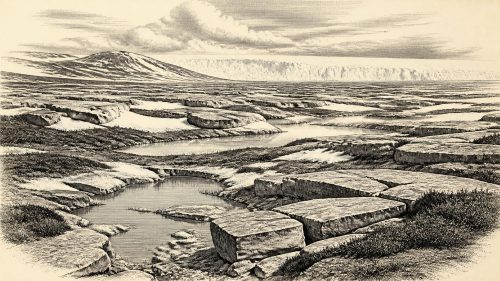
Archived: 19 September 2026
Abstract
Around 31,202 BCE, Ireland lay within the climatically unstable Late Pleistocene, approaching major expansion of the British–Irish Ice Sheet. Evidence cannot reconstruct a single year: ice extent varied regionally, and later glaciers erased or disturbed earlier landscapes and deposits. Cold, seasonal open habitats probably persisted where ice did not cover land, while fossil caves attest to a wider earlier fauna including mammoth, reindeer and predators, though revised dates prohibit assigning species confidently to this moment. No secure evidence shows human residence, society, trade or conflict. Ireland’s first demonstrated human activity dates about 12,800 cal BP. Glaciation reshaped terrain, obscuring evidence.
Read Article
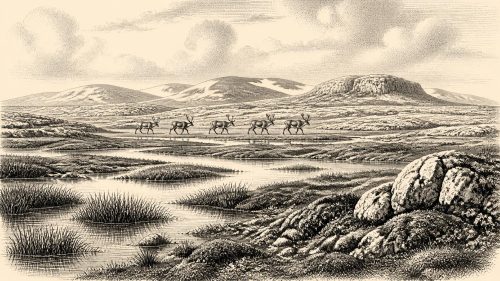
Archived: 19 September 2026
Abstract
31,203 BCE is a modern chronological marker rather than a recoverable Irish year. During this unstable Late Pleistocene period, Ireland experienced variable ice cover, lower sea levels and cold, open wetlands, evidenced by Derryvree sediments in Fermanagh. Castlepook Cave near Doneraile preserves a mixed late-Ice-Age fauna including mammoth, reindeer, giant deer, hyaena and wolf, though deposits were disturbed and span millennia. A dated reindeer femur bearing a possible stone-tool cut mark may indicate Upper Palaeolithic human processing around 33,000 years ago. It cannot prove settlement or continuity. It stresses uncertainty, distinguishing environmental evidence, animal remains, and an unresolved human trace.
Read Article
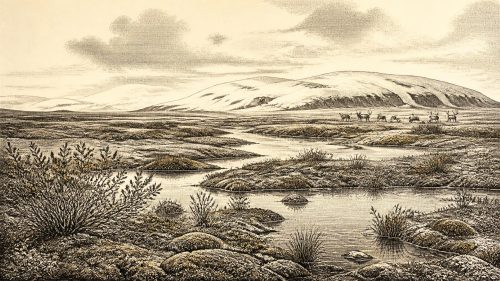
Archived: 19 September 2026
Abstract
Around 31,204 BCE, Ireland's evidence is environmental rather than historical. Derryvree, County Fermanagh, preserves a wetland deposit between glacial tills, dating broadly to late Marine Isotope Stage 3. Its plants and invertebrates indicate treeless, periglacial tundra with freshwater pools, bogbean and seasonally thawed ground. Castlepook Cave, County Cork, contains time-averaged remains of reindeer, mammoth, giant deer, carnivores and other cold-adapted animals, demonstrating ecological links with north-west Europe. A marked reindeer bone may record Upper Palaeolithic butchery, but cannot prove settlement. Before the Last Glacial Maximum, Ireland experienced fluctuating ice extent; evidence remains fragmentary, uncertain and regionally variable throughout this period.
Read Article
Archived: 19 September 2026
Abstract
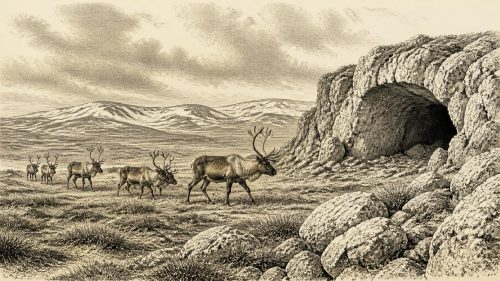
Around 31,205 BCE, an approximate modern label for a fluctuating MIS 3 interval, Ireland was a cold, changing landscape before the Last Glacial Maximum. Castlepook Cave, County Cork, preserves bones of mammoth, reindeer, giant deer, hyaena and animals, showing intermittent habitats for mammals but not a single contemporaneous community. A reindeer femur reportedly bears a possible stone-tool butchery mark and may represent Ireland’s earliest human activity, although dating, context and interpretation remain uncertain. No evidence establishes settlement or culture. Cave deposits, sediments and faunal remains instead reveal open tundra-like environments, mobile wildlife, shifting access, and records obscured by advancing ice.
Read Article
Archived: 19 September 2026
Abstract
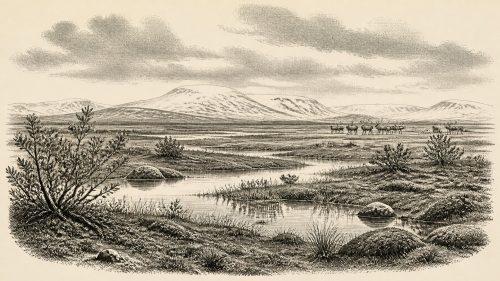
31,206 BCE is a modern label for a Late Pleistocene interval, not a recoverable Irish historical year. Derryvree, County Fermanagh, preserves organic sediments between glacial tills, indicating an ice-free, treeless wetland of sedges, mosses, pools and cold-adapted insects during Marine Isotope Stage 3. Castlepook Cave, County Cork, contains a mixed fauna including mammoth, reindeer, giant deer, carnivores and small cold-climate mammals, though its deposits lack precise stratigraphic control. A marked reindeer femur may indicate butchery by people, potentially Ireland’s earliest human trace, but proves neither settlement nor permanent population. Climatic deterioration expanded the British-Irish Ice Sheet, destroying or concealing evidence.
Read Article
Archived: 19 September 2026
Abstract
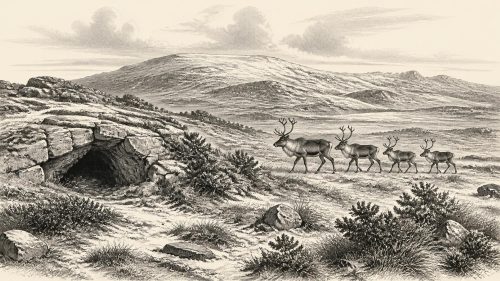
The modern label 31,207 BCE denotes a broad, uncertain MIS 3 horizon rather than a recoverable Irish year. Radiocarbon ranges and cave deposits show that southern Ireland supported, at different times, brown bears, mammoths, reindeer, giant deer, wolves, Arctic foxes, lemmings and spotted hyaenas. Castlepook Cave, County Cork, preserves notable hyaena remains, but mixed sediments cannot establish contemporaneous communities or behaviour. Ireland’s shifting ice, periglacial terrain, low sea levels and variable vegetation connected it intermittently with north-west Europe. Northern organic deposits indicate occasional milder habitats. No secure human occupation dates to this period; a possibly cut-marked reindeer bone remains inconclusive.
Read Article

Archived: 19 September 2026
Abstract
31,208 BCE is a modern label rather than a recoverable Irish year; radiocarbon calibration permits only broad chronological ranges. At Derryvree, County Fermanagh, freshwater silts between tills, dated broadly to 36,900–31,700 calibrated years BP, record a local ice-free, treeless wetland of sedges, mosses and arctic-alpine plants during unstable MIS 3 conditions. Cave calcite confirms climatic fluctuation, while ice extent remains uncertain. Castlepook Cave, County Cork, preserves mixed remains of Pleistocene mammals, suggesting intermittent access for fauna. A marked reindeer bone may indicate early human butchery, but disturbed deposits preclude claims for settlement. No evidence supports polities, farming, occupation, or events.
Read Article
Archived: 19 September 2026
Abstract
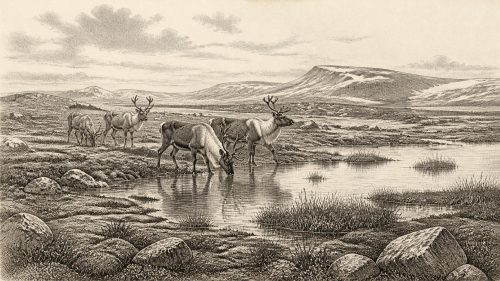
About 31,209 BCE, Ireland experienced a fluctuating Late Pleistocene climate rather than a precisely datable event. At Derryvree near Maguiresbridge, freshwater sediments between glacial tills, dated broadly to 36,900–31,700 years ago, show a local ice-free interval with pools, sedges, mosses, bogbean and open tundra vegetation. Castlepook Cave preserves remains of mammoth, reindeer, giant deer, predators and other cold-adapted animals, though not from one moment. A marked reindeer bone may indicate brief human butchery, but no secure settlement evidence exists. Ireland’s changing ice, lowered seas and later glaciation fragmented this record, preserving chiefly environmental history rather than political or social narratives.
Read Article
Archived: 19 September 2026
Abstract
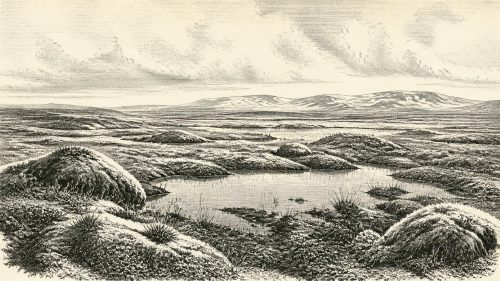
31,210 BCE is not a precisely recoverable Irish year, but falls near evidence from Derryvree, County Fermanagh, where freshwater organic sediments between glacial tills indicate a temporary tundra wetland during the later Pleistocene. Radiocarbon dates place this interval broadly in the mid-30,000s calibrated years BP, before the Last Glacial Maximum. Flora and invertebrates show cold, open, locally varied periglacial conditions. Castlepook Cave, County Cork, preserves time-averaged remains of mammoth, reindeer and other cold-adapted animals. A marked reindeer bone may indicate early human butchery, yet no secure settlement evidence exists. Ireland’s record is environmental, incomplete, and shaped by advancing later ice.
Read Article
Loading more articles…

