Start Exploring
Choose a route into Ireland’s past: follow the newest additions, find a particular year or subject, or browse every available period.

Day By Day
Welcome to Emerald Archives, where Ireland’s past awaits discovery. Our homepage brings you the latest additions to our growing collection, from remarkable people and historic places to pivotal events and forgotten traditions. Browse our newest discoveries and follow the archive’s progress day by day.
Deep Research
When you ask, we listen and respond. Enter a question about any aspect of Irish history in our search box (above) to initiate Deep Research. Give us a few moments, and we’ll prepare a detailed, illustrated article with sources and citations to answer your question. Your article becomes a permanent part of Emerald Archives.
Editorial
Archived: 23 November 2026
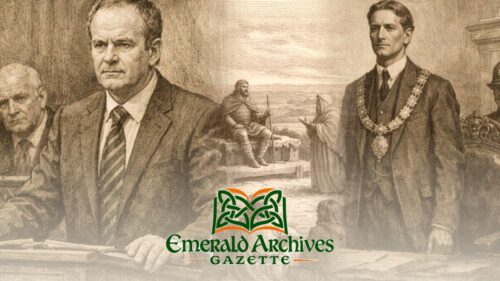
In today’s issue we ask how Ireland remembers the people who challenged authority, exercised it or found themselves caught in its path. The early annals bring us to Tara, where a royal feast could mark a claim to power, and to Áth Dara, where accounts of battle and captivity differ. Notices about Patrick and Benignus are brief, yet the differences between them show how much depends on who kept the record. The biographies of Liam Lynch, Ernie O’Malley and Peadar O’Donnell bring the same question into sharper focus, following people whose choices took them from local communities into national conflicts. That thread continues through the lives of Seán Heuston, Michael Mallin and Tomás Mac Curtain, then into the more recent accounts of Mairéad Farrell, the hunger strikers and Ian Paisley. Read together, these stories show how political convictions grew out of workplaces, neighbourhoods and families, and how their consequences reached well beyond the people who made the decisions. The issue also looks beyond Ireland, where reports of earthquakes and church councils sit beside the Irish notices. You can start with a familiar name or an unfamiliar place and follow the links to see how each surviving account was pieced together.
Ian Paisley — Public Role
Archived: 23 November 2026
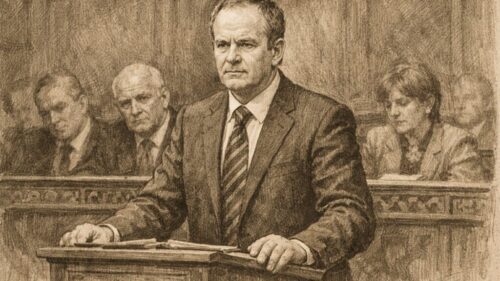
Ian Richard Kyle Paisley Jr was identified in a University of Aberdeen research portal extract as the son of the late Reverend Ian Paisley. The same extract says that he took over the North Antrim seat and became MP for North Antrim in 2010. Irish Times reporting in 2003 described him as a senior member of the anti-agreement Democratic Unionist Party. In that year he called on Sir John Stevens to investigate claims that the murdered Belfast lawyer Pat Finucane was a member of the IRA. He said that he had written to Stevens asking him to consider the matter urgently.
Patrick Flourishing
Archived: 23 November 2026
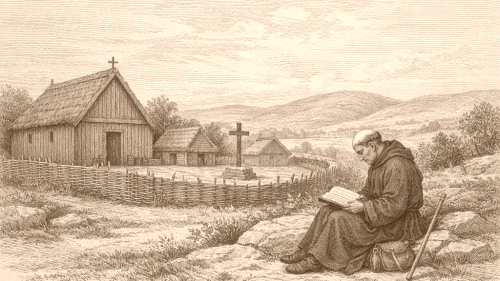
The surviving annal notices linked to 443 are sparse and uneven. The Annals of Ulster give an explicit AD 443 heading and note Patrick flourishing in the faith and doctrine of Christ in Ireland. The Annals of Inisfallen preserve a closely parallel Patrick notice, but the excerpt does not itself supply an explicit AD heading and instead cross-references AU 443. Chronicon Scotorum provides only a chronological entry for CS443 in the excerpt shown, with no comparable event notice.
Ian Paisley
Archived: 23 November 2026
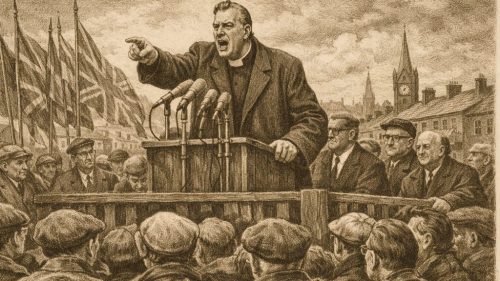
Ian Paisley was a politician and retired clergyman. The RTÉ Archives profile states that he was born in Ballymena, Armagh, and that he co-founded the North’s first Free Presbyterian Church in 1951. His early public life included religious leadership as well as political activity. In November 1968, he and Ronald Bunting led a Loyalist counter-demonstration against a civil rights march in Armagh, and both were jailed. He became MP for North Antrim in 1970 and founded the Democratic Unionist Party that year. A CAIN text from 1993 identifies him as Leader of the Democratic Unionist Party.
Ard Macha
Archived: 23 November 2026
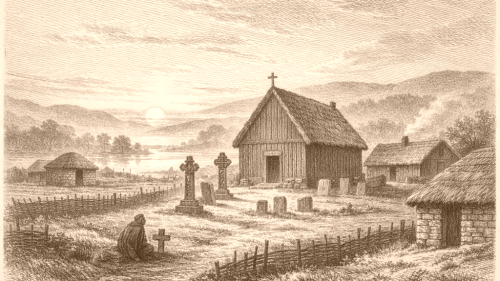
The surviving annal excerpts for 444 CE are sparse but not empty. The Annals of Ulster explicitly date the founding of Ard Macha to 444. The Annals of the Four Masters also mark 444 and place it in the sixteenth year of Laeghaire. The Annals of Inisfallen preserve an eclipse notice under its 444 entry. Taken together, the evidence shows one securely dated Ulster notice, one chronologically framed Four Masters entry, and one Inisfallen notice attached to the year, with no need to supply an unrecorded event.
Feimin Battle
Archived: 23 November 2026
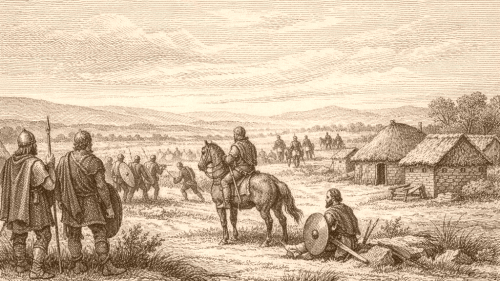
The surviving annals give a sparse and uneven picture of 445 CE. Chronicon Scotorum dates the battle of Feimin to that year, while the Annals of Ulster place the death of Nath Í under 445 and the Annals of Inisfallen preserve the same death notice but cross-reference it to another annalistic year. The evidence shows both a real event tradition and clear chronological uncertainty.
Thomas McElwee
Archived: 23 November 2026
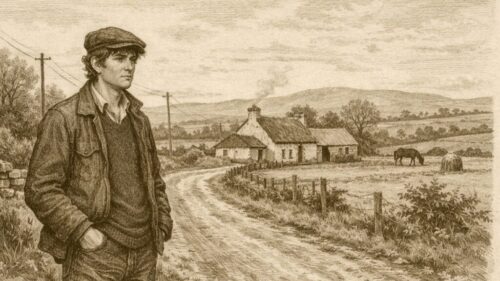
Early Life Thomas McElwee was from Bellaghy in South Derry and was born on 30 November 1957. His parents were Jim, a retired builder, and Alice. Family details place him in a close household in Tamlaghtduff, near Bellaghy. Schooling Years He attended St Mary's primary school in Bellaghy and then Clady intermediate school. Accounts describe him as getting on well at school. His favoured subjects were English and Maths, and he was also good at Geography and History. He helped around the house and with outdoor work, including cutting hedges and putting up fencing.
Feimen Battle — Feimen
Archived: 23 November 2026
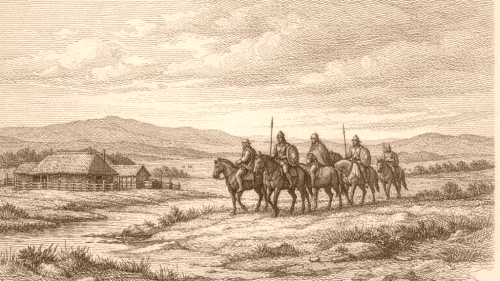
The surviving excerpts give a sparse and uneven picture of 446 CE. Annals of Ulster assigns the battle of Feimen to that year, while Chronicon Scotorum assigns the death of Secundinus to 446. Annals of Inisfallen preserves a 446 heading in the excerpt but no event notice there. The surrounding entries also show that the battle of Feimen is dated differently in other annals, so the year assignment is not uniform across the texts.
Kieran Doherty
Archived: 23 November 2026
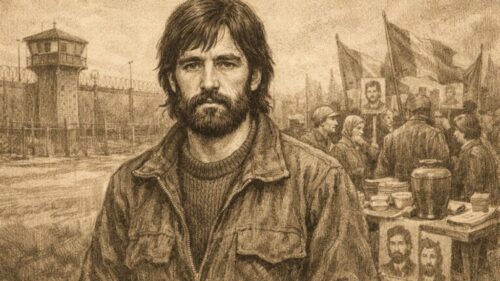
Early Life Kieran Doherty was born on 16 October 1955 in Andersonstown, Belfast. He was the third son in a family of six children. His mother, Margaret, was a Catholic convert from a Protestant background, and his father, Alfie Doherty, was a floor-tiler by trade. He attended St Theresa’s primary school and later the Christian Brothers secondary school on the Glen Road. In 1971 he won an Antrim Minor medal for St Theresa’s GAC, and he also spent time cycling with St Thomas’ cycling club. Republican Involvement Doherty joined Na Fianna Éireann in the autumn of 1971.
Secundinus Repose
Archived: 23 November 2026
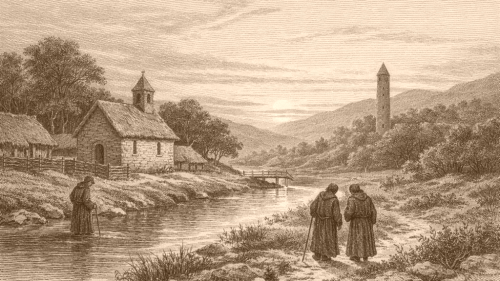
The surviving annal entries for 447 CE are sparse. The Annals of Ulster and the Annals of the Four Masters both record the death of Secundinus in that year, while the Annals of Inisfallen preserves a battle notice under a 447-style heading and places Secundinus under the following year in the retrieved excerpt. Chronicon Scotorum offers only a year heading in the excerpt shown here, leaving no event visible.
Kevin Lynch, hunger striker
Archived: 23 November 2026
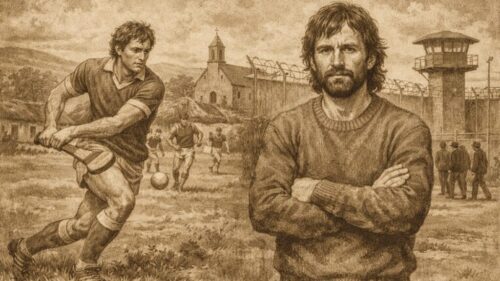
Kevin Lynch was a republican hunger striker from Dungiven in North Derry. One source states that he was born on 25 May 1956 in Park, outside Dungiven, the youngest of eight children. He attended St. Canice's primary school and St. Patrick's intermediate school in Dungiven, and was remembered there for sporting ability and a sense of humour. He played Gaelic football from an early age and later took up hurling, excelling at both. He played right half-back for St. Patrick's hurling club at the inaugural Feile na nGael in Thurles in 1971, shortly after an appendix operation.
Constantinople Earthquake
Archived: 23 November 2026
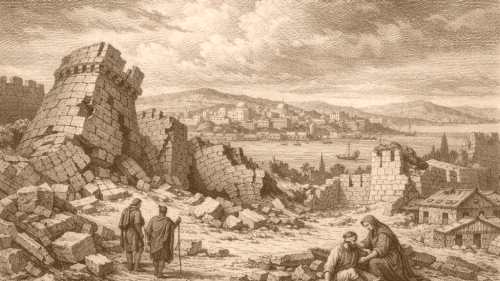
The surviving annals give a very sparse picture for 448 CE. The Annals of Ulster record an external notice of a violent earthquake at Constantinople. The Four Masters place 448 under chronological headings and a long Patrick-related passage, while Inisfallen and Chronicon Scotorum preserve only brief year markers or adjacent notices. The evidence shows a year with minimal Irish narrative content and some dating uncertainty.
Martin Hurson
Archived: 23 November 2026
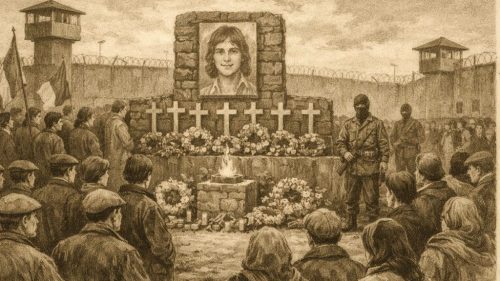
Martin Hurson was an Irish Republican Army prisoner in the Maze Prison. CAIN’s chronology records that he joined the hunger strike on 28 May 1981. The same chronology states that Hurson died on 13 July 1981 after 46 days on hunger strike. CAIN’s dead list likewise identifies him as Martin Hurson, aged 29, of the Irish Republican Army, and records that he joined the hunger strike on 28 May 1981 and died on 13 July 1981 after 46 days without food. CAIN’s Sutton index lists Hurson as Catholic and notes that he died on the 46th day of the hunger strike in Long Kesh/Maze Prison, County Down.
Theodosius Notices
Archived: 23 November 2026
The surviving annal excerpts for 449 CE are sparse and uneven. Annals of Ulster records the year heading and a notice on the death of Theodosius and accession of Marcianus; the Annals of the Four Masters gives a year heading, regnal year, and the death of Amhalghaidh; and Annals of Inisfallen preserves only a brief year marker with no event in the excerpt shown. The Chronicon Scotorum excerpt supplies adjacent year markers but no visible 449 entry, highlighting the fragmentary and uneven coverage of this year in the retrieved material.
Irish Annals — Ulster Record
Archived: 23 November 2026
The surviving excerpts for 450 CE are sparse. The Annals of Ulster preserve an explicit AD 450 heading without a recorded event; Chronicon Scotorum likewise marks a 450 entry with only a fragmentary annal label; and the Annals of Inisfallen preserve an AI450 heading with only a minimal entry. The evidence from these excerpts supports an account of silence and dating uncertainty rather than any securely dated Irish event for the year.
Patsy O’Hara
Archived: 23 November 2026
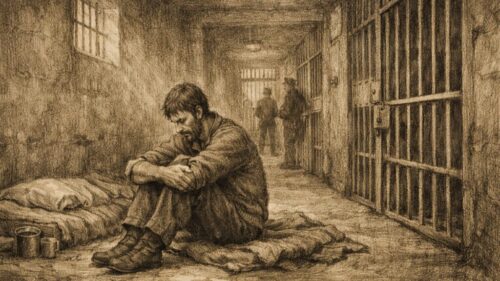
Hunger Strike Patsy O'Hara was identified in CAIN’s list of hunger strikers as a member of the Irish National Liberation Army and as someone who joined the hunger strike on 22 March 1981. The same list says he died on 21 May 1981 after 61 days without food. A CAIN memorial entry places his death in Long Kesh / Maze Prison, County Down. Prison Role In a CAIN account of the strike, Patsy O'Hara is described as the INLA prisoners’ commanding officer. The same passage says he had received orders from the INLA Army Council that nobody could negotiate on their behalf.
Raymond McCreesh
Archived: 23 November 2026
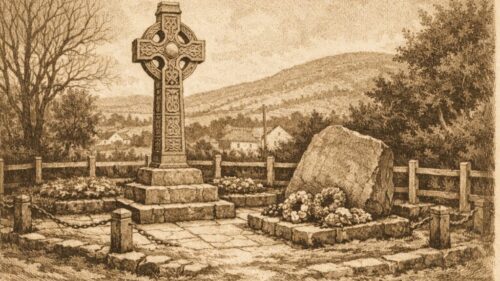
Raymond McCreesh was a Catholic Irish Republican Army member listed by CAIN among the hunger strikers who died in 1981. CAIN states that he joined the hunger strike on 22 March 1981. The same record says he died on 21 May 1981 after 61 days without food. Another CAIN deaths entry places his death at Long Kesh / Maze Prison in County Down and identifies him as aged 24. CAIN’s deaths list also records him as killed by no known killer and says he died on the 61st day of the hunger strike.
Chalcedon Entry
Archived: 23 November 2026
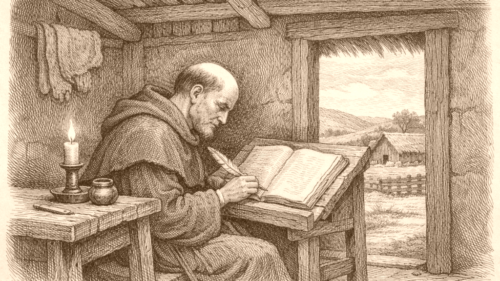
The surviving annal material linked to 451 CE is sparse and uneven. One Irish annal tradition records an Easter date and a corrected notice that Theodosius the Younger died in that year; another preserves only a brief chronological heading without an event; and a later Irish compilation places the synod of Chalcedon under the year in a way that is not securely tied to Ireland. Together, the notices show both the limits of the evidence and the need to separate dated entries from later or uncertain synchronization.
Francis Hughes
Archived: 23 November 2026
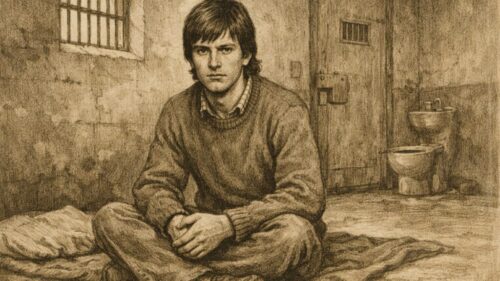
Francis Hughes was a republican from Bellaghy in South Derry. The Bobby Sands Trust states that he was born on 28 February 1956, was the youngest son among ten children, and came from a staunchly republican family rooted in Tamlaghtduff. According to the Trust, Hughes attended St Mary’s primary school in Bellaghy and then Clady intermediate school. It says he enjoyed school and was a fairly good student, with history and woodwork among his favourite subjects. The same account describes him as a lively, outdoor boy who later trained as an apprentice painter and decorator.
Laegaire Rout
Archived: 23 November 2026
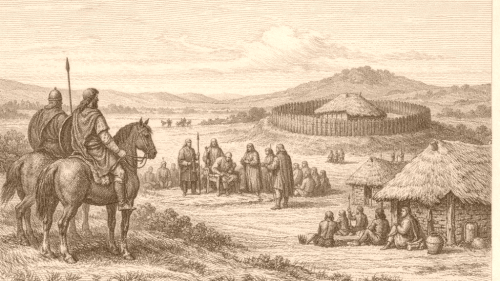
The surviving annals give a thin but recoverable picture of 453 CE. Annals of Ulster and the Annals of the Four Masters place a defeat or rout of the Laigin in that year, while Chronicon Scotorum records a feast of Temair celebrated by Laegaire son of Niall. Other witnesses attach different kinds of notices to the same year cluster, showing that the Irish record is uneven and that some entries sit beside broader chronological or external notices rather than a single fully agreed event.
Mairéad Farrell
Archived: 23 November 2026
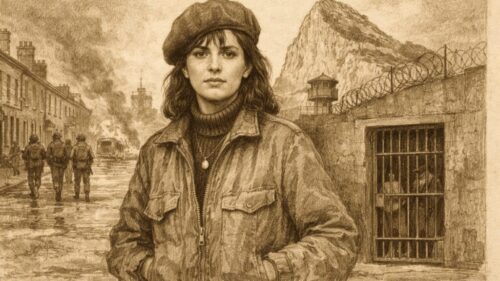
Early Life Mairéad Farrell was born on 3 March 1957 in Belfast, Northern Ireland. She grew up in West Belfast and was educated at Rathmore Convent School, Belfast. At the age of 14, she was recruited into the Provisional IRA by Bobby Storey. Prison Years In 1976, she was sentenced to fourteen years in prison for explosives offences, firearms offences, and belonging to an illegal organisation. At Armagh prison, Farrell was the commanding officer of the female IRA prisoners. She took part in a protest for political status and later in a no-wash protest.
Temair Feast — Saint Usaille — Death
Archived: 23 November 2026
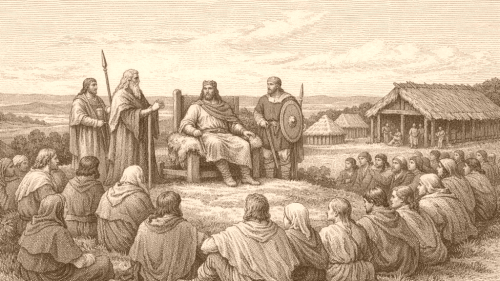
For 454 CE, three annalistic traditions record Laegaire son of Niall in connection with the Feast or Festival of Temair. Ulster, the Four Masters, and Chronicon Scotorum place the notice in 454, while the Annals of Inisfallen preserve a related entry with an internal cross-reference to AU 454 rather than an independent 454 dating. The surviving evidence is brief and largely annalistic, so the year is best treated as securely attested for the feast notice, but little else.
Tomás Mac Curtain
Archived: 23 November 2026
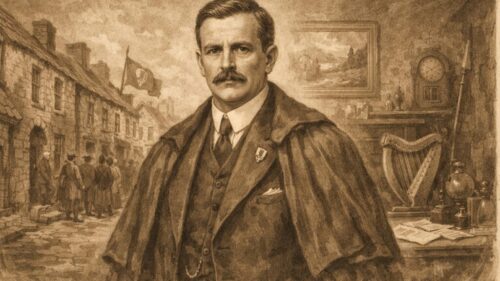
Tomás Mac Curtain was born at Ballyknockane, Mourne Abbey, County Cork, on 20 March 1884. He was the son of Patrick Curtin, a farmer, and Julia Sheehan. He attended Burnfort National School, and in 1897 his family moved to Cork City, where he went to the North Monastery School. In his early working life he was employed as a clerk, and he also taught Irish in his free time. Mac Curtain became active in cultural and political life through the Gaelic League, joining the Blackpool branch and serving as its secretary in 1902.
Enna Death
Archived: 23 November 2026
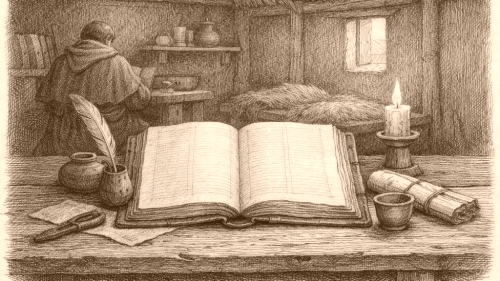
The surviving annals give a sparse and uneven picture for 455 CE. Chronicon Scotorum records the death of Enna son of Cathbadh, Annals of Ulster notes that Victorius the astronomer flourished, and Annals of Inisfallen preserves material under an 455 heading but links its notices to other years. Taken together, the entries show direct dating in one case, a non-event notice in another, and explicit uncertainty in the third.
Terence MacSwiney
Archived: 23 November 2026
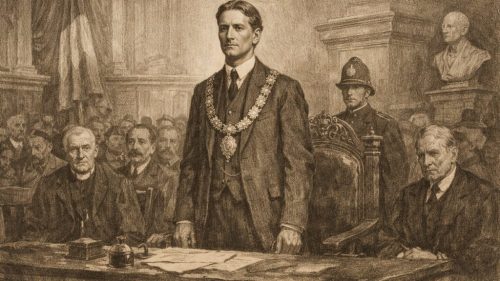
Terence MacSwiney was born in Cork in 1879. He developed interests in Irish history, culture, and language, and these interests led him to become a writer. In 1901 he was a founding member of the Celtic Literary Society. In 1908 he co-founded the Cork Dramatic Society with Daniel Corkery, and that society produced many of his plays. He also published poetry and essays. MacSwiney was a founding member of the Cork Branch of the Irish Volunteers and stayed with its separatist wing when it split in 1914. He became second in command of the Cork No 1 Brigade.
