Start Exploring
Choose a route into Ireland’s past: follow the newest additions, find a particular year or subject, or browse every available period.

Day By Day
Welcome to Emerald Archives, where Ireland’s past awaits discovery. Our homepage brings you the latest additions to our growing collection, from remarkable people and historic places to pivotal events and forgotten traditions. Browse our newest discoveries and follow the archive’s progress day by day.
Deep Research
When you ask, we listen and respond. Enter a question about any aspect of Irish history in our search box (above) to initiate Deep Research. Give us a few moments, and we’ll prepare a detailed, illustrated article with sources and citations to answer your question. Your article becomes a permanent part of Emerald Archives.
Archived: 3rd November 2026
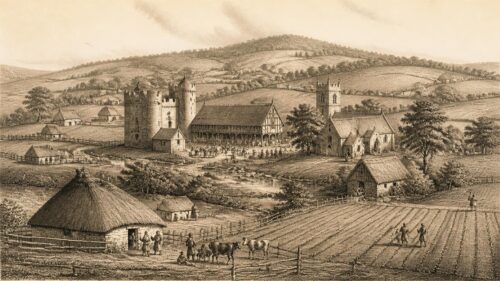
Manorial Ireland
The manor was a significant but uneven feature of Irish history, developing most strongly in regions shaped by Anglo-Norman, ecclesiastical and aristocratic lordship. This article examines its role as estate, jurisdiction, settlement framework and source of local authority from the twelfth century into the modern era. It considers manorial landscapes at Knocktopher and Dowth, the Dublin Crosslands, manor courts, tenant lives and later estate records. It also stresses a necessary distinction: manorial structures did not simply replace the older and varied systems of Gaelic lordship, landholding and authority that continued to shape Ireland.
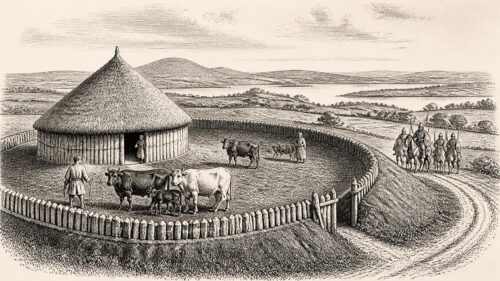
Dún Cremthainn
Archived: 3 November 2026
In 650, the battle of Dún Cremthainn reflected continuing rivalry within the northern Uí Néill. Óengus, son of the former Cenél Conaill ruler Domnall mac Áedo, was killed by his cousins Cellach and Conall Cóel, sons of Máel Coba. The victory did not secure lasting supremacy, as later conflicts displaced both victors. Annalistic dating is uncertain, and other notices assigned to the year include local warfare, deaths of rulers and abbots, and church activity. Ireland remained a patchwork of small kingdoms, lordships and ecclesiastical centres. Rural life depended on farming, cattle wealth and labour, while churches preserved learning and maintained wider connections.
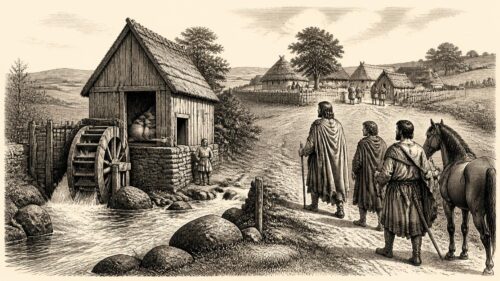
Blathmac's Sons
Archived: 3 November 2026
In 651, Irish annals record the killing of Dúnchad and Conall, sons of Blathmac of the powerful Síl nÁedo Sláine dynasty, at Máel Odhrán’s mill. Máel Odhrán, identified as a man of Leinster, was named as their killer, though the location and circumstances remain uncertain. Later sources add unconfirmed details, while annalistic verse portrays the deaths as the loss of an eminent lineage. A separate Christian moral judgement interpreted them as punishment for Blathmac’s alleged sexual transgression. The episode illustrates the links between regional dynastic conflict, rural productive sites, vernacular poetry and monastic historical memory in early medieval Ireland.
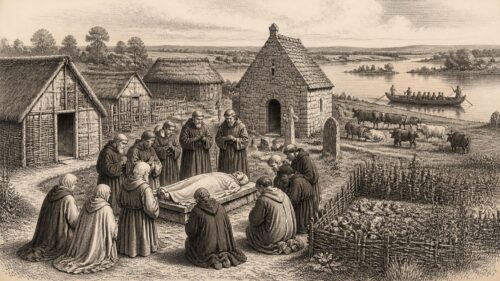
Ségéne’s Death
Archived: 3 November 2026
Around 652, despite conflicting annalistic dates, Irish records note the deaths of prominent churchmen and a dynastic battle. Ségéne, abbot of Iona since 623, led an influential Columban network linking Ireland, Pictland and Northumbria. Aedlug of Clonmacnoise and Mainchéne of Min Droichit also died, illustrating the importance of both major monasteries and local religious communities. At Cúil Corra, Cuiléne, king of Uí Fhailge, was killed by rival forces, reflecting unstable regional kingship. These notices depict a rural, politically fragmented Ireland connected through kinship, river routes and ecclesiastical networks.
Airther Seóla
Archived: 3 November 2026
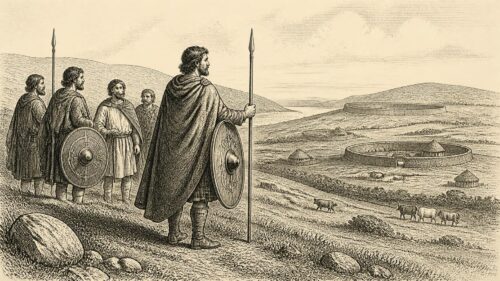
In 653, the battle of Airther Seóla in Connacht saw Marcán, king of the Uí Maine, killed by forces led by Cenn Fáelad and Máenach, king of the Uí Briúin. The conflict illustrates rivalry among regional dynasties rather than a unified Connacht. The death of Máel Dóid, king of Mide, marked another potential shift in Irish politics. Irish annals also noted Pictish deaths and ecclesiastical figures, reflecting networks linking kings, churches and neighbouring regions. Dating remains uncertain: some annals place the Connacht battle in 652. Most people lived in dispersed agricultural communities supporting these competing centres of authority.
