Start Exploring
Choose a route into Ireland’s past: follow the newest additions, find a particular year or subject, or browse every available period.

WELCOME TO EMERALD ARCHIVES
Welcome to Emerald Archives, where Ireland’s fascinating past comes to life. Explore remarkable people, historic places, pivotal events and forgotten traditions through our growing collection of articles, updated day by day.
Enjoy exclusive documentaries and podcasts, available to all visitors, and discover our collection of free e-books.
Have a question about Irish history? Enter it in the Deep Research box above. Within a few moments, we’ll prepare a detailed, illustrated article supported by historical sources and citations. Your question helps shape our collection, and your article becomes a permanent part of Emerald Archives for everyone to explore, enjoy and share.
Day By Day
Welcome to Emerald Archives, where Ireland’s past awaits discovery. Our homepage brings you the latest additions to our growing collection, from remarkable people and historic places to pivotal events and forgotten traditions. Browse our newest discoveries and follow the archive’s progress day by day.
Deep Research
When you ask, we listen and respond. Enter a question about any aspect of Irish history in our search box (above) to initiate Deep Research. Give us a few moments, and we’ll prepare a detailed, illustrated article with sources and citations to answer your question. Your article becomes a permanent part of Emerald Archives.
Granard Battle
Archived: 22 November 2026
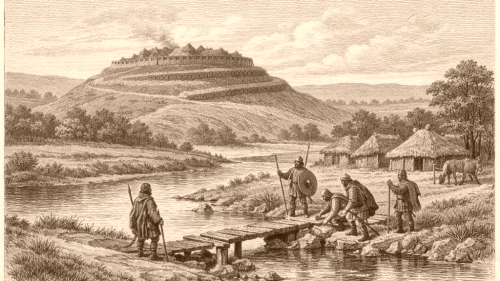
The surviving annal entries for 486 CE are sparse and uneven. The Annals of Ulster place a notice of the first battle of Graineret in that year, while also marking the wording as alternative; Chronicon Scotorum records the death of Saint Cianan; and the Annals of Inisfallen preserve a birth notice keyed to 486 without a printed AD heading. Together they show a year with limited but varied annalistic coverage and some explicit uncertainty about dating and wording.
Maud Gonne
Archived: 22 November 2026
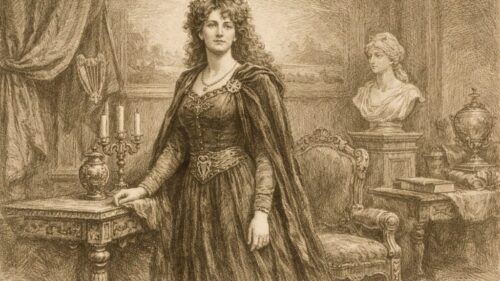
Maud Gonne MacBride was born on 21 December 1866 at Tongham Manor near Farnham, Surrey. Her father, Captain Thomas Gonne, was appointed brigade major of the cavalry in Ireland in 1868, and the family later lived first at the Curragh and then at a cottage on Howth Head. When she was six, she and her sister Kathleen were sent to live with their mother’s aunt, Augusta Tarlton, in London. In 1876 the family left for the south of France, and Gonne remained at ease in France as well as in Ireland and England. She became fluent in French as well as English.
Cell Osnadha — Cill Osnaigh
Archived: 22 November 2026
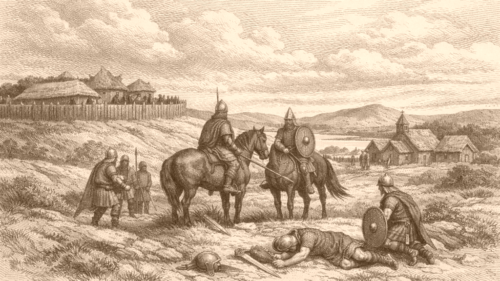
The surviving annal entries for 487 CE are sparse and uneven. Some texts record the death of Bishop Mel or Mael, while others place the battle of Cell Osnadha in nearby or differing chronology. The result is a small cluster of notices with clear variation in wording and dating.
Constance Markievicz
Archived: 22 November 2026
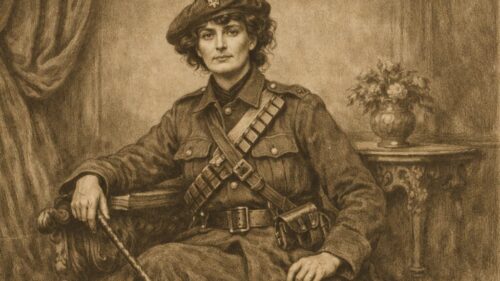
Early Life Constance Gore-Booth studied art in London and Paris. In 1900 she married Count Dunin-Markievicz, a Polish aristocrat and artist. The couple came to live in Dublin in 1903, and there Constance developed a keen interest in nationalist politics. She became a member of Inghinidhe na hÉireann and Sinn Féin, and she worked closely with James Connolly. Political Work During the 1913 lock-out in Dublin, she helped feed the workers. She subsequently joined the Irish Citizen Army and took part in the Easter Rising in 1916. She was sentenced to death for her part in the rebellion, but this was commuted on account of her sex.
Cianan Duleek
Archived: 22 November 2026
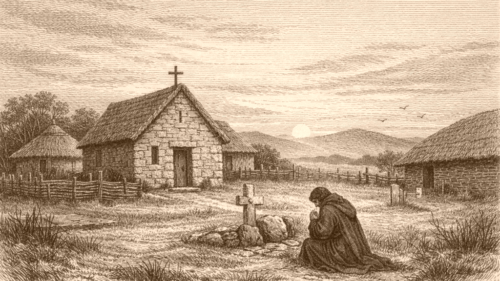
The surviving annal entries tied to 488 CE are sparse. The Annals of Ulster and the Annals of the Four Masters explicitly place the death of Cianán/Cianan in 488, while the Annals of Tigernach preserve the same death notice in a 488 sequence without an explicit CE heading. The evidence for the year is therefore narrow and uneven, with one clear death notice and no securely dated battle entry in the material examined for that year.
Éamonn Ceannt
Archived: 22 November 2026
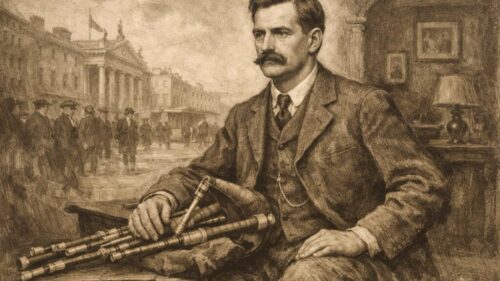
Éamonn Ceannt was born Edward Thomas Kent in Ballymoe, County Galway, and later used the Irish form of his name. He attended the De La Salle national school in Ardee, the Christian Brothers’ school at Sunday’s Gate in Drogheda, and later the O’Connell Schools and University College, Dublin. He worked for Dublin Corporation in the rates department and later in the city treasury office. Ceannt joined the central branch of the Gaelic League in 1899 and met Patrick Pearse and Eoin MacNeill through it. He taught Irish part-time at Gaelic League branches, became a fluent Irish speaker, and played several musical instruments, especially the Irish war pipes and uileann pipes.
Cell Osnadha
Archived: 22 November 2026
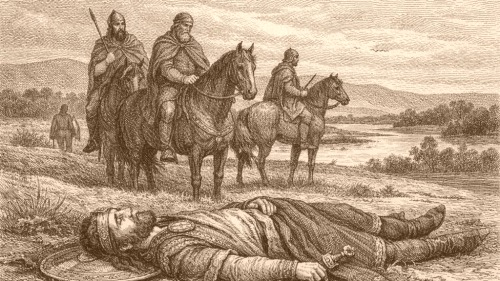
The surviving annals give a sparse and uneven picture for 489 CE. Several works associate the year with the death of Bishop Maccaille and with the battle of Cell Osnadha in which Aengus son of Nadfraech fell. Other annals preserve related notices but shift them in date, or provide no explicit AD heading, showing that the surviving record for this year is both thin and chronologically unstable.
Joseph Plunkett — Irish Review
Archived: 22 November 2026
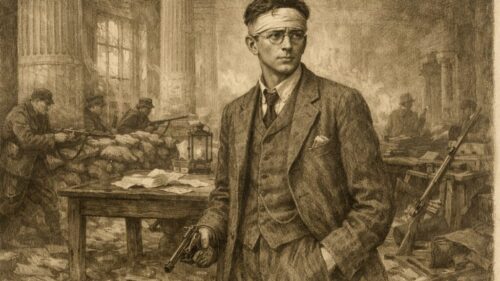
He was educated by the Jesuits at the Catholic University School, Belvedere College and Stonyhurst College in Lancashire. As a young man he contracted tuberculosis, and he spent periods in Italy, Algeria and Egypt between 1910 and 1912. Literary Life Plunkett met Thomas MacDonagh when MacDonagh tutored him in Irish for University College Dublin matriculation examinations. Their friendship was shaped by poetry, religion and mysticism. MacDonagh published some of Plunkett’s early poems in the Irish Review, and later edited his first collection, The Circle and the Sword, which appeared in 1911.
Cenn Losnada
Archived: 22 November 2026
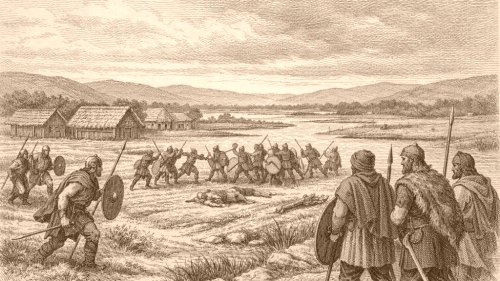
The annals do not give a single settled Irish event for 490 CE. Annals of Ulster places a battle notice in its 490 entry alongside Roman imperial notices, while Tigernach and the Four Masters place the same battle under 489. Annals of Inisfallen preserves a later cross-reference to the Ulster dating. The surviving evidence therefore shows a closely related set of entries, but also explicit chronological disagreement.
Thomas MacDonagh
Archived: 22 November 2026
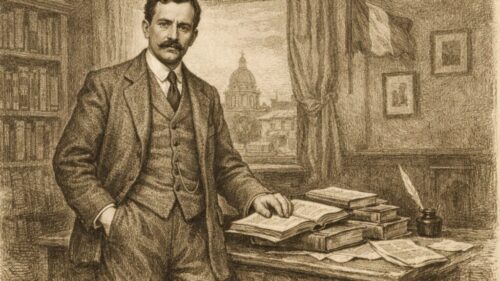
Thomas MacDonagh was born in Cloughjordan, County Tipperary, the son of Joseph MacDonagh and Mary Parker, both teachers. He spent seven years at Rockwell College near Cashel, where he trained for the priesthood before moving into teaching and literary work. MacDonagh taught at St Kieran’s College, Kilkenny, from 1901 to 1903, and at St Colman’s College, Fermoy, from 1903 to 1908. During this period he joined the Gaelic League. He later studied at University College, Dublin, graduating BA in 1910 and gaining an MA in 1911 for a thesis on Thomas Campion and the Art of Poetry.
Patrick Rest
Archived: 22 November 2026
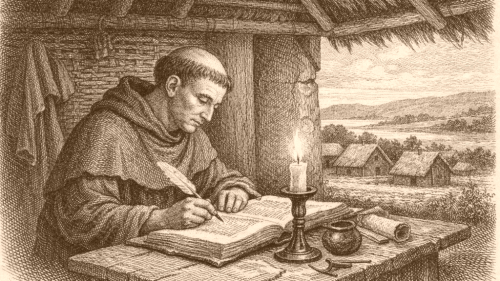
The annals preserved for 491 CE are sparse and uneven. Most surviving notices for the year concern the death of Patrick, while other entries in the same annal traditions place nearby events under adjacent years or add cross-references that show some chronological uncertainty. One annal also preserves an Irish battle notice explicitly dated to 491.
Thomas Clarke
Archived: 22 November 2026
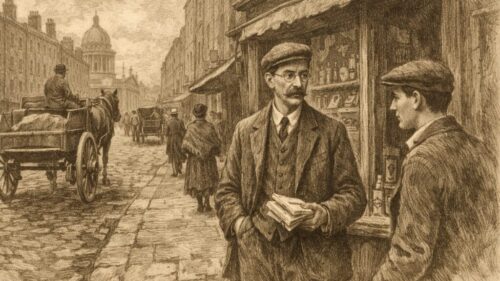
Early Role Thomas J Clarke was a central figure in the leadership of the Irish Republican Brotherhood. He was also instrumental in planning the Easter Rising, and one source describes him as a central leader among the extremists involved in that event. Another account says he ensured that the IRB acquired a controlling interest in the Irish Volunteers and helped to found the Irish Volunteers in 1913. He is given the life dates 1858 to 1916 in one source. Political Work Clarke’s activity in republican organisation extended to the creation of the IRB’s Military Council, which one source describes as the principal vehicle for planning the Rising.
Sleamhain Battle
Archived: 22 November 2026
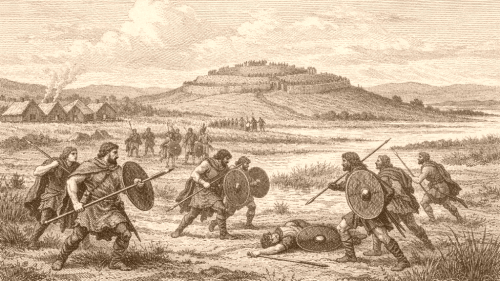
The surviving annals give only sparse and uneven evidence for 492. Two works place a battle at Sleamhain or Graine in that year, while other annals under nearby year labels record different deaths and battles. The result is a thin historical picture with clear notices but uncertain alignment between the annalistic systems.
Seán Mac Diarmada
Archived: 22 November 2026
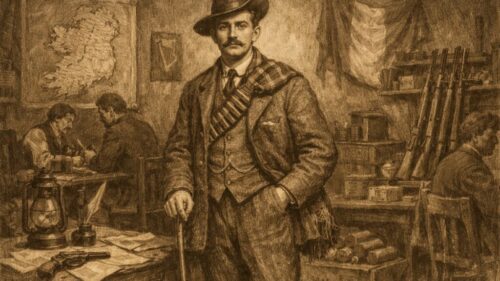
Seán MacDiarmada, also known as John Joseph MacDermott, was born in Corranmore near Kiltyclogher, County Leitrim. He was the son of Donald MacDermot, a carpenter, and Mary McMorrow. He was educated at Corradoona national school and at night school in Tullinamoyle, County Cavan, where he learned bookkeeping and Irish. After a spell in Scotland, MacDiarmada settled in Belfast in 1905 and worked first as a tram conductor and later as a barman. He joined the Gaelic League and the politically moderate Ancient Order of Hibernians. He was sworn into the Irish Republican Brotherhood by Denis McCullough, helped organise the republican Dungannon Clubs, and also acted as an organiser for Sinn Féin.
Patrick Death
Archived: 22 November 2026
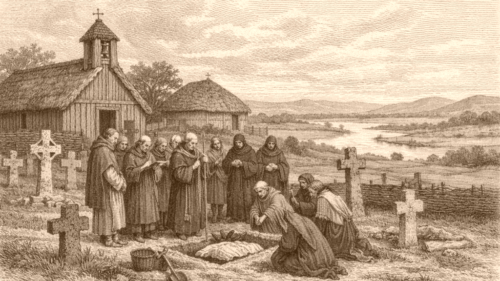
The surviving annals do not present a single dominant Irish event for 493 CE. They instead record a small cluster of notices, including Patrick’s death in some compilations, several battles, and papal deaths or successions. The entries do not fully agree on dating, so the year is best read as a close comparison of overlapping annal traditions rather than a single settled narrative.
Willie Pearse
Archived: 22 November 2026
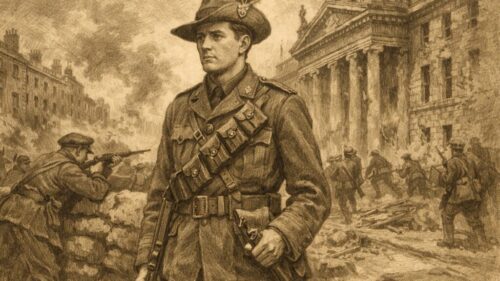
William, known as Willie, Pearse was born at 27 Great Brunswick Street in Dublin and was the only brother of Patrick Pearse. He was educated at the Christian Brothers’ secondary school in Westland Row and later studied sculpture and drawing at the Metropolitan School of Art in Kildare Street. He joined the Gaelic League and learned Irish well enough to give classes to some fellow art students. Pearse exhibited work at the Royal Hibernian Academy and the Oireachtas exhibitions between 1906 and 1913, and he also showed work at the Irish International Exhibition in 1907.
Tailtiu Battle — Tailtiu Entry
Archived: 22 November 2026
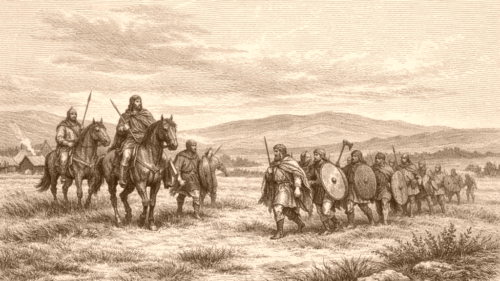
The annalistic record for 494 CE is uneven. Two Irish annals place a battle of Tailtiu in that year, while other annals assign different battles to 494. One witness in the same sequence gives only a bare chronological marker for the year, showing that the surviving notices are sparse and not fully aligned.
