

Shared Safeguards
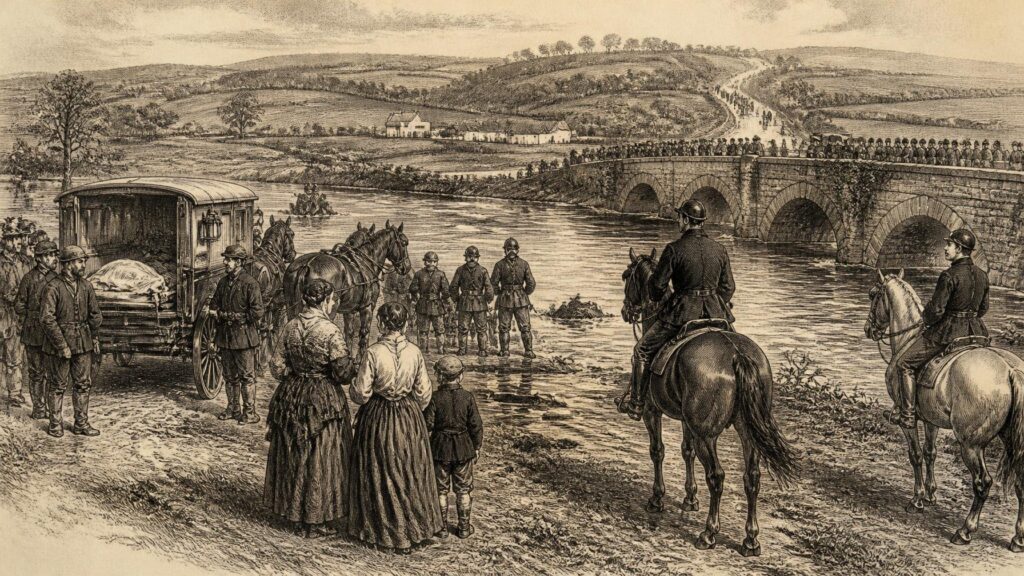
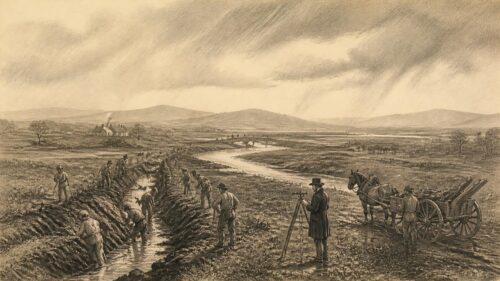
AI generated historical illustration, not a contemporary photograph.
At a Glance
All-island resilience is not an ancient Irish doctrine, nor a single institution with authority over the whole island. It is a recent term for a much older practical problem: illness, floodwater, animal disease, supply disruption and environmental danger do not recognise the constitutional boundary created in 1921. Its history lies in the recurring effort to match shared risks with forms of co-operation that are useful, legitimate and acceptable on both sides of that border.
Modern Language
The expression ‘all-island resilience’ belongs chiefly to the vocabulary of twenty-first-century public administration. In November 2022 the Irish Government’s Office of Emergency Planning convened an inaugural All Island Disaster Risk Reduction Conference at Ballymascanlon in County Louth. Its declared theme was resilience, and its participants came from public administration, emergency services, academic life, voluntary bodies and the private sector across Ireland and Northern Ireland. The conference was associated with the Shared Island initiative and was intended to encourage dialogue on preparedness, management, recovery and the risks that may cross the border.
That event should not be mistaken for the origin of practical North/South assistance. Nor should its language be read backwards into earlier centuries. People confronting famine, epidemic disease, storms or fires in the past did not generally speak of ‘resilience’ in its present institutional sense. They spoke of relief, sanitation, quarantine, drainage, insurance, public safety, mutual aid and recovery. The modern phrase is valuable because it groups these concerns together, but it can also obscure difference. A community’s capacity to endure hardship, a government’s capacity to coordinate an emergency, and an electricity network’s capacity to continue operating are related but not identical things.
Historically, the phrase therefore works best as a lens rather than a claim. It draws attention to an island whose geography produces common exposures, while its political history has produced separate authorities, legal systems and public services. The history of all-island resilience is not a smooth movement towards unity. It is a history of recurring necessity, interrupted by constitutional division and conflict, then reshaped by negotiated institutions. Its central lesson is less romantic than practical: co-operation develops most securely where a shared danger is concrete, the benefit is visible, and the constitutional position of each jurisdiction is respected.
Island Geography
Ireland’s physical geography has always made some hazards collective. Rivers rise in one county and flow through another; catchments and coastlines ignore county boundaries; animal movements, roads and markets link districts on either side of the later Border. Weather systems approach the island as a whole, though their consequences vary sharply between upland and lowland, coast and interior. The Irish Sea offers a degree of separation from Britain and continental Europe, but it has never been a complete shield. Ships, people, livestock, grain, infection, ideas and trade have crossed it continuously.
Such facts do not create a single political community by themselves. They do, however, explain why health, agriculture, transport, environment and emergency communications repeatedly became fields in which co-ordination was attractive. A disease outbreak may be local in its first appearance but island-wide in its economic consequences. Flooding may be managed by local responders yet require information from upstream districts. A shortage of fuel, medicine or food can reveal dependencies created by ports, roads, electricity systems and commercial supply chains that extend well beyond one council area.
It is important not to exaggerate geography into destiny. Ireland contains many distinct regions and communities, and no emergency strikes all places equally. The Great Famine, for example, had devastating effects across much of the island but was experienced differently according to local ecology, poverty, landholding, relief provision and access to migration. Likewise, modern resilience cannot be measured only at an island scale. It rests on households, voluntary organisations, local authorities, farms, hospitals, emergency crews and communications networks. The all-island dimension matters because some threats and systems are shared, not because local experience ceases to matter.
Relief Traditions
Before modern emergency management, Irish responses to disaster were often improvised and uneven. Parish structures, landlords, charitable bodies, religious institutions, local committees and municipal authorities all played parts in relief. Their work could be energetic and humane, but it depended on resources and political assumptions that were frequently inadequate. The nineteenth century brought a more interventionist state in fields such as public health, policing, poor relief and infrastructure, yet the relationship between need and provision remained deeply contested.
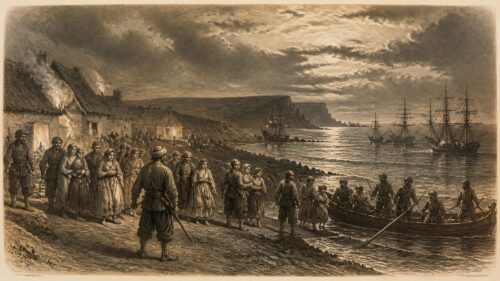
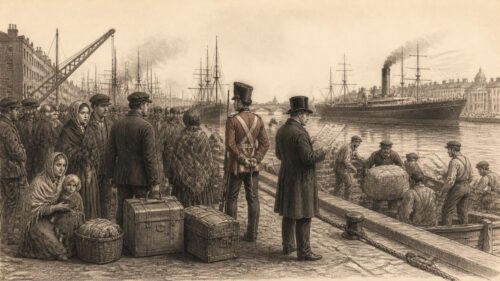
The Great Famine of the 1840s remains the unavoidable historical backdrop to any discussion of resilience in Ireland. It was not simply a natural calamity. Potato blight was the immediate biological shock, but the scale of mortality, sickness, eviction, destitution and emigration was shaped by social inequality, land tenure, official policy and the limitations of relief. The famine shows why resilience cannot be reduced to endurance. Communities displayed extraordinary mutual support, but survival strategies were constrained by poverty and power. To praise resilience without asking who had food, land, income, mobility and political influence risks turning a history of suffering into a comforting story.
The famine also demonstrated the importance of connections beyond local places. Grain markets, ports, workhouses, emigrant routes and imperial administrative structures affected what was possible. Yet the island was then governed as part of the United Kingdom, and later constitutional division should not be projected backwards. The relevant historical point is not that a modern all-island system already existed, but that island-wide crises exposed the limits of fragmented relief. Later public-health and welfare arrangements grew partly from the recognition that emergency conditions could overwhelm customary charity and local capacity.
Health Measures
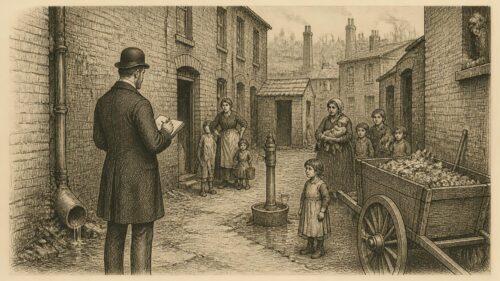
Nineteenth-century epidemics made public health a practical matter of administration as well as medical knowledge. Cholera, typhus, smallpox and other infectious diseases travelled along routes of movement and trade. Towns responded with boards of health, temporary hospitals, burial measures, cleansing schemes and regulation of water or overcrowded housing. These interventions were imperfect, and contemporary understandings of disease were often incomplete. Still, they encouraged habits of reporting, inspection and communication that became essential to later public health.
Public health developed unevenly. Rural poverty, inadequate sanitation and limited medical access meant that the benefits of reform were not shared equally. Many measures also carried coercive elements: quarantine, removal to hospital, restrictions on movement and intrusive inspection could be feared as much as welcomed. Historical evidence therefore cautions against treating emergency planning as purely technical. Public trust matters. So do language, local knowledge, access to care and the perceived fairness of restrictions. These were lessons repeatedly rediscovered during later outbreaks of human and animal disease.
There is no basis for claiming an uninterrupted institutional line from nineteenth-century sanitary boards to modern North/South emergency management. The systems were separated by constitutional change, political conflict and enormous advances in medicine and communications. There is, nevertheless, a recognisable continuity of problem. Contagion creates pressures that disregard administrative frontiers. Authorities need reliable information, timely communication and workable arrangements for the movement of patients, staff and supplies. These requirements became especially significant after partition, when a formerly internal administrative geography became an international boundary.
Border Creation
The partition of Ireland transformed the setting in which common hazards were addressed. The Border did not erase older social, commercial or family connections, but it divided public authority between the Irish Free State, later Ireland, and Northern Ireland within the United Kingdom. Different departments, laws, funding systems and professional structures developed. In areas close to the Border, ordinary life continued to involve roads, farms, rivers, markets and kinship networks that crossed it. Administrative separation and practical interdependence existed together.
That coexistence was frequently awkward. Co-operation could be limited by political distrust, by different policy priorities and by the sensitivities attached to sovereignty. It could also proceed quietly in technical fields where the mutual benefit was obvious. Veterinary control, river management, public health, transport and policing all posed questions that could not always be resolved neatly by jurisdiction. A disease or flood did not become less urgent because responsibility was divided. Yet joint action required communication, compatible procedures and a willingness to share information.
Partition also changed the symbolism of emergency work. A cross-border ambulance arrangement, for example, might be a simple response to distance and time; it could also be interpreted through competing constitutional narratives. This was especially true during periods of heightened political tension. The historical value of the later all-island resilience language lies partly in its attempt to frame co-operation around common safety rather than constitutional aspiration. That does not remove politics, but it may make practical collaboration easier to defend publicly.
Conflict Years
The conflict usually known as the Troubles imposed severe pressures on public institutions and communities from the late 1960s through the 1990s. Violence, bomb threats, shootings, displacement, security operations and attacks on infrastructure changed the working environment of emergency services. Responders often acted under extraordinary strain. Hospitals, ambulance staff, fire crews, local authorities and voluntary organisations dealt with the immediate consequences of incidents while wider political relationships deteriorated.
It would be misleading to describe this period simply as one of resilience. That word can conceal grief, fear and profound damage. The experience of surviving violence was not evenly shared, and no general account can substitute for the histories of victims, bereaved families or communities that endured repeated attacks. Nor did emergency need automatically produce harmonious co-operation. Security concerns, institutional separation and mistrust could impede it. The Border was both a line of jurisdiction and, in many places, a heavily politicised landscape.
Yet the period also underlined a basic operational truth: serious incidents could have effects across the island. Medical treatment, information exchange, road closures, environmental contamination and public reassurance all required attention beyond the immediate scene. The practical relationships developed among professionals should not be romanticised as a substitute for political settlement. They were constrained by the conflict. But they helped demonstrate that the protection of life and the management of consequences could be shared concerns even where constitutional agreement was absent.
Peace Structures
The Belfast or Good Friday Agreement of 10 April 1998 created the most important constitutional framework for later North/South co-operation. Its Strand Two arrangements established the North/South Ministerial Council, bringing together those with executive responsibilities in Northern Ireland and the Irish Government. The Agreement envisaged consultation, co-operation and action on matters of mutual interest, including where there was a cross-border or all-island benefit. Its annex specifically identified such potential fields as agriculture and animal health, transport, environment, waterways, marine matters and health, including accident and emergency services.
This was not an all-island emergency-management authority. The Agreement neither abolished separate jurisdictions nor transferred general responsibility for civil contingencies to a joint body. Its significance was constitutional and practical. It supplied recognised channels through which administrations could meet, exchange information and develop policies by agreement. It also embedded a principle crucial to later resilience work: co-operation should operate within the respective democratic and legal arrangements of North and South.
The institutions created after 1998 were often affected by political disagreement and by periods in which devolved government in Northern Ireland was not functioning fully. That fragility must be acknowledged. Nevertheless, the Agreement changed the context in which technical collaboration could occur. It made cross-border work less dependent on informal exception and more capable of being presented as normal public business. In historical terms, this was a major shift. Shared risks were no longer merely inconvenient facts at a contested frontier; they became subjects for structured, consent-based discussion.
Animal Health
Animal health offers one of the clearest examples of why co-operation on the island has practical force. Livestock farming, animal movements, food processing and veterinary surveillance form interconnected systems. An outbreak of a serious animal disease can cause immediate losses for farmers and workers, disrupt trade and impose restrictions on rural communities. It can also require rapid tracing, testing, movement controls, laboratory work and public communication. Such tasks are difficult enough within one administration; they become more difficult if policies and information are poorly aligned across a nearby border.
After the 1998 Agreement, animal and plant health became an identified area for North/South attention. In late 2001 the North/South Ministerial Council commissioned work towards closer co-operation and joint strategies in animal health and welfare. Subsequent Irish animal-health surveillance material describes regular engagement on diseases of common concern, including bovine tuberculosis, bovine spongiform encephalopathy and scrapie. This was neither a symbolic exercise nor evidence of a merged veterinary state. It was a recognition that surveillance and disease control gain value when neighbouring systems can compare information and co-ordinate measures.
The language of ‘one island’ can be useful in this field, but it should be used carefully. Veterinary powers and trade rules have not been identical in both jurisdictions, particularly as wider European and UK arrangements changed. Co-operation does not remove those differences. Instead, it seeks workable connections between them. This distinction is central to all-island resilience. The aim is not necessarily uniformity. It is the capacity to recognise a common risk early, reduce avoidable inconsistency, and respond without allowing an administrative boundary to become a gap in protection.
Farming Crisis
The 2001 outbreak of foot-and-mouth disease was a formative episode. The wider outbreak began in Britain, and restrictions affecting agriculture, movement and rural life followed across Ireland. Ireland recorded a single confirmed outbreak in a flock of sheep that year. Even where infection did not spread widely, the social and economic effects of precautions were substantial. Markets, farm visits, transport, sporting events and rural tourism were affected. The episode showed that a disease threatening animals could alter the rhythms of whole communities.
Its significance for North/South resilience lies in the operational lessons rather than in a claim of complete success. In 2004 the Minister for Agriculture and Food told Dáil Éireann that a new Irish contingency plan and operations manual had drawn heavily upon the 2001 experience and had included input from the Northern Ireland Department of Agriculture and Rural Development. He also referred to continuing co-operation on an all-island animal-health strategy and to efforts to harmonise approaches to serious contagious diseases. That parliamentary record provides unusually direct evidence of a crisis shaping later preparedness.
Foot-and-mouth disease also illustrates why preparedness cannot wait for an emergency. Once movement restrictions are necessary, the quality of existing contacts, data systems, training and public messages becomes critical. Farmers need clear instructions; veterinary staff need shared situational awareness; neighbouring authorities need to understand each other’s powers and procedures. No plan can eliminate loss or anxiety. It can, however, reduce delay and confusion. The 2001 experience became part of the institutional memory from which later cross-border resilience work developed.
Emergency Frameworks
Modern civil-contingencies arrangements in Ireland and Northern Ireland are distinct. In Ireland, strategic emergency planning has been developed through national structures coordinated by the Office of Emergency Planning and, in more recent arrangements, the National Directorate for Fire and Emergency Management. Northern Ireland has its own Civil Contingencies Framework, supported through the Executive Office and designed to bring public bodies and responders into a common approach. The legal and administrative contexts are not the same, and any history that pretends otherwise would be inaccurate.
The Northern Ireland framework reflects the particular character of devolution within the United Kingdom. Many functions relevant to emergencies are devolved, while others, including aspects of national security and certain reserved responsibilities, remain connected to UK structures. Irish arrangements operate through a separate state and legal order. These differences shape decision-making, funding, information governance and public accountability. They cannot simply be dissolved by goodwill or common terminology.
At the same time, both systems recognise that local and regional emergencies may have cross-border dimensions. Official UK guidance has long noted that district councils adjoining the Border may have arrangements with local authorities across it, and that regional emergencies can require co-ordinated work with counterparts in Ireland. The practical implication is modest but important. A cross-border response does not require a single command structure for every incident. It requires agencies to know whom to contact, how to exchange information, when mutual aid is possible, and where separate legal responsibilities remain.
Working Networks
The most durable form of resilience is often professional familiarity. Formal agreements matter, but an emergency rarely allows responders to begin building trust from scratch. Fire officers, ambulance personnel, health officials, police services, local-authority staff, coastguard teams, veterinarians and infrastructure operators need opportunities to meet, train and exercise before a major incident occurs. They also need a shared understanding of terms that may appear interchangeable to outsiders but have specific legal or operational meanings within each jurisdiction.
The Cross-Border Emergency Management Group exemplifies this networked approach. Its stated objectives include acting as a multi-agency planning group, improving co-operation and resilience, developing joint protocols and training, strengthening arrangements for prevention, preparedness, mitigation and response, and advancing interoperability between major-emergency plans. Its membership spans agencies and services from both jurisdictions. The breadth matters: a serious event may involve emergency response, public health, transport, environmental protection, local government and communications simultaneously.
Interoperability is a practical word with a broad meaning. It can refer to equipment, radio systems and command procedures, but it also includes compatible expectations. A team arriving to assist needs to know who has authority, how risks are assessed, what safety rules apply and how information will be recorded. These are unglamorous matters, yet historical experience shows that they determine whether declared co-operation becomes useful action. The strongest evidence for all-island resilience is therefore not a slogan but the slow accumulation of relationships, protocols and joint exercises.
Health Borders
Health has always made the artificiality of a rigid border especially visible. Patients may live nearer to a hospital across the Border than to one within their own jurisdiction. Ambulances may operate in areas where roads and travel patterns make cross-border assistance sensible. Disease surveillance, laboratory capacity and health messaging may also have to take account of communities whose work, schooling, shopping and family life cross the frontier regularly.
The Belfast Agreement’s specific reference to accident and emergency services reflected this practical reality. It did not guarantee a seamless all-island health service, and it would be wrong to imply that it did. Health systems retain distinct funding, governance, workforce and eligibility arrangements. Nonetheless, the Agreement made health one of the legitimate fields for co-operation and helped create a setting in which shared services or protocols could be considered on their merits.
Experience during the COVID-19 pandemic gave the subject renewed urgency. The pandemic was global rather than uniquely cross-border, and its effects exposed limitations as well as strengths in public administration. Different legal rules and political timetables could generate confusion, particularly where people moved regularly between jurisdictions. Yet the underlying challenge was unmistakable: public-health risks, clinical knowledge and supply needs were not contained by the Border. The subsequent emphasis in Northern Ireland’s civil-contingencies framework on lessons from the pandemic is evidence that resilience policy has been shaped by recent experience, not merely by abstract planning.
Water Risks
Flooding provides another instructive case because water respects neither political maps nor administrative convenience. Rivers and catchments may pass through or near the Border, while intense rainfall can affect neighbouring districts in different jurisdictions within hours. Flood response involves immediate rescue and protection, but also drainage, roads, housing, farming, insurance, planning policy, environmental management and long-term recovery. No single agency can resolve every part of the problem.
Historical accounts of Irish flooding frequently focus on dramatic events, damaged towns or exceptional weather. Those episodes matter, but resilience depends equally on less visible work: maintaining channels, mapping risk, monitoring rainfall, planning land use, warning residents and ensuring that emergency services can reach vulnerable places. The all-island question arises where information, watercourses, transport routes or response capacity cross the Border. Coordination can improve the picture available to decision-makers even when responsibility for each side’s infrastructure remains separate.
Climate change has made this question more prominent, although the historical record should be approached with care. It is possible to say that planners now treat severe weather and flood risk as important resilience concerns. It is less defensible to attribute every individual storm or flood directly to climate change without specialist evidence. The historical point is that environmental hazards have always required adaptation; contemporary institutions are attempting to manage them with better forecasting, scientific data and cross-border communication than earlier generations possessed.
Infrastructure Links
Resilience increasingly concerns systems as much as incidents. Electricity, telecommunications, transport, ports, fuel distribution, food supply and digital networks connect communities across the island and beyond it. A disruption in one part of a system may have consequences elsewhere. This does not mean that every infrastructure question demands an all-island solution. Ownership, regulation, investment and market structures differ. It does mean that planners must understand interdependence before a crisis reveals it abruptly.
The 2022 resilience conference explicitly included sessions on shared-island critical infrastructure, cyber resilience, health co-operation, climate adaptation and a practical all-island exercise. These topics indicate how the meaning of emergency management has widened. Earlier civil-defence thinking often centred on discrete events and frontline response. Contemporary planning also considers cascading effects: how a power failure can affect communications, water treatment, hospital care, transport, banking and food distribution; or how misinformation can undermine response even when physical systems remain intact.
There are political as well as technical limits to this approach. Cross-border infrastructure is often discussed in the language of opportunity, but resilience demands sober attention to vulnerability, cost and responsibility. Joint dependence can provide mutual support; it can also create shared exposure. Historical analysis should resist easy conclusions. The existence of a cross-border network does not automatically make either jurisdiction safer. Its value depends on maintenance, governance, contingency planning, trained staff and the capacity to act under pressure.
Fire Cooperation
Fire and rescue cooperation has become a particularly visible strand of recent North/South capacity building. In 2025 the Irish Government announced Shared Island funding for coordinated work between the National Directorate for Fire and Emergency Management and the Northern Ireland Fire and Rescue Service. The measures included expanded training, interoperable urban search and rescue equipment, and flood-containment capacity. They were presented as support for joint training and collaborative response rather than as the creation of a single all-island fire service.
The distinction is significant. Mutual aid is most credible when the respective services retain clear command, statutory duties and public accountability. Joint training can nevertheless reduce obstacles when help is needed urgently. It allows responders to become familiar with equipment, procedures and colleagues before an incident. Urban search and rescue is especially dependent on such preparation because major structural collapse, flooding or technical rescue can require specialist skills and resources beyond the routine capacity of a single locality.
Funding also has a historical dimension. Earlier cross-border initiatives often depended on short-term projects or personal relationships. Programmes supported through peace-building and shared-island mechanisms seek to turn some of that cooperation into enduring capacity. Whether they succeed will depend on continued training, maintenance and political support. Announcements and equipment purchases are beginnings, not final proof of resilience. The historical record suggests that capability must be renewed repeatedly if it is to survive changes of government, budget pressure and institutional turnover.
Public Confidence
Emergency planning is often described through structures and agencies, but resilience also depends on public confidence. People need information they can understand and trust. Border communities may receive media from more than one jurisdiction, encounter different public-health instructions, and use services on both sides. If official messages conflict or arrive late, the practical result may be uncertainty even where responders are working effectively.
This is one reason recent all-island resilience discussion has included public-safety messaging to border communities as a research subject. The issue is not merely one of wording. A warning must identify the relevant hazard, explain who is affected, offer realistic advice and make clear which authority is issuing it. It must also take account of unequal access to digital communication, disability, language needs and local patterns of movement. A message that is technically accurate but inaccessible can fail those who most need it.
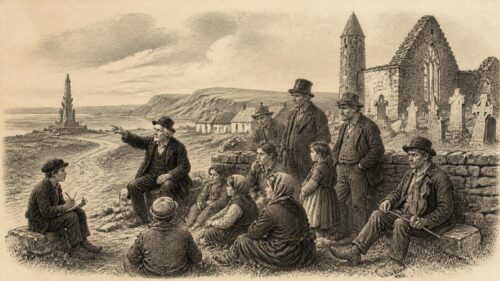
History offers no simple formula for trust. Irish experience shows that people judge official action through memories of previous emergencies, political affiliation, economic circumstances and local relationships. Voluntary groups, local media, schools, faith communities and neighbours may be as important as central government in transmitting information and practical help. Resilience is therefore social as well as administrative. It cannot be delivered entirely from Dublin, Belfast or London, even when strategic direction from those centres is necessary.
Constitutional Limits
All-island resilience must be distinguished from a constitutional programme. The phrase can describe co-operation across the island, but it does not settle the constitutional status of Northern Ireland. The Belfast Agreement rests on the principle of consent and on institutions designed to accommodate different political identities and aspirations. Practical co-operation is most likely to endure when it respects that settlement rather than appearing to bypass it.
This does not mean that constitutional questions are irrelevant. They shape law, funding, trade, border arrangements and the political atmosphere in which agencies work. Changes in the relationship between the United Kingdom and the European Union have demonstrated how quickly technical matters can acquire constitutional significance. Animal movement, food standards, supply chains and data-sharing can all become contested. Resilience work must therefore be precise about what it can achieve. It can improve preparedness and response; it cannot resolve every political disagreement.
The historical achievement is not the disappearance of difference but the creation of channels through which difference can be managed. The North/South institutions, professional networks and project-based partnerships developed since 1998 provide mechanisms for addressing practical concerns without requiring unanimity on larger questions of identity. Their existence should not be taken for granted. They are products of negotiation, legal design and sustained human effort. Their weakness is also their strength: they depend on continued consent and must therefore remain attentive to legitimacy.
Historical Balance
A balanced history of all-island resilience should avoid two opposite errors. The first is to imagine that the island’s shared geography has always produced easy unity. It has not. Partition, conflict, divergent administrations and political mistrust have repeatedly limited co-operation. The second is to imagine that the Border makes meaningful collaboration impossible. The documented experience of animal-health work, health cooperation, emergency planning and fire-service training shows otherwise.
Evidence supports the conclusion that cross-border emergency management has become more organised in the decades since the Belfast Agreement. Official frameworks identify contacts, responsibilities and areas for joint work. Conferences, research calls, exercises and funded projects have given the idea wider visibility. Evidence does not support the stronger claim that Ireland now possesses a fully unified resilience system. Separate jurisdictions remain, and their differences are sometimes consequential. ‘All-island’ is better understood as an operating scale for certain risks than as a description of a single state apparatus.
Interpretation is also required. The growing use of resilience language may reflect a genuine recognition of interdependence, but it can also serve as a politically careful way to discuss co-operation. That ambiguity is not necessarily a flaw. In a society shaped by contested identities, a vocabulary centred on safety, preparedness and recovery can create room for practical agreement. Its value should be judged by outcomes: clearer plans, quicker assistance, better communication, safer communities and a capacity to learn after failure.
Future Lessons
The historical record points to several durable lessons. First, hazards are rarely confined to the institutions expected to manage them. Health emergencies affect transport and employment; floods affect housing, farming and communications; animal disease affects trade, mental wellbeing and rural culture. Second, relationships built before a crisis are more useful than promises made during one. Third, local knowledge is indispensable. Border communities understand their roads, river crossings, farms, family networks and service patterns in ways that central plans may overlook.
Fourth, resilience must include fairness. The ability to recover from disruption is distributed unequally. Households with savings, secure housing, transport, insurance and reliable information can absorb shocks more easily than those without them. Rural isolation, poverty, disability, age and insecure work can turn a general emergency into a personal catastrophe. Historical memory of famine, migration, conflict and economic inequality should make Irish policymakers wary of presenting resilience as a simple demand that communities cope alone.
Finally, cooperation needs maintenance. The work of meetings, exercises, shared terminology, compatible communications and joint training can seem routine until it is needed. Yet it is precisely this routine labour that converts a broad aspiration into capability. All-island resilience, properly understood, is neither an inherited national trait nor a substitute for constitutional debate. It is the continuing, evidence-based effort to ensure that an emergency crossing the Border does not find public institutions unable to cross it in response.


The article’s striking implication is that all-island resilience depends less on dissolving jurisdictional differences than on making those differences workable during emergencies. Foot-and-mouth disease, flooding and pandemic planning show how shared hazards demand information exchange, compatible procedures and public trust, yet the history also warns that resilience language can hide unequal resources and experiences. The Belfast/Good Friday Agreement provided legitimate channels for co-operation, but political consent and separate legal powers remain constraints. How might North/South emergency planning balance the benefits of common standards and joint action with local accountability, differing capacities, and communities’ trust that restrictions and assistance are fair?