

Reconciled Island
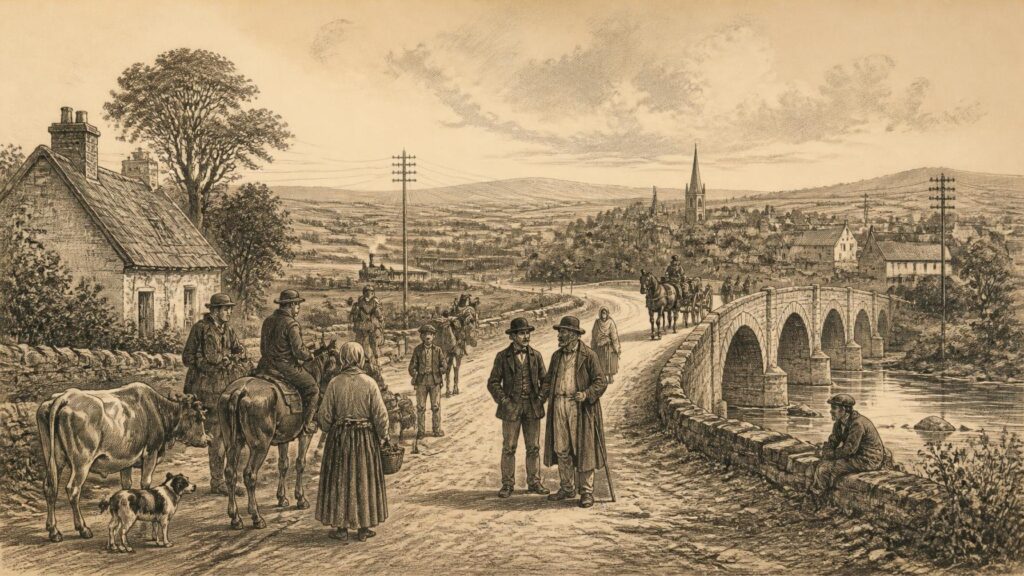
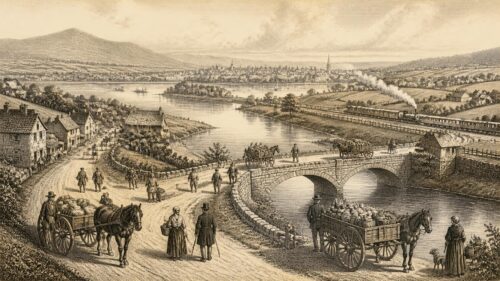
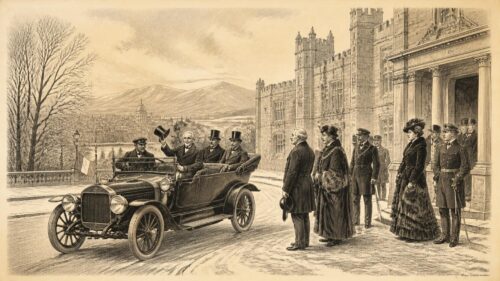
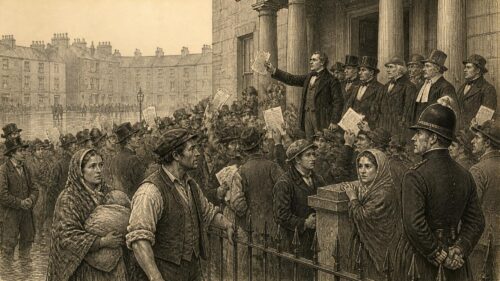
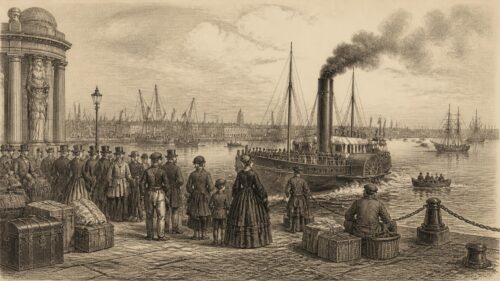
AI generated historical illustration, not a contemporary photograph.
At a Glance
“Shared Island Reconciliation” is not the name of a single historical event, nor is it a settled constitutional programme. It is a contemporary phrase for an older Irish problem: how people formed by rival national loyalties, unequal political experiences, partition and political violence might live with one another in security and dignity. Its history is therefore not simply the history of unity or division. It is the history of repeated efforts to make difference governable without making one community’s identity conditional upon another’s defeat.
Contested Language
The phrase “shared island” can sound deceptively plain. Ireland is physically one island, but political authority, citizenship, memory and allegiance have not been singular. Since the establishment of Northern Ireland in the early 1920s, the island has contained jurisdictions with different constitutional arrangements and populations whose national self-understandings overlap, conflict and sometimes coexist. For some, an island shared in practical life suggests cooperation without constitutional change. For others, it implies preparation for a future united Ireland. For many unionists, the phrase can provoke concern if it appears to take the desired constitutional outcome for granted. For nationalists, it may seem incomplete if it treats partition as permanent or morally neutral.
Reconciliation is equally difficult. It does not mean that all historical accounts must become identical, that political disagreement disappears, or that bereaved families must forgive. It is better understood as a process through which people and institutions reduce the power of inherited hostility, accept the equal legitimacy and safety of others, and create habits of cooperation. That process is necessarily political as well as personal. It concerns laws, policing, schools, commemorations, public symbols, public money, cross-border services and the language through which people describe the place in which they live.
Historical writing must distinguish these meanings. A shared island is not proven merely because goods, workers and visitors cross the border. Reconciliation is not proven merely because violence has declined. Nor should either term be dismissed because difficult arguments persist. The Belfast or Good Friday Agreement of 10 April 1998 established a constitutional and institutional framework intended to permit deep disagreement without a return to coercion. The later Shared Island initiative of the Irish Government operates within that framework, rather than replacing it. Its historical importance lies in the way it revisits a central question left unresolved by partition: whether relationships across the island can become more ordinary, informed and mutually respectful whatever constitutional future the people choose.
Partition Origins
The roots of the present problem lie in the constitutional crisis that followed the Home Rule struggle, the First World War, the Irish revolutionary period and the competing national projects that emerged from them. It would be misleading to represent the division of Ireland as an inevitable consequence of religious difference alone. Political loyalties, economic connections, regional patterns of settlement, class, imperial attachment and fear of domination all mattered. In Ulster, many Protestants—especially though not exclusively in the north-east—identified strongly with the Union and regarded an all-Ireland parliament in Dublin as a threat to their political influence, cultural security and economic interests. Irish nationalists, meanwhile, generally understood self-government or independence as the democratic fulfilment of an Irish national claim.
The Government of Ireland Act 1920 created separate parliaments for Northern Ireland and Southern Ireland, while also providing for a Council of Ireland. The measure did not solve the constitutional conflict. The southern institutions envisaged by Westminster did not command nationalist legitimacy and were overtaken by the War of Independence and the Anglo-Irish Treaty. But the Northern Ireland arrangements came into operation in 1921, placing six north-eastern counties within a devolved polity in the United Kingdom. The boundary was subsequently confirmed, although its practical effects were sharpened by the violence, displacement and insecurity of the period.
Partition created more than a line on a map. It made national identity an everyday administrative matter. Elections, public employment, housing, policing, education and municipal boundaries took on heightened political meaning in a state where a unionist majority governed a substantial nationalist minority. In the Irish Free State, and later in the Republic of Ireland, partition was widely treated as unfinished national business. In Northern Ireland, the Union was defended not simply as a constitutional preference but as a guarantee against incorporation into a state many unionists feared would not accommodate them fairly.
The Council of Ireland envisaged in 1920 is sometimes presented retrospectively as an early blueprint for cooperation. It is more accurate to say that it showed an awareness that the island’s affairs could not be neatly divided, while also demonstrating the weakness of institutions not supported by consent. The Council never developed into a durable all-Ireland forum. Its fate is a warning against treating institutional design as a substitute for trust. Yet the later North/South bodies of the 1998 settlement would draw on a different principle: cooperation should be agreed by both governments and embedded in a wider constitutional settlement, not imposed as a route around political consent.
Unequal Statehood
For decades after 1921, politics in Northern Ireland was marked by a stable unionist parliamentary majority and by nationalist alienation. Historians debate the extent to which particular practices should be described as systemic discrimination, and they rightly attend to variations between places and periods. The broad documentary record nevertheless shows that grievances over electoral arrangements, housing allocation, local government and employment became central to nationalist criticism of the Northern Ireland state. Unionists often regarded criticisms as partisan attacks upon the state’s legitimacy, while nationalists regarded official assurances as inadequate to their experience.
These disagreements hardened because the constitutional question made ordinary policy disputes appear existential. A unionist concerned about security or the Union could interpret nationalist demands as steps towards dismantling Northern Ireland. A nationalist facing exclusion could interpret appeals to order as a defence of entrenched inequality. Neither interpretation was merely a rhetorical invention: both arose from genuine historical fears. The difficulty was that each community’s protective story could make the other community’s insecurity less visible.
Relations between the Dublin and London governments were also shaped by competing claims. The Constitution adopted in 1937 contained Articles 2 and 3, which asserted a national territorial claim while recognising the laws then in force in the area governed by the Northern Ireland parliament. Unionists saw these provisions as evidence that the Republic did not accept their constitutional position. Many nationalists saw them as an assertion of national continuity rather than a practical plan for coercive incorporation. The difference mattered because words in constitutional texts can carry emotional authority far beyond their technical legal operation.
Throughout these decades, everyday contacts persisted. Families crossed the border; farmers traded; churches, sporting organisations and cultural networks linked places north and south. Such contacts mattered, but they did not dissolve the political structure of division. Nor should folklore about an undivided older Ireland be mistaken for evidence of a simple lost harmony. The island’s past includes long patterns of interaction, migration and shared culture, but it also contains conflicts over land, religion, sovereignty and power. Historical reconciliation requires room for both realities.
Civil Rights
The Northern Ireland civil-rights movement of the late 1960s brought longstanding grievances into public view. Its campaigners called for reforms associated with democratic equality, including fairer electoral practice, housing allocation and protection from discrimination. The movement was diverse: some participants sought reform within Northern Ireland, while others held nationalist or republican aspirations. Its emergence cannot be reduced to a single cause, but it made the internal legitimacy of the Northern Ireland state impossible to ignore.
The response to civil-rights protest, including policing controversies, street violence and counter-demonstrations, deepened mistrust. Events unfolded in a wider atmosphere of fear, paramilitary mobilisation and constitutional uncertainty. By 1972, following escalating violence and the collapse of Stormont, the British Government imposed direct rule. This was not reconciliation; it was a recognition that Northern Ireland’s existing arrangements had failed to command sufficient confidence or maintain political order.
The onset of the Troubles transformed the problem. Republican paramilitaries, particularly the Provisional IRA, pursued a campaign that they claimed was directed towards ending British rule and achieving Irish unity. Loyalist paramilitaries carried out attacks in defence of the Union and against the nationalist community. State forces were also involved in contentious and sometimes unlawful violence. Civilians bore the greatest cost. Murder, injury, intimidation, imprisonment, displacement and bereavement reached into workplaces, streets and families. The conflict’s effects did not fall evenly, nor can all actors’ intentions or responsibilities be treated as identical. Reconciliation does not require such false equivalence. It requires an honest recognition that many people endured profound loss and that no community possesses a monopoly on suffering.
The language used about this period remains sensitive. “The Troubles” is widespread and can offer a practical shorthand, but some find it too mild for sustained political violence. “Conflict” can clarify that more than one armed and state actor was involved, while also risking an impression that violence was impersonal. “War” is used by some participants but is contested. Responsible historical prose should neither evade the nature of the violence nor impose a vocabulary that conceals disagreement.
Failed Settlements
Before 1998, several initiatives demonstrated both the necessity and difficulty of agreement. The Sunningdale Agreement of 1973 proposed power-sharing and a Council of Ireland. It represented an important attempt to join internal Northern Ireland reform to an Irish dimension. Its collapse in 1974, amid unionist opposition, a loyalist strike and a grave security crisis, became a durable lesson in the perils of agreements that lack sufficient political support and public confidence.
The Anglo-Irish Agreement of 1985 gave the Irish Government a consultative role in Northern Ireland affairs through an intergovernmental conference. It did not grant Dublin authority over Northern Ireland, but it was fiercely opposed by unionists, who saw it as an intrusion into the United Kingdom’s internal affairs. Nationalists often viewed it as an overdue recognition that the Irish Government had a legitimate interest in the wellbeing of nationalists in Northern Ireland. The agreement did not end violence, but it normalised structured British-Irish consultation and helped create a governmental relationship capable of supporting later negotiations.
The Downing Street Declaration of 1993 advanced a decisive principle: the British Government stated that it had no selfish strategic or economic interest in Northern Ireland and accepted that any change in its status would depend on the consent of a majority there. This did not satisfy all parties, but it helped clarify that constitutional change could be pursued only by democratic means. The declaration also recognised the need to address the fears of unionists and nationalists alike. In historical terms, this was a movement away from rival vetoes and towards a framework in which consent, equality and dialogue could coexist.
These initiatives were not a smooth ascent towards peace. They occurred amid continuing killings, failed ceasefires, political exclusion and deep public suspicion. Their significance is that they established pieces of a later settlement: British-Irish governmental partnership, power-sharing, a North/South dimension, and a principle that no constitutional arrangement should be changed by force. The record also shows why reconciliation cannot be narrated as elite diplomacy alone. Agreements are sustained only when people experience them as compatible with their security, rights and dignity.
Agreement Architecture
The Belfast or Good Friday Agreement was signed on 10 April 1998 after multiparty negotiations involving the British and Irish Governments and most of Northern Ireland’s principal parties. It comprised a Multi-Party Agreement and a British-Irish Agreement. Its achievement was not that it settled every argument. Rather, it created interlocking arrangements through which arguments could be pursued peacefully.
Its first strand concerned democratic institutions within Northern Ireland: an Assembly elected by proportional representation and an Executive intended to share power across major political designations. Its second strand established North/South institutions, including the North/South Ministerial Council and implementation bodies for defined areas of cooperation. Its third strand created or strengthened relationships across these islands through the British-Irish Council and British-Irish Intergovernmental Conference. This three-stranded arrangement acknowledged that Northern Ireland could not be understood solely as a local constitutional unit. It was also part of the United Kingdom, part of the island of Ireland, and connected to a wider network of relations between Britain and Ireland.
The constitutional provisions were especially important for reconciliation. The Agreement affirmed that it was for the people of the island of Ireland alone, exercised respectively in both jurisdictions and without external impediment, to determine their constitutional future by consent. Northern Ireland would remain part of the United Kingdom unless a majority there chose otherwise. It also recognised the birthright of the people of Northern Ireland to identify and be accepted as Irish, British or both, and to hold both British and Irish citizenship. These clauses did not ask people to abandon national identities. They placed them under equal legal protection.
In May 1998, voters in Northern Ireland and the Republic endorsed the settlement in referendums. The Republic’s Nineteenth Amendment enabled the State to approve the British-Irish Agreement and provided for new constitutional wording, including revised Articles 2 and 3, once the agreement came into force. That constitutional revision was symbolically and politically significant. The Irish State moved from a territorial claim expressed in earlier language towards an aspiration for unity achieved by peaceful means and majority consent, while expressly respecting the diversity of identities and traditions on the island.
The Agreement’s language about reconciliation was neither ornamental nor an assurance that reconciliation had already happened. The British and Irish Governments committed themselves to develop close cooperation and friendly relations, while participants committed to partnership, equality and mutual respect. Its practical methods included equality duties, human-rights commitments, reform of policing, decommissioning, provisions concerning prisoners, and new cross-border institutions. Each area remained contentious. Yet together they changed the constitutional grammar of Irish politics: the future would be negotiated, identities would have formal standing, and neither community should have to accept political humiliation as the price of peace.
Uneven Peace
Peace after 1998 was real, but it was uneven. The scale of politically motivated violence fell dramatically from the worst years of the Troubles. Former adversaries entered institutions and, at various times, governed together. Cross-border bodies became normal components of public administration. Tourism, trade, higher education, environmental management and emergency planning provided practical occasions for cooperation. It would be historically careless to minimise these changes. A generation has grown up in circumstances profoundly different from those of the 1970s and 1980s.
At the same time, the institutions have experienced repeated suspension and strain. Disputes over decommissioning, policing, language, welfare policy, flags, parades, the legacy of violence and the operation of power-sharing have revealed how incomplete the transformation remains. A system designed to protect major communal interests can reduce the danger of domination, but it can also encourage parties to address voters principally through communal narratives. This is an interpretation shared by many scholars of divided societies, not a statement that power-sharing was a mistake. The alternative to imperfect accommodation in 1998 was not an imagined consensus; it was a far more dangerous political landscape.
Segregation has also endured. In many places, residential patterns, schools and social networks remain structured by community background. Peace walls and interfaces are visible reminders that the absence of widespread conflict does not necessarily produce everyday intimacy. Shared education, integrated schooling, youth projects and local initiatives have created valuable contact, but contact is neither automatic nor uniformly transformative. It can be cautious, temporary or shaped by unequal power. The most durable work often takes place in local relationships that receive less public attention than high politics.
Academic work from Ulster University on everyday reconciliation is useful here. It argues for attention to the small-scale indicators of positive change within particular communities, rather than measuring reconciliation only by constitutional agreement or headline political events. This approach does not romanticise local life. It recognises that trust may be practical before it becomes ideological: neighbours cooperate over amenities, parents support children’s activities, and voluntary groups work across lines once regarded as fixed. Such developments are historically significant precisely because they are ordinary.
Remembered Violence
Dealing with the past remains among the hardest dimensions of reconciliation. Families seek information about killings, disappearances and alleged collusion; survivors seek recognition of injury; former combatants, police officers and soldiers bring their own experiences and moral claims. Public debate often turns on whether truth, justice, acknowledgement, prosecution, memorialisation, financial support and forgiveness can be pursued together. There is no painless formula.
The record demonstrates why broad language about “moving on” can be inadequate. People do not leave history behind merely because politicians prefer a forward-looking agenda. Unresolved deaths and unanswered questions can remain immediate within families for decades. Nor is there a single shared narrative of the Troubles waiting to be discovered. Different experiences generate different accounts of cause, responsibility and loss. A historical culture capable of reconciliation must therefore distinguish between accepting plural memories and accepting demonstrably false claims.
The 2009 report of the Consultative Group on the Past, commonly associated with its co-chairs Denis Bradley and Robin Eames, described reconciliation as elusive and contested but insisted that a shared future required a serious response to the legacy of division. Its proposals provoked strong opposition, especially the suggested recognition payment. The controversy illustrated an enduring difficulty: measures intended to acknowledge suffering can be interpreted as equating actions that others regard as morally or legally different. The failure to secure agreement did not make the underlying questions disappear.
Commemoration is similarly difficult. The centenaries of events from the revolutionary decade and the formation of Northern Ireland have shown both the possibilities and limits of inclusive remembrance. The Irish Government’s Decade of Centenaries approach explicitly sought commemoration that was respectful, evidence-based and alert to differing perspectives. Such language can be criticised as cautious, but caution has value when public remembrance might otherwise become a contest over whose dead, heroes or constitutional story are entitled to public recognition. It cannot remove pain. It can, however, establish that historical complexity need not be treated as betrayal.
Folklore and family memory also belong in this landscape, though they are not equivalent to archival proof. Stories passed through households may preserve details omitted from official records, but they may also change in retelling or merge separate incidents. Historians should treat them respectfully, test them where possible and state their status clearly. Reconciliation is poorly served by either dismissing lived memory or converting every inherited story into unqualified fact.
Border Questions
The United Kingdom’s decision to leave the European Union revived anxieties about the Irish border. For many people, the relative invisibility of the border in everyday movement had become one of the practical achievements of the post-1998 order, supported by common membership of the European Union and by the constitutional settlement itself. The prospect of new checks or political division raised fears that old territorial questions might again become more tangible.
The subsequent arrangements governing trade and regulation in Northern Ireland have generated intense political controversy. It is not necessary to resolve those controversies here to recognise their historical significance. They have reminded the public that cross-border cooperation depends on wider British-Irish and European relationships, and that economic arrangements can acquire profound symbolic meaning in a place where sovereignty is contested. They have also shown that technical solutions are rarely experienced as merely technical.
For reconciliation, the lesson is not that the border must become irrelevant. Borders matter differently to different people: as a constitutional guarantee, a reminder of division, a practical inconvenience, a source of economic opportunity or an object of fear. The more productive historical question is whether the border can be managed without turning identity into a zero-sum contest. The Agreement’s institutions were designed precisely to make multiple relationships possible: Northern Ireland can be within the United Kingdom while participating in North/South cooperation; individuals can be British, Irish or both; constitutional aspirations can be advanced peacefully without demanding immediate cultural surrender from others.
Shared Island
The Shared Island initiative was announced by the Irish Government in 2020. It presents itself as a whole-of-government effort to develop cooperation, connection and mutual understanding across the island, underpinned by the Good Friday Agreement. It includes dialogue events, commissioned research and investment programmes. Its declared focus extends beyond constitutional debate to areas such as infrastructure, climate, health, education, culture, community connection and economic development.
That scope is historically important. Earlier all-Ireland discussion was often dominated by the constitutional destination: union, partition or unity. The Shared Island approach attempts to give greater weight to the conditions of everyday coexistence. It asks, in effect, whether people can collaborate on shared problems even while disagreeing about the state to which Northern Ireland should belong. This is not a new idea; cross-border cooperation has long existed. But it is significant that an Irish Government policy now places reconciliation, mutual respect and practical partnership so prominently beside economic development.
There are legitimate reasons for caution. A government initiative cannot manufacture trust, and unionists may reasonably judge it by whether they are treated as participants with equal standing rather than as audiences to be persuaded. Nationalists may question whether practical cooperation can become a substitute for addressing constitutional aspiration. Critics may also ask whether investment labelled “shared” reaches communities most affected by division or simply supports projects already well placed to apply for funds. These are not objections to be brushed aside. They are tests of whether the language of reconciliation changes public practice.
The initiative’s strongest historical basis is its explicit connection to the Agreement’s consent principle. Reconciliation should not be defined as acceptance of one constitutional outcome. It should mean creating conditions in which any future constitutional decision, if it arises, is informed, democratic and nonviolent, and in which those who lose a vote retain security, rights and dignity. This is a demanding standard. It requires more than a respectful tone; it requires detailed planning, credible safeguards and an acknowledgement that constitutional change would affect institutions, welfare, citizenship, public finance, symbols and emotional belonging.
Constitutional Futures
The question of Irish unity remains legitimate and unresolved. The Agreement provides a route by which the Secretary of State may call a poll on Northern Ireland’s constitutional status when it appears likely that a majority would favour a united Ireland, and it provides for parallel democratic procedures in the Republic. It does not set a timetable, guarantee a particular result or settle the social meaning of unity. The constitutional future is therefore a matter for democratic argument, not historical prophecy.
Historical perspective should temper both certainty and alarm. Opinion may shift; demographic change does not mechanically dictate political preference; and identities do not map perfectly onto religious background or family origin. Some people identify as Northern Irish, some as both British and Irish, and some place little importance on national labels. Others hold strong and entirely sincere unionist or nationalist convictions. Any serious future debate must take that complexity as its starting point rather than treating it as an inconvenience.
The work of reconciliation is necessary under every plausible constitutional outcome. If Northern Ireland remains in the United Kingdom, the island will still require cooperative relationships and protection for nationalists who regard themselves as Irish. If a majority someday votes for unity, the need to accommodate British identity, unionist political traditions and continuing links with Great Britain would become more, not less, urgent. A majority vote may decide a legal status; it cannot by itself create emotional consent, mutual confidence or institutional competence.
Recent academic research on discussion of a possible constitutional referendum has emphasised uncertainty, emotion and the demand for reliable practical information. That finding is unsurprising in historical terms. Referendums condense complicated institutional futures into a binary choice, and Ireland’s past gives people reason to fear triumphalism. A reconciliatory debate would therefore need to be slower, more evidence-led and more attentive to people who do not begin from fixed constitutional camps. It would also need to reject the idea that reconciliation consists of asking one tradition to become culturally invisible.
Practical Trust
Trust is often described as an attitude, but it is also a consequence of repeated experience. It grows when public bodies act fairly, when agreements are implemented, when people encounter one another without threat, and when political leaders resist the temptation to turn every dispute into proof of communal danger. It weakens when rights appear conditional, language is careless, memorials are used as weapons or promises are treated as expendable.
Practical cooperation therefore has a modest but important role. An ambulance service, a cross-border rail connection, environmental protection, university partnership or cultural project does not resolve competing national narratives. It can, however, create relationships in which cooperation is normal rather than exceptional. Such schemes must not be oversold. Material projects can generate disagreement about funding, accountability and benefit. Their value lies not in symbolism alone but in whether people experience tangible improvements and fair participation.
Culture deserves similar care. Music, sport, literature and local history can create shared space, but they can also carry contested allegiances. The goal is not to produce an artificial culture stripped of distinctive traditions. It is to make cultural expression less threatening by ensuring that no tradition is granted a monopoly over public legitimacy. This means accepting that Irishness, Britishness, Ulster identities and newer forms of belonging are all part of the island’s lived reality.
Education is especially consequential because it shapes historical imagination. A reconciliatory curriculum should not demand that pupils admire the same people or reach identical moral conclusions. It should teach them to distinguish evidence from assertion, understand why people acted as they did, recognise the human cost of violence and identify propaganda in their own preferred tradition as well as in others. That is not neutrality in the sense of moral emptiness. It is intellectual fairness.
Historical Measure
The historical measure of shared-island reconciliation cannot be whether Ireland becomes politically united, because reconciliation is required before, during and after any constitutional decision. Nor can it be whether the past becomes comfortable. The past will remain painful to many. A better measure is whether citizens and public institutions become capable of acknowledging disagreement without treating neighbours as enemies or constitutional opponents as lesser inhabitants of the island.
The documented history offers grounds for guarded hope. The states that once framed their relationship through conflict now cooperate through treaty-based institutions. People who grew up amid bombings, shootings and military deployment have seen a political settlement survive crises that would once have seemed insurmountable. Constitutional language once experienced as mutually hostile was revised through democratic consent. These are achievements, not myths.
But the same history counsels humility. Agreements can be stalled; institutions can be suspended; old fears can acquire new forms. Reconciliation has no ceremonial finishing line. It is a discipline of public life: accurate remembrance, equal citizenship, patient dialogue, credible institutions and practical cooperation. The island may remain divided in sovereignty or may one day be united by consent. In either case, the essential task is the same: to ensure that no one must abandon identity, safety or dignity in order to belong.


The article presents Shared Island reconciliation as cooperation within the Belfast/Good Friday Agreement, rather than a predetermined route to constitutional change. This distinction seems crucial because practical links may encourage trust, while the same language can still evoke fears of displacement or expectations of unity. It also suggests that reconciliation requires more than reduced violence: it depends on equal recognition, honest engagement with memory, and safeguards accepted across communities. How might cross-border projects in education, services, culture or commemoration be designed to deepen everyday mutual respect while preserving confidence that differing British, Irish and all constitutional identities remain equally secure?