

Changing Vows
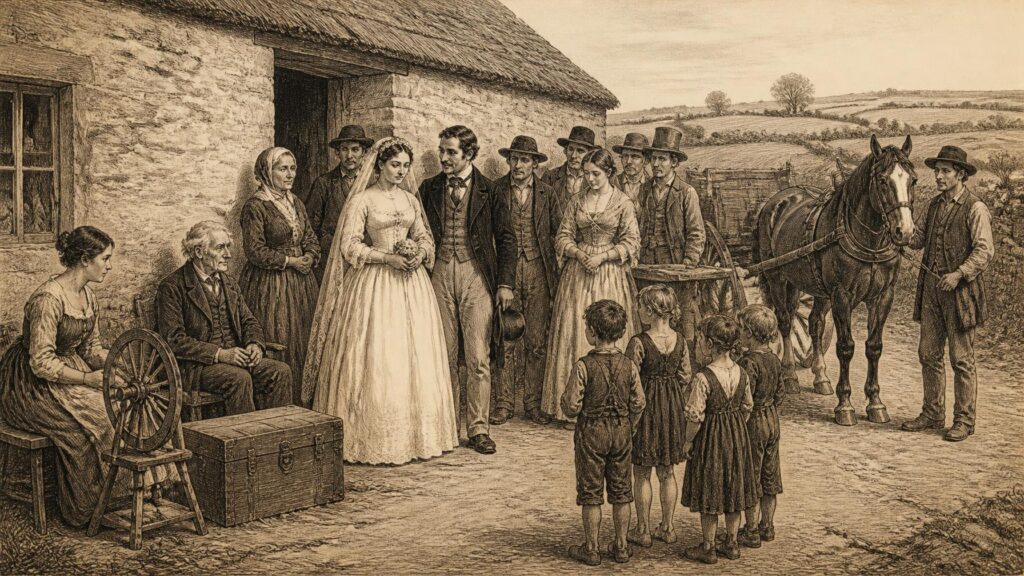
AI generated historical illustration, not a contemporary photograph.
At a Glance
Marriage in Ireland has never been merely a private promise between two people. It has been a mechanism through which land was transferred, households were formed, children were recognised, women’s work was regulated, religious communities asserted authority and the State defined social order. Its history is therefore a history of social change: gradual in the countryside, sharply contested in law, and experienced differently according to class, gender, denomination, place and generation.
Changing Bonds
To write about marriage and social change in Ireland is to begin with a caution. “Irish marriage” was never a single, fixed institution. The island contained Gaelic and settler legal inheritances, Catholic, Church of Ireland, Presbyterian and other religious communities, and marked differences between city and country. Marriage meant one thing to a tenant farmer seeking to secure a holding, another to a Dublin wage-earner, another to a Protestant commercial family, and another again to a woman whose employment ended on her wedding day. The surviving evidence is uneven. Census reports, registration returns, statutes, court records, newspapers and family papers illuminate some lives better than others. They tend to preserve official definitions of marriage more clearly than affection, coercion, compromise or disappointment within individual homes.
That limitation matters. Folklore and later reminiscence often present an older Ireland of universal early courtship, large weddings and unquestioned lifelong domestic unity. Such material can convey customs and ideals, but it is not a substitute for demographic or legal evidence. Official records, by contrast, establish that many Irish people postponed marriage for long periods or never married at all, particularly after the nineteenth-century catastrophe of famine and mass emigration. The historical pattern was not simply one of large Catholic families. It was also one of late marriage, restricted access to land, sibling sacrifice, migration and households shaped by absence.
Interpretation is unavoidable, but it should be separated from proof. It is demonstrable that legal rules changed women’s property rights, employment and marital status. It is demonstrable that population statistics recorded unusually high proportions of unmarried adults in many parts of Ireland. It is an interpretation, though a well-supported one, that marriage became a principal means by which post-Famine rural society controlled the division of scarce economic resources. That interpretation is strongest when joined to evidence of inheritance practices, farm size, emigration and household formation rather than treated as a timeless national characteristic.
Rural Economies
In agrarian Ireland, marriage was deeply connected to land. Before industrial employment became widely available, the ability to form an independent household frequently depended on access to a farm, a cottage, a trade or reliable wages. A marriage could bring together labour, kinship and property; it could also determine who remained at home and who went abroad. The relationship between marriage and inheritance was consequently intimate. A parent’s decision about succession could shape the prospects of several children, while a prospective marriage could affect negotiations over dowry, residence and the future management of a holding.
It would be misleading to imagine every rural household following an identical “stem family” model, in which one heir succeeded while siblings departed. Jane Gray’s work on nineteenth-century County Fermanagh is valuable precisely because it treats household formation as historical and contested rather than automatic. It questions easy generalisations by showing that inheritance, class formation and household arrangements were shaped by a long process of rural change. The familiar small-farm household observed by later social researchers was not an unchanging survival from antiquity. It was the outcome of economic pressure, property arrangements and social restructuring over generations.
Still, the broad connection between a restricted marriage market and rural resources is hard to deny. When a holding could not be divided indefinitely without becoming unviable, marriage for every son and daughter was not economically straightforward. Some children remained unmarried as carers or farm labourers; others entered domestic service, religious life, trades or migration. Such choices were not always freely made. A family’s strategy might promise security for the successor while narrowing the horizons of brothers and sisters. Marriage could be desired, but delayed until a farm, house or income became available.
Dowry and match-making have an enduring place in popular memory. There is documentary evidence that financial settlements and family negotiations mattered, especially where property was involved. Yet the theatrical image of the matchmaker should not obscure the variety of practice. The degree of parental control varied, and ordinary people had agency in choosing partners, resisting matches or leaving the locality entirely. Nor should the term “arranged marriage” be applied casually to rural Ireland. Family influence could be powerful without eliminating consent, courtship or conflict.
Famine Legacy
The Great Famine transformed the setting in which marriage occurred. It caused catastrophic mortality, drove emigration and accelerated changes in landholding and household formation. Historians rightly resist explaining every later Irish demographic feature as a direct mechanical consequence of the Famine. Nevertheless, its aftermath was profound. The population fell dramatically, the rural economy was reorganised, and migration became a central fact of family life. Marriage choices were made amid a social world in which departure for Britain, North America, Australia and elsewhere was often expected, necessary or irreversible.
Post-Famine Ireland became associated with late marriage and high levels of permanent celibacy. The term “celibacy” in demographic writing generally means non-marriage, not necessarily a religious vocation or an absence of intimate life. It is important to use the term carefully. Census categories could identify people as single, married or widowed, but could not fully record private relationships, informal unions, separated spouses or emotional attachments disrupted by migration. Even so, they reveal a striking pattern: substantial numbers of adults, especially in rural districts, did not marry.
The Census of Ireland for 1911 gives a vivid official snapshot. Among those aged twenty and over, 48.3 per cent of men were classified as bachelors and 40.4 per cent of women as spinsters. The proportions varied greatly by county and by urban setting. Belfast, an industrial city with a distinctive labour market and demographic profile, differed from many rural counties. Dublin also had its own pattern. County-level variation warns against treating the island as socially uniform, but the overall picture confirms that delayed or forgone marriage was a major social fact rather than an anecdotal curiosity.
Emigration was both cause and consequence. A son or daughter who left altered the household’s labour supply and inheritance calculations; the possibility of leaving could also relieve pressure on limited land. Those who married abroad belonged to Irish family history even when they disappeared from local registers. Remittances, letters and return visits sustained connections across oceans, while absences could postpone marriage at home or end a courtship altogether. In this sense, Irish marriage history cannot be confined to the island. It belongs also to Liverpool, Glasgow, London, Boston, New York, Melbourne and the many places where Irish migrants made homes.
Economic explanations should not become reductive. Religion, local moral regulation, personal aspiration and gendered expectations all influenced marital behaviour. Cormac Ó Gráda, Timothy Guinnane and Carolyn Moehling have stressed the importance of distinguishing low overall birth rates from marital fertility. Ireland’s crude birth rate could fall because people married later or did not marry, while couples who did marry continued to have relatively large families. That distinction is essential. It prevents the mistaken assumption that fewer births necessarily meant widespread modern contraceptive practice within marriage during the nineteenth century.
Recorded Lives
Civil registration made marriage more visible to the State. The registration system and the published reports of registrars-general created a growing statistical archive of ceremonies, ages, marital condition, literacy and later demographic trends. Records do not represent the whole truth of a marriage, but they show how the State increasingly treated marriage as an event that could be counted, compared and administered. Registration also matters to descendants and local historians because the marriage entry can name spouses, occupations, residences, fathers and witnesses, turning an intimate occasion into public evidence.
The Central Statistics Office’s historical account of vital statistics shows both continuity and change. In 1864, 27,406 marriages were registered across the island; the report also records major differences in signatures and marks, offering one limited measure of literacy. It notes that young women were much more numerous than young men among those marrying below twenty-one in that year. Such details remind us that age, education and marriage were connected, although a register cannot explain the family circumstances behind a particular union.
By the early twentieth century, census compilers were analysing conjugal condition in increasingly elaborate ways. Their categories reflected contemporary assumptions, including the language of bachelors, spinsters, husbands, wives, widows and widowers. Yet the data supplied evidence later historians could reconsider. The 1911 census, for example, noted the markedly greater number of widows than widowers, and attributed part of the difference to the more frequent remarriage of widowers. That observation points to a gendered imbalance of resources and opportunity. A widowed man with land, earnings or dependent children might be considered a plausible remarriage prospect; a widow’s social and economic position could be more precarious.
Statistics should be read neither as impersonal truth nor as mere bureaucracy. They indicate patterns, but do not explain individual motives. A woman listed as unmarried may have been caring for parents, earning wages, supporting siblings, saving for a home, mourning a partner who emigrated, pursuing religious life or exercising a preference not to marry. A man who married late may have inherited late, accumulated capital slowly, migrated and returned, or found work only after years of instability. The archive supplies structure; biography restores contingency.
Gendered Law
Marriage changed a woman’s legal and economic position. For much of the nineteenth and twentieth centuries, the law and many social institutions assumed a male breadwinner and a wife centred on the home. This was not merely a cultural ideal. It affected ownership, contractual power, domicile, employment, taxation, social welfare and access to remedies when a marriage failed. The notion that an Irish wife’s dependence was only a matter of custom understates the force of law.
The Married Women’s Status Act 1957 was an important consolidation and reforming measure. It stated that a married woman could acquire, hold and dispose of property, make contracts, sue and be sued as if unmarried. It also recognised the joint capacity of husband and wife to acquire and manage property. The language itself reveals a historical transition: legislation had to affirm capacities that modern readers may take for granted. The Act did not make married life equal in every practical sense, but it weakened older legal assumptions that merged a wife’s independent civil identity into that of her husband.
Another telling change came with the Domicile and Recognition of Foreign Divorces Act 1986. It abolished the rule that a married woman automatically acquired her husband’s domicile and could not possess another during the marriage. Domicile may sound technical, but it had real consequences in private international law, jurisdiction and personal status. Its reform shows how deeply marriage could once affect a woman’s independent legal existence.
Law did not operate in a vacuum. A wife might have formal property rights yet lack an income, access to credit or confidence in dealing with solicitors and courts. Conversely, women often exercised considerable authority within households, farms, shops and family networks despite formal inequality. Historical analysis must accommodate both realities. Domestic power was negotiated, but negotiation took place within a legal and economic framework that usually advantaged men.
Domestic Ideals
The Constitution adopted in 1937 placed marriage and family at the centre of the State’s social vision. Article 41 recognised the family as a fundamental unit of society, pledged special care for marriage, and stated that women’s life within the home gave support to the State. It further declared that the State should endeavour to ensure mothers would not be obliged by economic necessity to work outside the home to the neglect of domestic duties. These provisions should be read as historical evidence of a particular political and moral ideal, not as a complete description of women’s actual lives.
Many married women did work, whether visibly in paid employment or invisibly in farming, shops, family businesses, domestic production and care. In rural households, the separation between “home” and “work” was often artificial. A farmwife might keep accounts, manage poultry or dairy work, rear children, preserve food, care for older relatives and contribute directly to the holding’s survival. In towns, wives took in lodgers, performed piecework, ran shops or returned to paid work when family circumstances required it. The constitutional ideal therefore existed alongside a more complicated social economy.
The historical importance of the ideal lay in its institutional influence. It helped validate a model in which marriage was imagined as the proper destination for women and the home as their proper sphere. That model could offer dignity to domestic labour, but it could also limit women’s independence by making their security dependent on a husband’s earnings and the stability of the marriage. The gap between reverence for motherhood and the material circumstances of mothers was one of the central tensions of twentieth-century Irish social history.
Work Bar
The so-called marriage bar made that tension exceptionally clear. From 1924, established female civil servants were required to resign when they married; the policy was later incorporated in legislation. Similar restrictions appeared in parts of private employment, notably white-collar occupations. The rule did not apply to all women or all work, and it should not be used to erase the long history of married women’s labour. Its significance lies in the State’s explicit acceptance of the proposition that marriage should end a woman’s public career.
The bar shaped individual lives over decades. A woman who had trained, passed examinations and begun a career could lose her post upon marriage. The consequence was not only immediate loss of wages. It could affect pension entitlements, promotion, professional experience, financial autonomy and bargaining power within the home. Such effects accumulated across the life course. The later public discussion of pensions for women affected by the bar shows that historical discrimination did not end when the rule was abolished.
The Civil Service (Employment of Married Women) Act 1973 ended the statutory restriction in the public service. The reform formed part of a wider change in Irish society: greater educational opportunity, economic modernisation, women’s organising, European integration and challenges to established gender roles. It did not instantly create equality. Occupational segregation, unequal care responsibilities and cultural expectation persisted. Yet the abolition of the bar altered the official relationship between marriage and women’s employment. Marriage no longer had to be treated by the State as a reason to compel a woman from her job.
It is tempting to narrate this change as a clean move from tradition to modernity. That would be too simple. Earlier generations of women had resisted restriction, earned income where they could, maintained households through hardship and used kin networks creatively. Equally, later legal equality did not remove economic insecurity. The more accurate account is of altered possibilities: the range of choices available to women widened, even though resources and outcomes remained unequal.
Private Breakdown
Marriage has always included the possibility of breakdown, desertion, violence, separation and bereavement. Older public narratives frequently concealed these experiences behind the ideal of permanence. The historical record is necessarily fragmentary because many troubled marriages never came before a court or survived only in family silence. Where records do survive, they show that marital conflict was not an invention of a later secular age.
For much of independent Ireland, divorce was constitutionally prohibited. The practical consequences were considerable. Couples whose marriages had irretrievably failed could separate, seek limited legal remedies or, in some cases, obtain a foreign divorce whose status was uncertain, but they could not obtain an Irish divorce. This restriction affected property, remarriage, children, housing and the capacity to make a fresh household. It also reinforced the idea that a marriage, once entered, was a public and permanent social condition rather than simply a private relationship.
The Fifteenth Amendment, approved in 1995 and effective in 1996, removed the constitutional prohibition and enabled divorce under specified conditions. The Family Law (Divorce) Act 1996 provided the legal machinery, coming into operation on 27 February 1997. Divorce was not made easy or casual: the constitutional conditions required that there be no reasonable prospect of reconciliation and that proper provision exist or be made for spouses, children and others prescribed by law. The reform represented a major redefinition of marriage, balancing permanence with recognition that some marriages could end beyond repair.
Divorce reform should be understood as more than a legal event. It signalled a changed willingness to recognise adult autonomy, marital failure and the welfare needs of separated families within Irish law. Yet it did not settle every social question. Disputes over maintenance, housing, care, property and children remained difficult precisely because marriage had long been a system for pooling lives and resources. Ending the legal bond could not instantly disentangle its practical consequences.
Equal Marriage
The most visible recent transformation came with the extension of civil marriage to couples without distinction as to sex. The constitutional change approved in 2015 and the Marriage Act 2015 altered the legal meaning of marriage while retaining its status as a public institution. Article 41 now states that marriage may be contracted by two persons without distinction as to their sex. This was not simply a change in ceremony. It affected recognition, inheritance, parental arrangements, next-of-kin status, social legitimacy and the ability of same-sex couples to participate equally in an institution from which they had been excluded.
The change is historically significant because it shows that Irish marriage has not been static even where it has been described as traditional. The institution retained its legal and symbolic importance, but its membership changed. Supporters argued that equality required access to marriage; opponents expressed concern about religious teaching, family meaning or constitutional change. The decisive legal result was a broader civil definition. Religious bodies retained their own doctrines and ceremonies, while the civil State recognised the marriages of same-sex couples.
This development should not be treated as the inevitable endpoint of history. Social change is neither linear nor complete. Questions of care, housing, assisted reproduction, parenthood, migration status, poverty and domestic violence continue to shape the lived reality of married and unmarried families. Nonetheless, equal marriage demonstrates that public understandings of kinship can change substantially within a generation, particularly when law, campaigning and personal testimony converge.
Historical Limits
There are areas where certainty is limited. Medieval and early modern Ireland did not possess the same administrative records as the nineteenth and twentieth centuries, and legal norms could differ between ecclesiastical law, Gaelic custom and local practice. Art Cosgrove’s discussion of medieval marriage warns that evidence is especially thin for people below the upper levels of society. Church records reveal disputes and regulations, but they do not permit confident estimates of ordinary marital behaviour across the whole island.
Folklore should be approached in the same spirit. Stories of bedding customs, wedding processions, matchmakers and festive rituals are historically interesting. Some customs are documented in particular places and periods, while others survive mainly as recollection or literary representation. They tell historians about communal expectation, humour, surveillance and the public character of marriage celebrations. They cannot, however, prove that every community observed them or that a remembered custom was ancient. The desire to give an old practice great antiquity is itself part of the folklore surrounding tradition.
Nor should historians presume that legal marriage was the only meaningful relationship. Widows and widowers, separated people, unmarried parents, siblings who kept house together, migrants living apart from spouses, servants and lodgers all formed households that complicate the neat ideal of the nuclear family. Census forms and civil registers privilege certain categories; social history must look beyond them while admitting where the evidence is incomplete.
Living Legacy
The history of marriage in Ireland is thus a history of structures and choices. Land and inheritance influenced who could marry; emigration altered the marriage market; religion provided moral frameworks and institutions; the State made rules about property, work, divorce and recognition; and families negotiated care, labour and authority in ways that were often private and only partly recoverable.
Its most enduring lesson is that marriage has been both intimate and political. A wedding could mark love, companionship and hope, but it could also redistribute property, remove a woman from paid employment, decide where an ageing parent would live, make children legitimate in law or prevent a separated person from remarrying. Changes in marriage law therefore reveal changes in the imagined Irish society: from a predominantly rural world constrained by land and migration, through a State that idealised domestic womanhood, to a more plural society that has recognised divorce and same-sex marriage.
That story should not be reduced to a contrast between a dark past and an enlightened present. Earlier people were not passive prisoners of custom, and modern law does not eliminate inequality. What the evidence shows is a long sequence of adjustments in which family strategies, demographic realities, women’s claims, religious influence and State power repeatedly met. Marriage changed because Irish society changed; equally, because marriage organised work, property, care and belonging, each change in marriage helped alter Ireland itself.
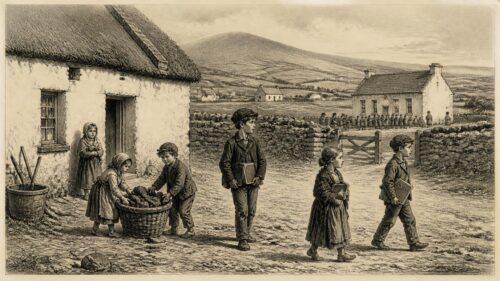
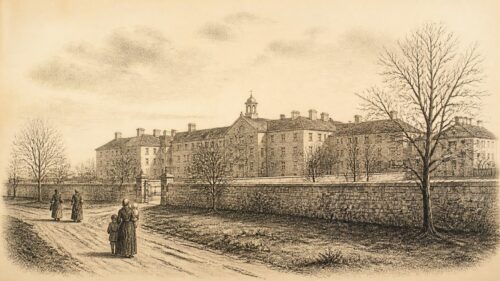
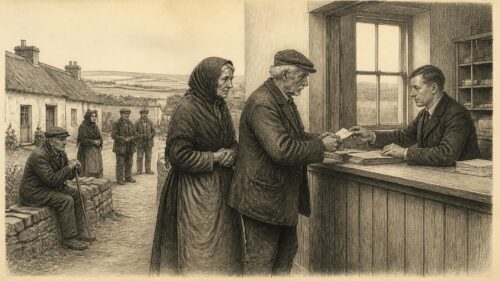
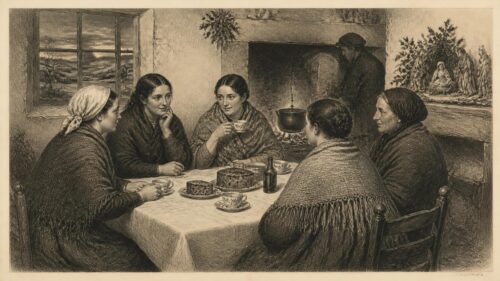
The article’s contrast between official marital categories and the hidden realities of migration, separation, care and choice is compelling. Census figures reveal widespread delayed or forgone marriage after the Famine, yet they cannot show whether individuals experienced this as sacrifice, strategy, constraint or fulfilment. This uncertainty matters when interpreting marriage as a tool for managing scarce land and household resources: economic pressures were powerful, but families and individuals negotiated expectations differently across regions, genders and classes. How might combining census data with letters, oral histories, inheritance records and migrant experiences reshape our understanding of why many Irish adults remained unmarried?