
Coalition Priorities
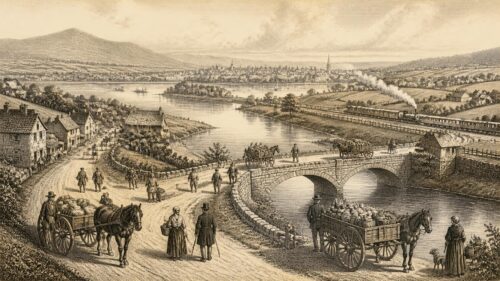
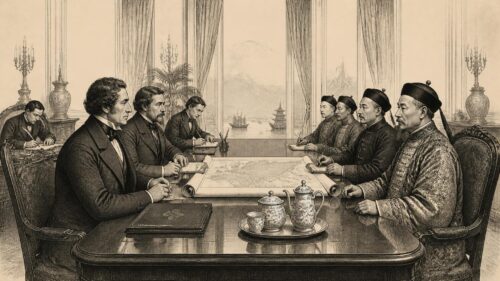
AI generated historical illustration, not a contemporary photograph.
At a Glance
January 2026 was not a month of a single Irish political rupture. It was, rather, a month in which the priorities and tensions of the government elected a year earlier became unusually visible: the pressure to deliver tangible household measures, the contest over migration and asylum, the persistence of housing as the central domestic test, and the growing weight of European and international affairs. The documentary record shows a coalition attempting to turn a broad programme into law and administration. It also shows that its language of stability, efficiency and national interest was disputed from the Dáil floor onwards.
Political Setting
The political setting of January 2026 was shaped by the government formed in January 2025 by Fianna Fáil, Fine Gael and supporting Independent TDs. Micheál Martin, leader of Fianna Fáil, had returned as Taoiseach, while Simon Harris of Fine Gael served as Tánaiste. Their governing agreement, Programme for Government 2025: Securing Ireland’s Future, presented itself as a plan for a stable majority, five budgets and delivery across housing, public services, infrastructure, security and the economy. Such language was intended to answer a familiar problem of Irish coalition politics: how to make a multi-party arrangement look durable while preserving the identities of its component parts.
By the opening of 2026, the coalition had survived its first year but had not escaped the conditions that had made coalition bargaining necessary. Fianna Fáil and Fine Gael remained the principal parties of government, yet their parliamentary majority relied on an agreement with Independents whose local priorities and political styles did not always sit easily with centralised Cabinet discipline. The governing programme gave the administration an extensive catalogue of commitments. Its very breadth, however, made delivery difficult to measure. The political question was not merely whether the government could announce measures; it was whether it could demonstrate that decisions made in Dublin altered the experience of housing, incomes, public services and security.
This was a historical moment of continuity as much as change. The two dominant parties had already governed together since 2020, an arrangement once presented as exceptional in the State’s political culture. By 2026, cooperation between them had become an established fact of government, though never an uncomplicated one. The earlier division between Fianna Fáil and Fine Gael, rooted in Civil War alignments, had not disappeared from political memory. Yet it no longer structured government formation as it once did. January 2026 therefore belongs to the longer history of an Irish party system adapting to fragmentation, issue-based politics and the electoral rise of parties outside the old governing pair.
Parliamentary Return
The Dáil returned after the Christmas recess on 13 January. The timing mattered. Parliamentary return is more than a procedural convenience: it is the point at which Cabinet plans encounter questions, motions, amendments and the daily theatre of democratic opposition. The first weeks of a new session can reveal which subjects a government believes it can command and which it expects to manage defensively. In 2026, migration, trade, housing, public expenditure and the direction of Irish foreign policy all competed for space.
The Government’s Spring 2026 legislation programme, approved at Cabinet and published on the day of the Dáil’s return, offered a useful official map of its intentions. It ranged across transport, public health, family law, justice and economic policy. Yet one measure stood above the rest in political consequence: the International Protection Bill 2026. The programme presented it as essential to implementing the European Union’s Migration and Asylum Pact and to preparing Ireland for its forthcoming Presidency of the Council of the European Union. That framing joined domestic administration to European obligation. It also ensured that a difficult argument about refugees, processing and family reunification would become an argument about Ireland’s place in Europe.
The record should be read cautiously. A legislative programme is evidence of governmental intention, not proof of consensus or of eventual success. Governments commonly describe bills as practical necessities, while critics often regard the same bills as political choices that could have been made differently. January’s debates made precisely that distinction. The coalition’s claim was that it was restoring capacity to the State; opponents argued that some of its proposed methods imposed avoidable hardship on people seeking protection. That disagreement was not incidental rhetoric. It went to the meaning of fairness in the administration of immigration law.
Asylum Turning
On 13 January, the Minister for Justice, Home Affairs and Migration, Jim O’Callaghan, received Cabinet approval to publish the International Protection Bill 2026. The department described it as the most significant reform of Irish asylum law in the history of the State. Such a superlative was a ministerial assessment, rather than a settled historical verdict, but the scale of the bill was plainly substantial. It was intended to replace the International Protection Act 2015 and to give domestic effect to major elements of the EU Migration and Asylum Pact before the relevant European measures became applicable in June 2026.
The bill’s stated purpose was to create a fair, sustainable and efficient procedure. Its mechanisms included faster processing, altered decision-making structures, a proposed border procedure, a new appellate body called the Tribunal for Asylum and Returns Appeals, and an independent inspectorate for asylum border procedures. Government reasoning rested heavily on delay. Long waits, it argued, harmed applicants, strained accommodation, increased costs and undermined confidence in the system. This was an administrative argument, but it was also political. Efficiency had become the language through which the coalition sought to reconcile Ireland’s legal obligations to refugees with a public demand for a more controlled migration system.
There was a further and more contentious element. The government proposed measures affecting family reunification for adult beneficiaries of international protection, including a three-year waiting period and a requirement of financial self-sufficiency. In Dáil exchanges on 13 January, opposition deputies challenged these changes as unjust and contrary to the humanitarian purpose of refugee protection. The Taoiseach defended the wider reform as a necessary, robust and timely system, stressing the number of unsuccessful claims and the need to avoid years-long decisions. The contrast is historically important. Both sides invoked fairness, but they meant different things by it: speed, enforceability and public confidence on one side; family unity, rights and protection from avoidable exclusion on the other.
The second-stage debate later in January located the bill within a longer Irish story. Introducing it, the Minister referred to Ireland’s history of emigration and to the contribution of foreign-born workers in healthcare, hospitality, construction and technology. This did not resolve the dispute over policy. It did, however, demonstrate the difficulty of constructing a national narrative around migration in modern Ireland. The State had long remembered itself as a country from which people departed in search of safety and opportunity. It was now governing as a comparatively prosperous destination state, responsible for borders, accommodation, asylum decisions and return procedures.
European Pressure
The asylum bill was inseparable from Ireland’s European position. The EU Pact established a timetable that limited the scope for leisurely domestic deliberation. Irish ministers repeatedly described implementation as necessary for legal compliance and for a coherent common European response. The Oireachtas Library and Research Service, in its later bill digest, recorded that the measure had been initiated on 22 January and was scheduled for second-stage consideration on 28 January. Its analysis also noted the bill’s large scale: 234 sections, fifteen parts and two schedules. Those features explain why it became more than an ordinary item of parliamentary business.
January also showed the extent to which Ireland’s European commitments were becoming part of ordinary governmental language. On 22 January, Helen McEntee, then Minister for Foreign Affairs and Trade and Minister for Defence, set out preparations for Ireland’s forthcoming EU Council Presidency. Her speech placed values, security and competitiveness together as the principal themes. Four days later, Minister of State Thomas Byrne attended the General Affairs Council in Brussels, where Ireland’s prospective presidency, the rule of law, democracy, competitiveness and regulatory simplification formed part of the agenda.
These were not ceremonial preliminaries alone. Holding the rotating presidency brings organisational burdens, diplomatic exposure and a limited but real power to shape agendas. For a small member state, the office is an opportunity to demonstrate competence and to connect national priorities with European deliberation. In January 2026, the government identified housing, infrastructure, migration, competitiveness and democratic resilience as matters in which Ireland wished to be heard. The historical significance lies less in any single meeting than in the changed scale of the State’s ambitions. Irish politics was being conducted at once in the Dáil chamber, in departmental offices and in European institutions.
Global Engagement
The Taoiseach’s official visit to China, from 4 to 8 January, supplied an early illustration of that wider setting. It was the first visit by a Taoiseach to China since 2012. The official account recorded meetings with President Xi Jinping, Premier Li Qiang and Zhao Leji, chairman of the National People’s Congress. Trade, bilateral relations, EU–China relations, multilateral institutions and international security were all discussed. The visit was an exercise in economic diplomacy, but it also revealed the constraints of a small European state attempting to maintain commercial connections while speaking the language of human rights, rules and international law.
It would be misleading to treat the visit as a decisive turning point in Irish foreign policy. The documentary evidence supports a more measured conclusion. It was a prominent expression of a longstanding Irish preference for engagement, trade and multilateral diplomacy. What had changed was the international environment in which that preference operated. Strategic competition between major powers, concerns about economic resilience and the approaching Irish EU Presidency all made a visit once framed principally as commercial more politically charged.
The same tension appeared in the government’s European speeches. Ministers called for cooperation and strong institutions at a time when those institutions were under pressure. This was not folklore about Ireland acting as a uniquely moral intermediary between larger powers. It was a practical calculation rooted in national interest. A state with Ireland’s size and trading profile benefits from predictable rules, open markets and functioning international forums. January 2026 showed ministers attempting to defend those conditions while acknowledging that they could no longer be assumed.
Household Measures
Foreign affairs did not displace domestic economics. On 1 January, a substantial group of Budget 2026 social-protection measures came into force. The Department of Social Protection stated that the package cost more than €1 billion in its January phase. Weekly payments increased by €10 for pensioners, carers and people with disabilities; child-support payments rose; fuel allowance increased; working-family-payment thresholds changed; and the domiciliary-care allowance rose. The measures were framed as assistance with child poverty and living costs, particularly for households likely to feel inflation and energy bills most sharply.
Budget measures acquire political meaning when they become visible in weekly payments, wages and household accounts. The January changes therefore mattered more than a line in an October budget speech. The national minimum wage also rose to €14.15 per hour on 1 January, following the Budget 2026 decision. These were concrete interventions, and the government could reasonably present them as evidence that its fiscal programme had reached everyday life. Yet their political reception could not be separated from continuing rents, mortgage costs, childcare expenses and housing scarcity. An increase in income may ease pressure without ending the sense that secure housing remains beyond reach.
This distinction helps explain the character of Irish political debate at the time. Governments tend to measure success through enacted budgets, expenditure totals and programme delivery. Citizens experience policy through queues, rents, commutes, bills and the availability of a home. Both perspectives concern real evidence, but they do not always meet. January 2026 marked the transition from promises in the 2025 programme to benefits and burdens capable of being tested against daily life. It was thus a month of implementation, but implementation did not guarantee political satisfaction.
Housing Persistence
Housing remained the most persistent domestic pressure surrounding the political month, even where it was not the formal subject of every legislative announcement. Ireland’s shortage of affordable homes had become the standard against which claims of governmental competence were judged. The coalition programme had pledged large-scale homebuilding and investment, but targets necessarily stretched beyond a single parliamentary session. In the meantime, the political cost of delay was immediate. Renters, prospective first-time buyers, people in emergency accommodation and households living with relatives did not experience housing as a distant capital-project timetable.
There is a temptation in retrospective writing to make housing the explanation for every political development. The evidence does not justify so simple a claim. Migration, health, regional development, public safety, agriculture and foreign affairs all had their own importance. Nevertheless, housing formed the background condition of much public argument. It shaped debates about infrastructure capacity, population growth, public spending and the accommodation of international-protection applicants. It also sharpened disagreement over whether the State’s difficulty was one of inadequate resources, weak administrative capacity, planning constraints, private-market incentives, or some combination of all four.
January did not supply a final answer. Its historical interest is that ministers were required to pursue long-term construction and infrastructure goals while answering immediate anxieties. That is a structural difficulty, not merely a partisan failing. A house takes longer to plan, permit and build than a budget measure takes to announce. Political confidence, however, can be lost quickly. The month demonstrated the mismatch between the timescale of the building process and the timescale of democratic accountability.
Neutrality Debate
Security and defence supplied another example of inherited political language meeting new circumstances. The government’s legislative plans included a measure to change the so-called Triple Lock governing larger overseas deployments of the Defence Forces. Under the existing arrangement, such deployments involved government approval, Dáil approval and a United Nations mandate or authorisation. The government’s earlier proposals argued that permanent members of the UN Security Council should not be able to prevent Ireland from participating in an overseas peace-support operation that the Irish government and Dáil considered appropriate.
Supporters described reform as a strengthening of sovereign decision-making while maintaining military neutrality and fidelity to international law. Critics feared that removing the UN Security Council element could weaken a meaningful safeguard and move Ireland closer to European military structures. The argument was not new in January 2026, but it had acquired fresh urgency amid wider European insecurity. Official statements continued to insist that Ireland would not enter military alliances or common defence arrangements. Whether that assurance would satisfy opponents was a matter of political judgement, not an issue settled by terminology.
The persistence of the neutrality debate reveals a broader historical pattern. Irish neutrality has never been a single, unchanging doctrine with one universally accepted meaning. It has involved non-membership of alliances, an attachment to UN peacekeeping, public suspicion of great-power military blocs and, at times, a claim to independent diplomatic judgement. January 2026 showed a government trying to adapt that inheritance to modern security conditions without abandoning its public legitimacy. The dispute was therefore about constitutional procedure and military deployment, but also about national identity.
Climate Emergency
Late in the month, Storm Chandra brought the government’s emergency responsibilities into view. On 27 January, the National Emergency Co-ordination Group met as the response continued, with the Minister for Housing, Local Government and Heritage participating. Flooding and transport disruption do not normally occupy the same interpretive space as asylum legislation or European diplomacy. Yet they are part of political history because they test the State’s capacity to coordinate services, communicate risks and provide relief.
The response also had an economic dimension. An emergency humanitarian flooding scheme for affected businesses opened during the period. That measure illustrated the recurrent movement of Irish government between long-term plans and sudden contingency. January’s official calendar contained capital programmes, reforms of asylum administration and European meetings; it also contained the urgent work of responding to damaged homes, disrupted transport and threatened local businesses. The contrast should not be overstated as a failure of planning. Governments must do both. But emergency events can expose the practical limits of administrative systems already under pressure.
For historians, the lesson is modest. Political months are seldom made only by the issues selected for party manifestos. Weather, infrastructure and the capacity of public bodies can reorder priorities with little warning. Storm Chandra did not define January 2026 in the way that the International Protection Bill did, but it demonstrated that environmental vulnerability had become part of the ordinary landscape of government.
Historical Meaning
January 2026 should not be remembered as a settled verdict on the coalition. It was too early for that, and history resists such instant conclusions. The more defensible interpretation is that the month exposed the governing method of the administration. It relied on legislation, budget implementation, European cooperation and a repeated appeal to delivery. Its leaders sought to represent difficult measures as necessary responses to constraints: European law, administrative backlog, infrastructure deficits, geopolitical instability and household costs.
Opponents did not generally deny that these constraints existed. Their challenge was directed at priority and principle. Could an asylum system be made faster without restricting family reunion? Could social-protection increases compensate for the pressures of housing and living costs? Could the State prepare for European leadership without diluting neutrality or overlooking domestic discontent? Such questions were not easily resolved because they arose from genuine conflicts between values: speed and due process, fiscal caution and public investment, international engagement and national autonomy.
The surviving official documents, parliamentary debates and contemporary reporting offer evidence of these conflicts. They do not support a romantic account of political harmony, nor a deterministic account of inevitable governmental collapse. Ireland in January 2026 was governed by institutions still capable of legislating, budgeting, debating and coordinating emergencies. At the same time, those institutions were being asked to respond to demands larger than any one bill or budget could satisfy.
Its lasting historical importance may therefore lie in its ordinariness. A returning Dáil debated major reforms; ministers prepared for Europe; payments changed; storms required action; and political adversaries contested the moral meaning of administrative choices. These are the materials of democratic history. January 2026 was a reckoning not because it produced one spectacular crisis, but because it made clear that the central questions of modern Irish government—home, security, migration, welfare and sovereignty—could no longer be kept in separate compartments.

January Reckoning presents the International Protection Bill as a test of how Ireland balances administrative speed, European obligations and humanitarian commitments. Particularly striking is the competing use of fairness: ministers emphasise quicker, enforceable decisions, whereas opponents stress family unity and the consequences of delayed reunification for adult protection beneficiaries. The article places dispute within Ireland’s transition from emigration country to destination state preparing for EU Presidency. How should Ireland assess whether asylum reform is genuinely fair: through processing times and system capacity, or through its effects on family life, legal safeguards and Ireland’s wider understanding of responsibility towards newcomers today?