
Memory Making
At a Glance
Private Papers
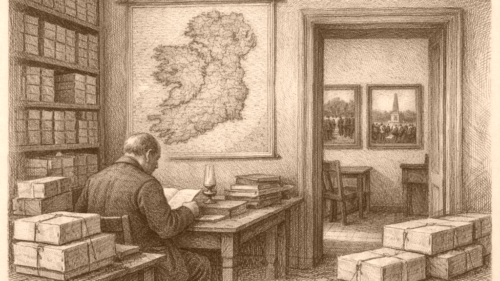
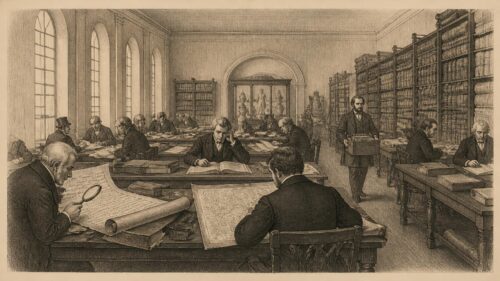
One institutional description presents UCD Archives as a place that acquires private paper collections associated with the history and development of the modern Irish state. It also says these holdings are complemented by papers of public figures, staff who served in high public office, and records of political parties, trade unions, professional bodies, cultural associations, and sporting bodies. The passage is a broad catalogue rather than a narrative, but it clearly places private papers within a wider documentary setting for research. [4]
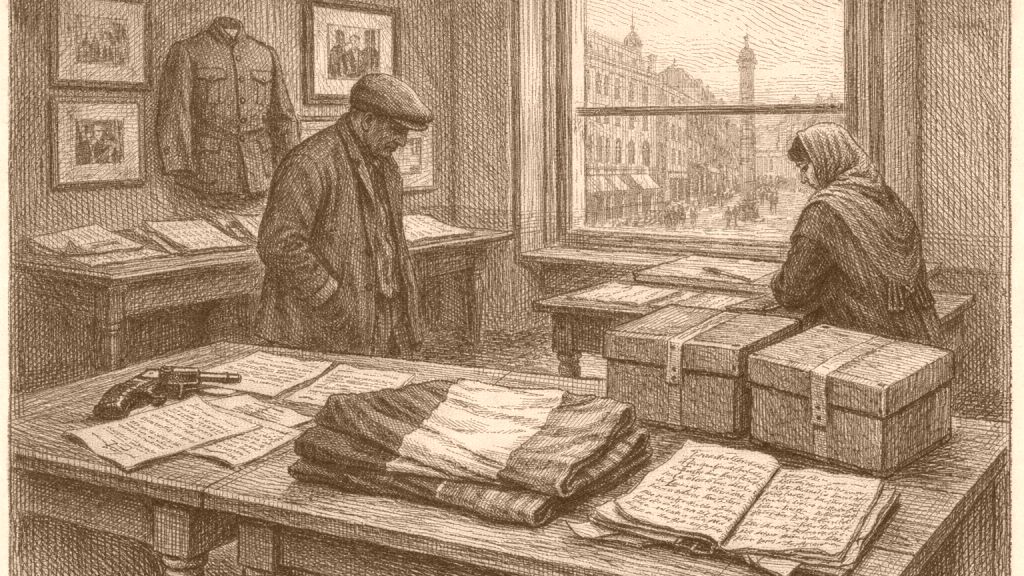
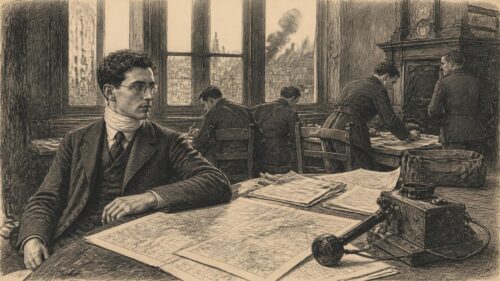
The same page gives a specific exhibition example. It lists a diary of a civil servant, Ernie O’Malley’s interview about Liam Manahan, Eoin MacNeill’s countermanding orders, photographs of the aftermath of the Rising, and intelligence papers concerning General Sir John Maxwell. These items come from different documentary kinds, yet the description gathers them into one exhibition on 1916. The evidence supports a curatorial practice of placing personal testimony beside official and visual records. [4]
Museum Holdings
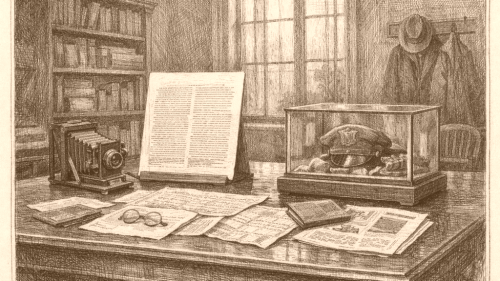
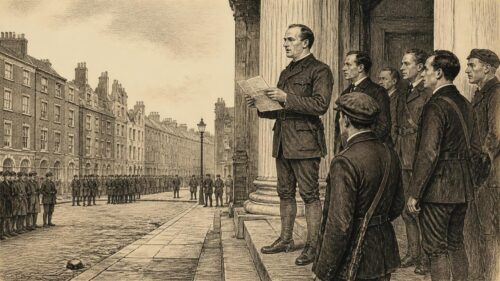
The National Museum of Ireland describes its Easter Week collection as material relating to 1916 and the War of Independence, acquired through donation and purchase. It says the collection includes the Proclamation of the Republic, Pearse’s surrender order, the Irish Republic flag that flew over the GPO, guns, uniforms, manuscripts, prison diaries, and personal memorabilia. The wording is cumulative and object-centred, presenting the Rising through a grouped set of surviving things and papers. [5]
The same record adds that the collection covers the period up to the end of the Civil War and incorporates commemorative material produced up to the present day. That statement extends the collection beyond the immediate week of Easter 1916 and beyond items made during the conflict itself. On this page, remembrance is therefore embedded within the collection’s scope, rather than treated as a separate appendix or afterthought. [5]
Exhibition Framing
A separate National Museum page presents a virtual tour of the Rising as a teaching and interpretation resource. It says the speakers focus on personal stories, especially those of lesser-known participants and civilians, while also examining why the rebellion happened and its immediate aftermath. The page further notes that the guide provides historical context, discussion points, activities, and curriculum links. Public memory here is shaped through a guided interpretive format. [6]
The same page lists curriculum headings including time and chronology, using evidence, change and continuity, synthesis and communication, cause and effect, and empathy. It also includes politics, conflict and society, as well as 1916 and the foundation of the State. These headings do not explain commemoration by themselves, but they show that the museum presents the Rising as a structured subject for present-day learning and interpretation. [6]
Digital Context
The National Archives of Ireland places the Easter Rising within a broader Decade of Centenaries collection covering key events from 1912 to 1923. It names the 1916 Rising, the War of Independence, and the Civil War, and it describes the site as offering free access to materials on a turbulent, transformative period. This is not a claim about the meaning of the Rising itself; it is a statement about the archive’s chronological and access framework. [2]
The same page lists records that support engagement with the Rising and its aftermath: court-martial files, property-loss applications, and Dublin Metropolitan Police movement reports on suspects. These series differ in purpose and tone, but the site groups them within one collection. The arrangement shows administrative papers, legal records, and surveillance reports being made available together for study within a commemorative digital context. [2]
Annal Context
The annals material in this set does not describe Easter commemoration. It does, however, show another kind of institutional presentation: the Annals of Ulster page identifies manuscript sources, lacunae, and the use of multiple copies, while the Annals of Tigernach page identifies manuscript witnesses and fragmentary survival. These passages document editorial and manuscript context, not public remembrance, and they provide a useful contrast with the museum and archive descriptions of 1916. [1] [3]
The contrast is visible in institutional language. The annals pages foreground editions, manuscript sources, and textual gaps; the 1916 pages foreground exhibitions, collections, access, and teaching tools. The evidence does not support a single shared purpose, but it does show two different documentary presentations: one for medieval textual traditions and one for the public handling of Easter Rising materials. That difference is observable directly in the descriptions. [1] [2] [3] [4] [5] [6]
Public Memory
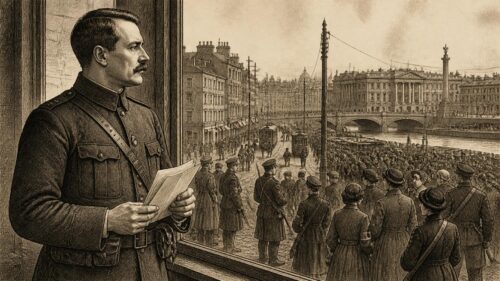
Taken together, these descriptions show public memory being assembled through selection, grouping, and access. Archives present private papers, diaries, orders, photographs, and intelligence files; museums present flags, weapons, manuscripts, prison diaries, and memorabilia; digital collections present court records and compensation files. None of the pages claims a single authoritative memory. Instead, they show institutions arranging different kinds of material so that the Easter Rising can be encountered through documents, objects, and interpretation. [2] [4] [5] [6]
The evidence also shows remembrance extending beyond the immediate Rising. One museum record includes commemorative material produced up to the present day, while another teaching resource asks users to consider aftermath as well as event. The archive collection ranges across 1916, the War of Independence, and the Civil War. Within these pages, remembrance appears cumulative: later acts of remembering sit beside surviving records of the original week and its aftermath. [2] [5] [6]
Source References
Hover over a number to see the source. Select it to open the source.

- [1] The Annals of Ulster
- [2] Decade of Centenaries Collection | The National Archives of Ireland
- [3] The Annals of Tigernach
- [4] Documents of 1916 – UCD Decade of Centenaries
- [5] Easter Week | National Museum of Ireland
- [6] Virtual Tour: Proclaiming a Republic. The 1916 Rising | Decorative Arts & History | National Museum of Ireland
How do Irish archival and museum collections frame Easter Rising commemoration as public memory?