
Garvaghy Road
At a Glance
Road Setting
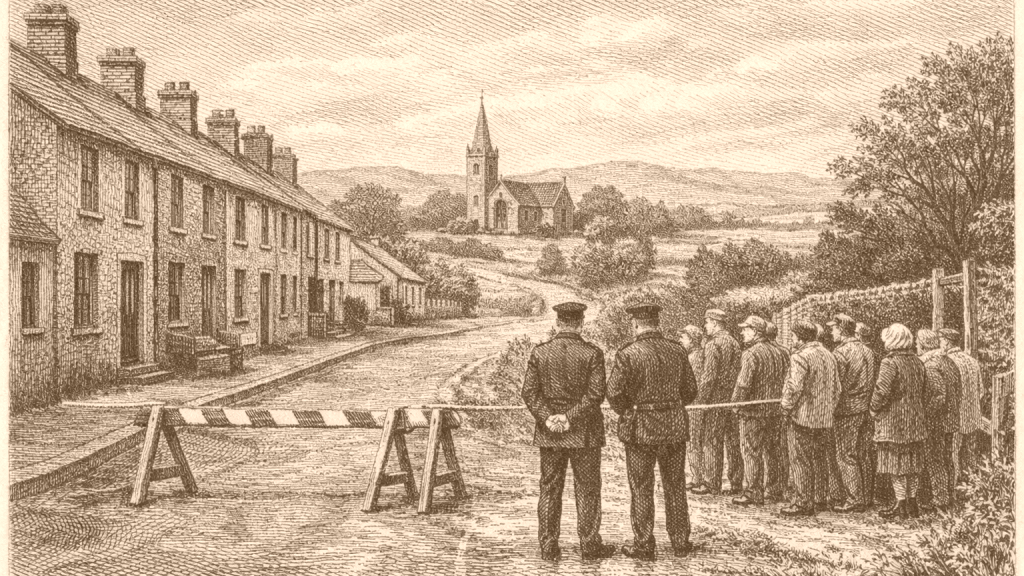
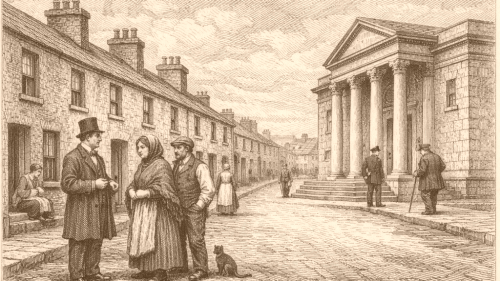
The texts identify Garvaghy Road as a predominantly Nationalist area of Portadown and place it within a wider pattern of contested parading routes. One passage says the area became the focus of attention each July from 1995 and links that attention to the Orange Order parade to Drumcree Church. Another describes it as one of the main geographical areas where parades and marches proved contentious, alongside the related Nationalist complaints about routes through their area. [3] [1]
The material also sets Garvaghy Road beside Obins Street and the Nationalist Tunnel area, which had already been rerouted in 1986. In one account, the Garvaghy Road route became controversial after those earlier reroutings, and residents formed an association in response. The passages do not describe the road as isolated; instead they place it in a network of nearby streets, housing estates, and parade routes in Portadown. [3] [2]
Early Tension
An earlier episode in 1985 shows the route already carrying tension before the Drumcree stand-offs of the 1990s. A St Patrick’s Day band was permitted to march from Obins Street to the upper Garvaghy Road, past predominantly Protestant houses, before boarding a bus for a larger parade. Unionist councillors pressed for a reroute, and a small loyalist demonstration gathered at the corner of Park Road and Garvaghy Road, after which police prevented the band from following its planned route. [2]
The same passage says a similar rerouting occurred on the band’s return in the evening and that there was a confrontation between police and nationalists on the Garvaghy Road. It also notes that Brid Rogers highlighted a contradiction between this rerouting and the protection given to Orangemen through Obins Street each July. Here the evidence is limited to what the text records: a local comparison between two parading situations, not a broader explanation. [2]
Stand Off
For 1995, the Mediation Network statement gives a detailed sequence for the Garvaghy Road stand-off. It says Brendan McAllister was first invited into the developing conflict in June, that he observed the proposed parade on 9 July, and that when the stand-off began he worked with police and both sides through shuttle mediation. The account records meetings with Orange representatives, David Trimble, and Ian Paisley, and says the situation remained deadlocked by dawn on 11 July. [4]
The same statement says the Garvaghy Road group intended to be physically removed by police if the Orange parade recommenced, and that deputy chief constables warned the outcome would affect disputes elsewhere. It records McKenna being asked to request protesters to remove themselves, and McAllister’s view that there would be no further marches on Garvaghy Road without residents’ consent. The paragraph is confined to those recorded exchanges and does not go beyond them. [4]
Rerouted Years
The Drumcree developments page records that the parade planned for 9 July 2000 would be rerouted away from the mainly Catholic Garvaghy Road. It also notes that a parade on 2 July 2000 had already been rerouted on the return leg and that the following nights saw violent protests in Belfast and at Drumcree. The evidence here is a chronology of rulings and disturbances, not a full description of every local reaction. [1]
For 1999, the same page says there had been no agreement between the Orange Order and the Garvaghy Road Residents Coalition, and that the Order refused a face-to-face meeting because one member had served a prison sentence for a paramilitary offence. It reports that, in the absence of agreement, the Parades Commission ruled on 28 June 1999 that the parade would be rerouted away from Garvaghy Road. The passage also notes that some commentators linked movement on the Executive to a possible parade on 4 July 1999. [1]
Community Claims
The 1995 Drumcree statement also records how the Garvaghy Road residents’ position was framed in the mediation process. It says the residents group had been approached for assessment of mediation, that it later agreed it would remove protesters from the road when the parade approached, and that the crowd then heckled McKenna when he asked them to clear the road. The text shows a negotiated process and a hostile public response, but it does not supply a broader social analysis. [4]
The parade-areas page describes the local claim in more general terms. It says the re-routing along Garvaghy Road caused extreme resentment in the Nationalist community there and that residents formed the Garvaghy Road Residents’ Association to prevent parades from marching along their road without consent. It also states that in 1995 and 1996 the RUC prevented the Portadown District Orange Lodge from marching along Garvaghy Road on its return from Drumcree Parish Church. [3]
Historical Frame
The sources together present Garvaghy Road as a place whose public meaning changed over time in the record. One passage says it only became controversial after 1986, another says it had become the focus of attention each July since 1995, and the 1995 report situates it within a longer pattern of parading disputes in Northern Ireland. The comparison is direct: a local road moved from earlier rerouting disputes to repeated annual contention. [3] [1] [5]
The surviving excerpts do not provide a full narrative of every year, and they do not describe every local actor or every negotiation in equal detail. What they do preserve is a sequence: early route objections in 1985, repeated rerouting and stand-offs in 1995 and 1996, and renewed commission rulings in 1999 and 2000. Taken together, these passages document Garvaghy Road as a recurring named site in the Drumcree dispute. [2] [4] [1] [3]
Source References
Hover over a number to see the source. Select it to open the source.

- [1] CAIN: Issues: Parades: Drumcree developments
- [2] CAIN: CSC: Report: Political Rituals: Loyalist Parades in Portadown, chapter 2
- [3] CAIN: Issue; Parades - Areas of Contention
- [4] CAIN: Issues; Parades - Statement by the Mediation Network on Drumcree 1995
- [5] CAIN: CSC: Report: From Riots to Rights: Nationalist Parades in the North of Ireland. Neil Jarman and Dominic Bryan.
How do the retrieved texts describe the Garvaghy Road dispute, its local setting, and the sequence of rerouting and mediation around Drumcree from 1985 to 2000?