
Climate Data
At a Glance
Climate Context
The EPA’s climate report presents Ireland as an island on the western edge of Europe facing the Atlantic Ocean, and says this position makes it well placed to measure and assess ongoing climate change. It also states that the second status report updated the 2013 report with new datasets, analyses, and seven more years of climate observations. The same publication frames climate change as a topic for measurement and assessment rather than a single isolated event. [1]
The report also says evidence of climate change is being manifested across the atmosphere, ocean, and terrestrial domains, and that such change and its impacts pose significant threats to Ireland’s environment, society, and economy. It further says effective response depends on reliable, quality-controlled, timely observations, and that such observations help understand the current climate and inform responses. This is a direct description of an evidence-based climate system, not a discussion of policy outcomes. [1]
Observation System
The climate report says analysis of observations informs actions from global to local levels, and notes that observations in Ireland are generally consistent with global trends. It gives two examples: increasing greenhouse-gas concentrations at Mace Head since the 1980s and an air temperature increase of about 0.9 degrees Celsius over the last 120 years. The report also says progress has been made in observation infrastructure, resourcing, analyses, and coordination since 2013. [1]
The same document says significant issues remain for the national climate observation system. It lists the need for long-term programmes instead of one-off funding, fuller analysis of in situ and satellite records, better use of existing infrastructure, improved access to climate data and information, and a roadmap for future observational infrastructure. These are presented as needs within the report’s own scope, showing that observation and data handling are central concerns. [1]
Risk Planning
In 2025, the EPA said Ireland’s first National Climate Change Risk Assessment provides a comprehensive national overview of potential risks and opportunities, and that it integrates scientific and technical knowledge with expert input. The report is described as supporting national policy objectives and sectoral and local authority adaptation planning. A later EPA release repeats that this assessment provides the best available evidence and analysis for adaptation and resilience at national level. [3] [4]
The same release says the risk assessment identifies 115 risks from projected climate changes, with 43 rated significant, and that the risks span energy, transport, communications, water security, public health, food supply, and ecosystems. It also says urgent action within five years is needed for risks involving communications and energy distribution infrastructure, as well as buildings and transport infrastructure. The excerpted text does not list data centres separately, but it does place energy infrastructure within the risk framework. [4]
Data Centres
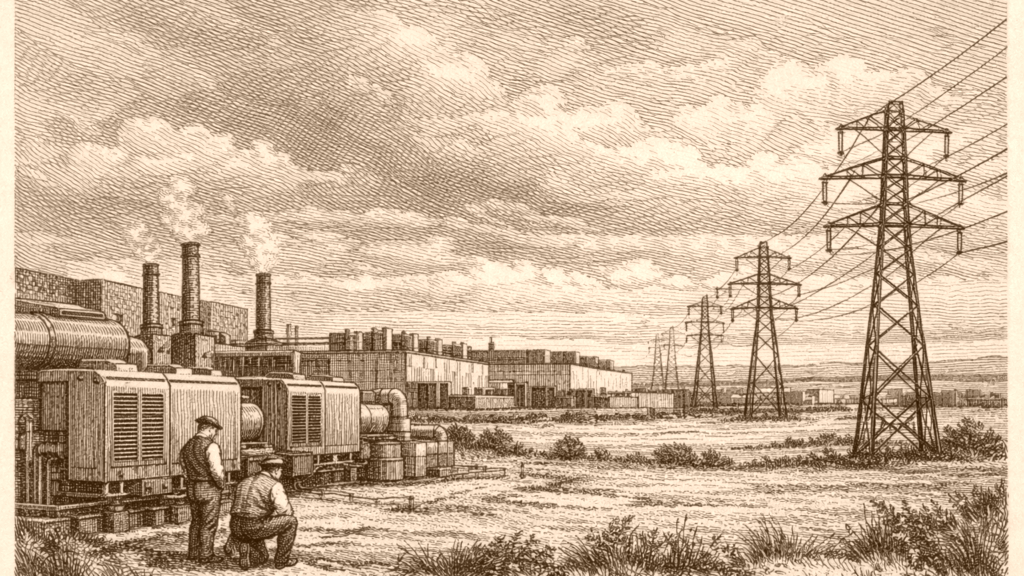
The 2024 State of the Environment report describes data centres as an associated aspect of Ireland’s technology sector and says their number has increased significantly in recent years. It states that data centres provide storage and processing capacity for digital data and are an essential component of the digital economy. The report also notes their dependence on continuous electricity supply from the national grid, with battery storage and on-site power generators used when grid power is unavailable or constrained. [2]
The same passage says on-site power generation has brought data centres into the EPA’s licensing regime under the Industrial Emissions Directive, and that the primary emissions of concern are air emissions from on-site generators, especially nitrogen oxides. It adds that there are over 20 licensed installations in Ireland, mostly in north County Dublin and County Meath, and that there is a high concentration of these facilities around Dublin. The text identifies concentration and emissions, but not wider environmental effects in detail. [2]
Grid Rules
CRU material from 2024 and 2025 links large energy users, including data centres, to electricity-system planning. The consultation says electricity use by data centres rose from 5 percent of national demand in 2015 to 21 percent in 2023, accounting for 85 percent of overall electricity-demand growth. It also says the review seeks a pathway for new large energy user connections while considering security of supply, grid infrastructure, and national carbon emissions. These figures and aims are stated together in the consultation text. [6] [7]
A later CRU decision says new data centres connecting to the electricity network will continue to need generation and or storage capacity on-site or nearby, and that this generation must participate in the wholesale market. It also requires at least 80 percent of annual demand to be met with additional renewable electricity projects in the Republic of Ireland, and says system operators must consider whether a requested connection is in a constrained or unconstrained location. This is a policy framework for connection conditions. [5]
Policy Direction
The CRU’s decision also says system operators must publish information on current and future network constraints, and that a connection engagement process for data centre applicants must be published by 31 March 2026. The same document says the medium- to long-term development of the data centre sector requires a State-led approach involving spatial planning, development targets, and plan-led infrastructure. The phrasing places sector growth within a broader planning structure rather than as a standalone licensing issue. [5]
The earlier CRU consultation said the aim was to provide a new pathway for large energy user connections while minimising impacts on carbon emissions and considering supply capacity and grid infrastructure. It also said future connection policy considerations included the location of the facility, flexibility from large energy demand customers, and the role of agencies and organisations in any new policy. Read together with the later decision, the documents show an administrative sequence from review to rule-setting, with renewable energy and network capacity named in both stages. [7] [5]
Source References
Hover over a number to see the source. Select it to open the source.

- [1] Research 386: The Status of Ireland’s Climate, 2020 | Environmental Protection Agency
- [2] Ireland's State of the Environment Report 2024
- [3] National Climate Change Risk Assessment Technical Report | Environmental Protection Agency
- [4] Major new EPA report assesses Ireland’s vulnerability to climate change impacts | Environmental Protection Agency
- [5] CRU Publishes its Decision on New Electricity Connection Policy for Data Centres | CRU.ie
- [6] Review of Large Energy Users Connection Policy | The Commission for Regulation of Utilities (CRU)'s Consultation Portal
- [7] Cru opens consultation on large energy user connections policy | CRU.ie










How do Irish climate observations and electricity-policy documents describe the relationship between climate governance and data centre growth?