
Public Culture
At a Glance
Festival Reach
The 2026 festival is presented as a public event with a fixed seasonal frame and a broad geographical spread. The English and Irish pages both state that Seachtain na Gaeilge runs from 1 to 17 March, and both describe it as an international Irish-language festival held in Ireland and in many other countries. The material also says it is one of the biggest celebrations of native language and culture, which makes scale itself part of its public identity. [2] [4]
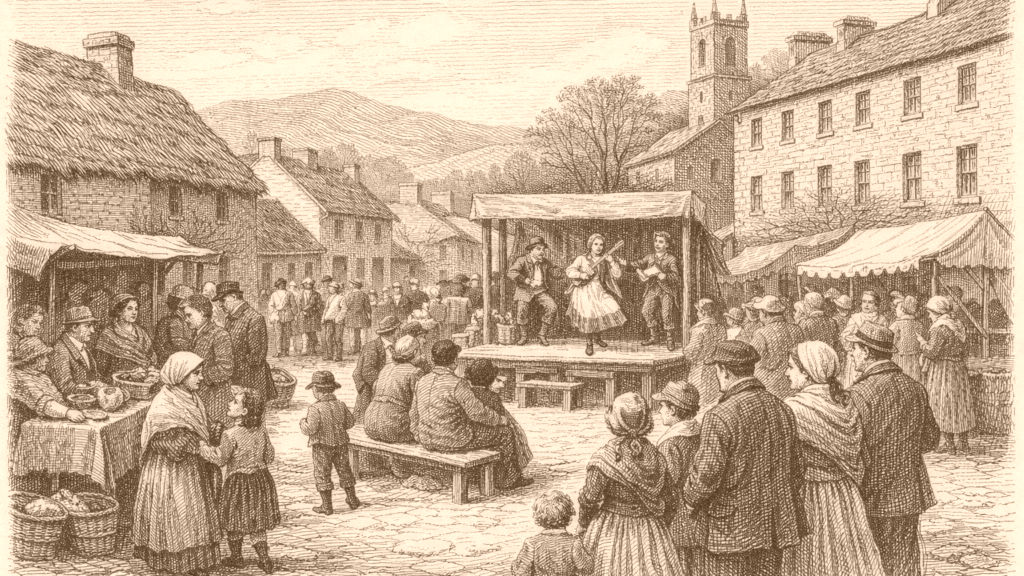
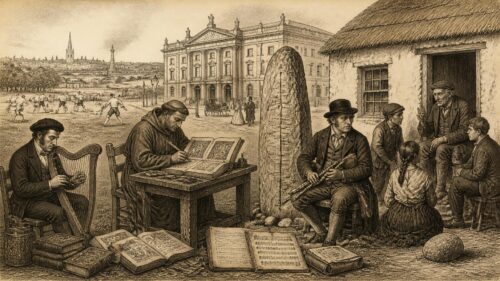
The same pages present participation as open-ended rather than exclusive. They say the festival gives everyone the chance to enjoy Irish, whether fluent, learning, or using a cupla focal, and that there is a calendar of events for every interest and every age group. The English page also lists music concerts, history tours, céilís, conversation circles, lectures, and poetry nights, showing a deliberately mixed public programme rather than a single cultural form. [2] [4] [5]
Local Organising
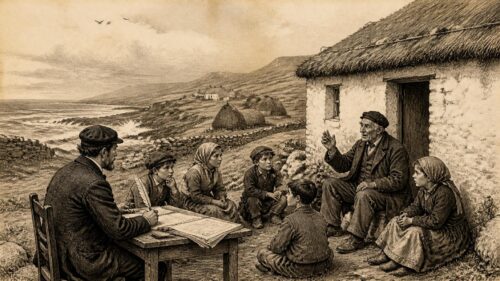
The festival is shown as something built locally by many kinds of organisations. The Irish and English descriptions both say voluntary and community groups, local authorities, schools, libraries, and organisations in music, sports, arts, and culture arrange events in their own areas. This is not presented as a centralised model alone: it is a networked public culture in which many institutions and groups contribute to the same seasonal celebration. [1] [2] [4]
The 2026 handbook page and the Creative Ireland listing both reinforce that local organisation continues in practice. The handbook page identifies 2026 community and school resources, including posters, while the Creative Ireland item for Offaly Libraries gives dates, venue, age range, and a workshop type. It also lists specific activities such as a café morning, quiz, film screening, conversation-circle day, and an Irish book-club session, which together show the festival being translated into local programming. [5] [6]
Media Presence
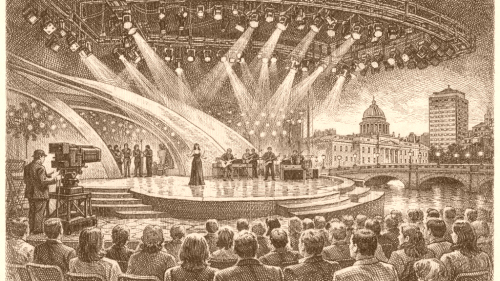
The festival’s public culture also extends into media and print. The English page says people can watch television programmes, listen to radio shows, read newspapers covering the festival, and use podcasts. It also says the official guide, issued with the Irish Independent each year, is the only place where all festival events are printed and that it includes articles, interviews, and sports, music, and technology features. The page identifies that guide as bilingual, which is presented as useful for learners. [2] [4]
The 2026 handbook page and the site navigation also show a structured digital presence. The handbook page lists separate community and school handbooks for 2026, while the site menu includes events, resources, competitions, youth competitions, games, and social-media links. A consent notice about cookies appears on the pages, but the factual point relevant here is that the festival is organized through a layered online platform as well as through events in the physical world. [3] [6]
Ambassadorial Voices
The 2026 home page foregrounds ambassadors as part of the festival’s public face. It names Conor Curley of Fontaines D.C., Róisín Seoighe, and IMLÉ as ambassadors for Seachtain na Gaeilge 2026. The page does not present them as historians or officials, but as named public figures associated with the festival’s outward visibility, linking the event to contemporary Irish-language presence in music and media. [3] [4]
The archive page shows that ambassadors are part of Seachtain na Gaeilge’s recorded history. It lists archive items from 2006 through 2021, including magazine covers, posters, a CD, and named ambassadors for different years. The page names specific people such as Danny O’Reilly and Aoibhinn Ní Shúilleabháin in 2010, and Bláthnaid Treacy, Imelda May, and Declan Hannon in 2021. It therefore presents a chronology of formats and names rather than assigning those people broader categories. [7] [8]
Historical Frame
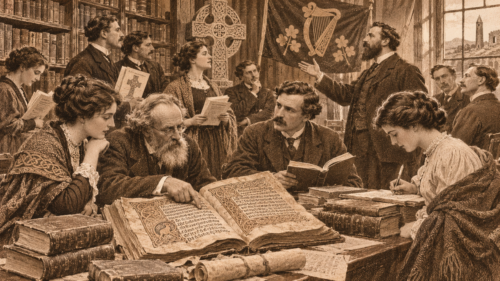
The archive gives the clearest long view of the festival’s public history. It states that the first Seachtain na Gaeilge was held in 1902 and that Conradh na Gaeilge organised it as part of a campaign to promote Irish-made products. The same page adds that a march used to be held on the Sunday nearest St Patrick’s Day. These details show that the archive preserves an early public campaign as well as a calendar marker. [7] [8]
The archive also notes that, as a result of this campaign and march, Conradh na Gaeilge and other groups succeeded in having St Patrick’s Day recognised as a public holiday in Ireland. That is a specific claim about one outcome recorded by the archive, and it is the closest direct statement in these pages about public recognition. The archive then points readers to examples from later decades, including 1970s, 1980s, 1990s, and 2000s material. [7] [8]
Public Memory
Across the pages, Seachtain na Gaeilge appears as both a current event and an organised memory of earlier public life. The archive page specifically invites readers to look at events and campaigns from the last 124 years, and the later items range from programmes and film nights to posters, magazines, and recordings. The evidence here does not show every historical period, but it does show a curated continuity from the first festival to recent ambassador campaigns. [7] [8]
The 2026 material therefore presents public culture as layered: local events, broad media coverage, printed guides, digital resources, and recurring ambassadorial figures all sit beside archival memory. What can be stated with confidence from these pages is that the festival is framed as open, multilingual in participation, and organised through a wide civic network. The pages do not, within these excerpts, provide a full account of attendance, funding, or reception. [2] [4] [5] [6] [8]
Source References
Hover over a number to see the source. Select it to open the source.

- [1] Cad í - Seachtain na Gaeilge
- [2] What is Seachtain na Gaeilge - Seachtain na Gaeilge
- [3] Baile - Seachtain na Gaeilge
- [4] Home - Seachtain na Gaeilge
- [5] Seachtain na Gaeilge - Creative Ireland Programme
- [6] Handbook - Seachtain na Gaeilge
- [7] Cartlann Sheachtain na Gaeilge - Seachtain na Gaeilge
- [8] Seachtain na Gaeilge Archive - Seachtain na Gaeilge
How do Seachtain na Gaeilge materials in 2026 present the festival’s role in public culture through events, ambassadors, and archival memory?