Máel Mórda
Máel Mórda mac Murchada was a king of Leinster in the late tenth and early eleventh centuries. He belonged to the Uí Dúnlainge dynasty, the royal line that supplied a number of Leinster kings, and he is chiefly remembered in Irish history for his part in the conflicts that surrounded Brian Boru’s rise to dominance in Ireland. The surviving narrative tradition places him at the centre of the political struggle between Leinster, Dublin, and Munster in the years before the Battle of Clontarf. Tradition identifies Máel Mórda as a son of Murchad and places him among the northern Leinster ruling families.
Dateline
Máel Mórda mac Murchada was a king of Leinster in the late tenth and early eleventh centuries. He belonged to the Uí Dúnlainge dynasty, the royal line that supplied a number of Leinster kings, and he is chiefly remembered in Irish history for his part in the conflicts that surrounded Brian Boru’s rise to dominance in Ireland. The surviving narrative tradition places him at the centre of the political struggle between Leinster, Dublin, and Munster in the years before the Battle of Clontarf.
Royal Heritage
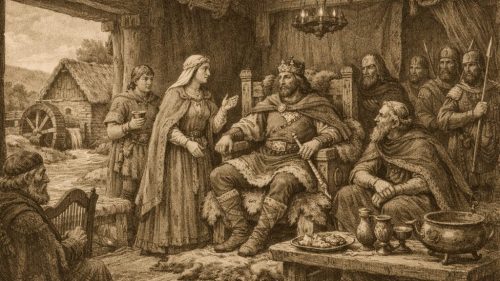
Tradition identifies Máel Mórda as a son of Murchad and places him among the northern Leinster ruling families. In that political world, kingship was not a simple inheritance but a contested office shaped by kinship, alliance, and armed force. Máel Mórda’s position as a Leinster ruler brought him into a wider arena of provincial rivalry, where the fortunes of Leinster were closely tied to relations with neighbouring rulers and with the Norse-Gaelic power centred on Dublin.
His surname, mac Murchada, marks him as the son of Murchad, and the name by which he is known in later history links him firmly to the Gaelic royal milieu of medieval Ireland. The annalistic and later literary traditions associated with him place him among the figures who shaped the final phase of the old provincial order before the upheavals of the early eleventh century.
Leinster Sovereignty
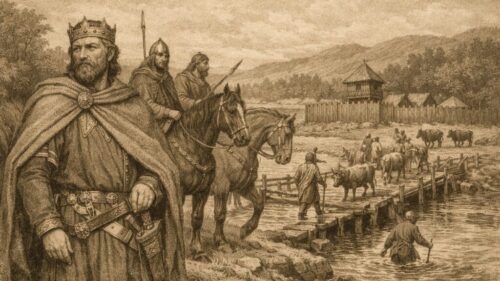
Máel Mórda is described as king of Leinster in the sources that preserve the history of this period. His rule belongs to a moment when provincial kingship in Ireland was deeply intertwined with competition for supremacy across the island. Leinster was one of the major kingdoms of Ireland, and its rulers had to manage both internal dynastic tensions and external pressures from powerful neighbours.
The historical memory of Máel Mórda is tied to the struggle between Leinster and Brian Boru, king of Munster, whose authority extended over much of Ireland. In that conflict, Máel Mórda appears not as a background figure but as a principal opponent. His kingship is therefore remembered less for administrative acts than for its place in the military and diplomatic contest that culminated in one of the best-known battles in Irish history.
Brian Conflict
Later tradition associates Máel Mórda with the Battle of Glenmama and with the wider hostilities that followed. These events belonged to the sequence of struggles between Leinster and the forces aligned with Brian Boru. In that setting, Máel Mórda became one of Brian’s most significant opponents. The survival of his name in this context shows how closely his career was bound to the political crisis of the period.
The literary account known as Cogad Gáedel re Gallaib presents him as a prominent adversary of Brian and gives a dramatic description of his final combat. Such narratives are not neutral records, but they do preserve the medieval image of Máel Mórda as a warrior king whose fortunes rose and fell in open battle. The same tradition places him in the company of other kings and noble figures who died in the fighting.
Clontarf Legacy
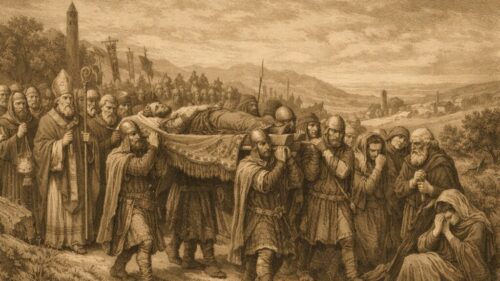
Máel Mórda died in the Battle of Clontarf in 1014, the great conflict fought on Good Friday between Brian Boru’s forces and their opponents. The battle became one of the defining events of medieval Irish memory, and Máel Mórda’s death there fixed his place in that remembered struggle. The surviving accounts do not present him as a long-ruling monarch who died peacefully, but as a king whose end came in the violence of campaign and combat.
The traditions about his death also connect him with the broader collapse of the alliance and enmities that shaped the battle. In that sense, Máel Mórda’s career is inseparable from the political crisis of early eleventh-century Ireland, when provincial kings, Dublin rulers, and high-kingship ambitions collided on the battlefield.
Historical Memory
Máel Mórda’s lasting significance lies in his role within the events remembered around Clontarf and Brian Boru. He stands as one of the Leinster rulers whose names survived because they were attached to a major national turning point. Through the annals and later narrative writing, he remains part of the history of the Uí Dúnlainge dynasty, the kingship of Leinster, and the turbulent political world of medieval Ireland.
Source References
Hover over a number to see the source. Select it to open the source.