O’Sullivan Beare
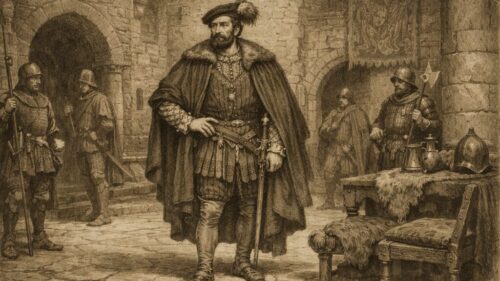
Donal Cam O’Sullivan Beare, known in Irish as Domhnall Cam Ó Súileabháin Bhéara, was an Irish nobleman and soldier who was born in 1560 and died on 16 July 1618 in Madrid. He was the last independent Chief of the Name of Clan O’Sullivan, and he was also described as the last O’Sullivan Beare. In the southwest of Ireland he held the lordship of the Beara Peninsula during a period when the English Crown was seeking to extend its rule across the island. O’Sullivan Beare was born in 1560. His father was killed in 1563, but he was considered too young to inherit the chiefship at that stage.
Dateline
Donal Cam O’Sullivan Beare, known in Irish as Domhnall Cam Ó Súileabháin Bhéara, was an Irish nobleman and soldier who was born in 1560 and died on 16 July 1618 in Madrid. He was the last independent Chief of the Name of Clan O’Sullivan, and he was also described as the last O’Sullivan Beare. In the southwest of Ireland he held the lordship of the Beara Peninsula during a period when the English Crown was seeking to extend its rule across the island.
Early Life
O’Sullivan Beare was born in 1560. His father was killed in 1563, but he was considered too young to inherit the chiefship at that stage. Leadership of the clan therefore passed to his father’s surviving brother, Eoin, who was confirmed by the Dublin Castle administration as Lord of Beare and Bantry. Eoin accepted the authority of Queen Elizabeth I and was knighted, becoming Sir Eoin.
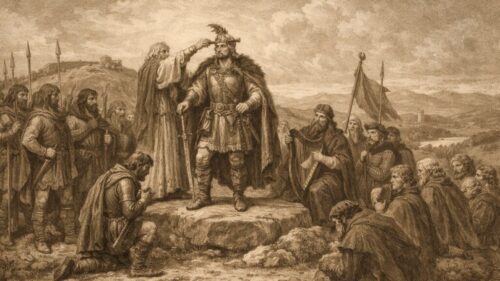
In 1587, Donal asserted his own claim to leadership of the clan. He petitioned the Dublin Castle administration to set aside Sir Eoin’s appointment and advanced a claim based on English law and absolute male primogeniture. The Dublin authorities accepted his claim, and he thereafter became the O’Sullivan Beare, head of the clan.
War Years
By 1600, Munster had been severely disrupted by war, and the wider conflict of the Nine Years’ War was under way. O’Sullivan Beare at first kept his distance from the rebel cause, but he later joined a confederation of Gaelic chiefs led by Hugh O’Neill, Earl of Tyrone, and Red Hugh O’Donnell. The allied Irish and Spanish forces were defeated by an English army at the Battle of Kinsale in early 1602. That defeat formed the background to the destruction of O’Sullivan Beare’s own power in the south-west.
After Kinsale, he resolved to continue resistance by holding Dunboy Castle. In June 1602 English forces attacked Dunboy, and the castle fell after a brief siege. The defenders were killed in combat or hanged afterwards. At that time O’Sullivan Beare himself was not at Dunboy, having travelled to Ulster for a conference with Tyrone.
March Northwards
Following the fall of Dunboy, O’Sullivan Beare continued the struggle by guerrilla tactics. He also maintained a stronghold on Dursey Island, which was attacked by an English detachment under George Carew. According to Philip O’Sullivan Beare, the assault left all 300 occupants dead, including women and children who had taken shelter there. After the fall of Dursey and Dunboy, he gathered the survivors of his followers and began a northward march on 31 December 1602 with 1,000 of his remaining people.
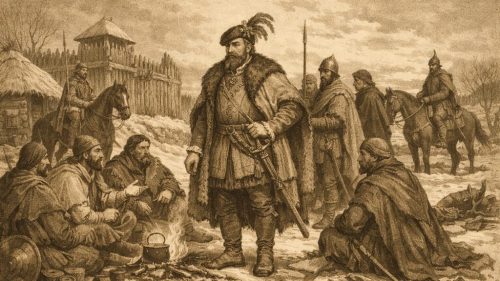
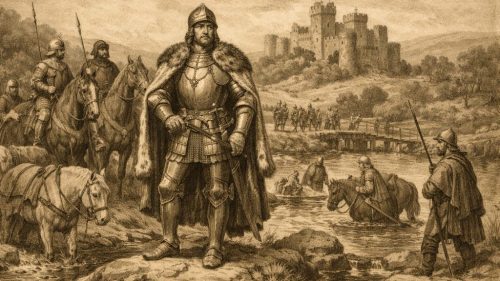
The march was intended to reach Lord Tyrone on the shores of Lough Neagh. O’Sullivan Beare led his party through Munster, Connacht and Ulster, while English forces and their Irish allies harried them throughout the journey. The group suffered from winter cold, hunger and exposure as they crossed a countryside already devastated by war. They encountered hostility in several places along the route, and only 35 of the original 1,000 reached Brian Oge O’Rourke’s castle in West Breifne on 14 January 1603. During the journey, O’Sullivan Beare crossed the River Shannon in darkness after having a skin-and-hazel-rod boat made in two days to carry people across in small groups.
Spanish Exile
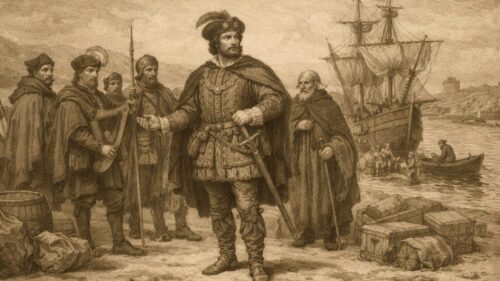
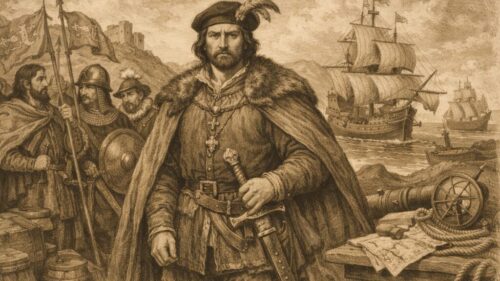
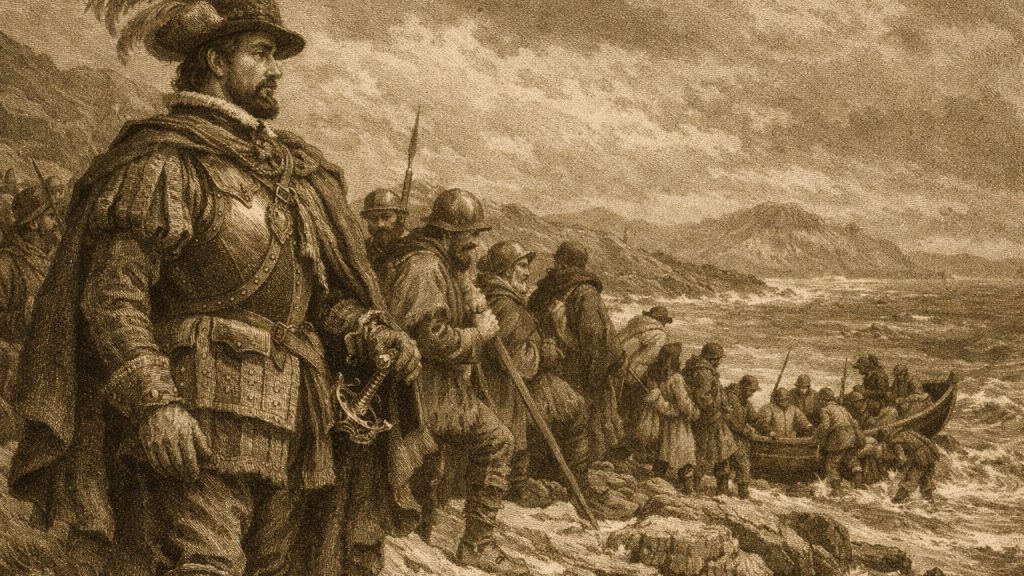
When resistance in Ireland ended, O’Sullivan Beare sought exile and escaped to Spain by ship. In Spain, Philip III welcomed him and reconfirmed his princely status. He also received a commission as an imperial general. An Irish College portrait later associated with him shows a man in Spanish armour, dressed in a courtly style and identified as O’Sullivan Beare, Lord of Beara and Bantry. The portrait’s dating and origin have been debated, but it remained closely linked with his memory in Ireland and Spain.
O’Sullivan Beare died in Madrid on 16 July 1618. The account associated with his death says that he was wounded while trying to break up a brawl between his nephew Philip O’Sullivan and a Dubliner named John Bath. His life thus moved from Gaelic lordship in Beara to military service and exile in Spain, where his title and status were recognised by the Spanish crown.
Source References
Hover over a number to see the source. Select it to open the source.