Mary Perolz
Mary Perolz was born in Market Alley, Limerick, on 7 May 1874. Her father, Richard Perolz, was a Dublin-born Protestant printer of French Huguenot origin, and the family later moved to Tralee and then to Cork city, where he worked on the Cork Examiner. She was educated by the Mercy sisters in Tralee and by the Presentation sisters in Cork and Dublin. Perolz joined the Gaelic League and became an early member of Inghinidhe na hÉireann in 1900. She taught history and Irish in classes organised by the organisation and acted in theatrical productions, including the first Dublin staging of Eilís agus an Bhean Deirce in December 1902.
Dateline
Mary Perolz was born in Market Alley, Limerick, on 7 May 1874. Her father, Richard Perolz, was a Dublin-born Protestant printer of French Huguenot origin, and the family later moved to Tralee and then to Cork city, where he worked on the Cork Examiner. She was educated by the Mercy sisters in Tralee and by the Presentation sisters in Cork and Dublin.
Nationalist Work
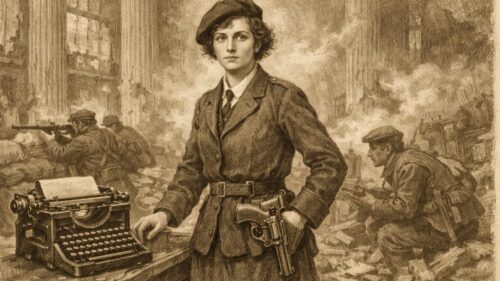
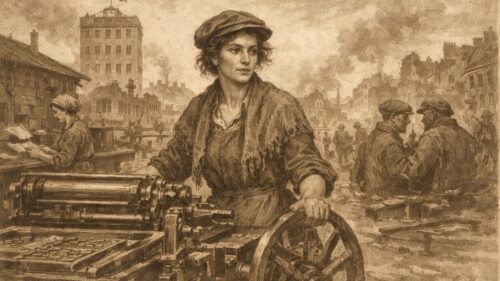
Perolz joined the Gaelic League and became an early member of Inghinidhe na hÉireann in 1900. She taught history and Irish in classes organised by the organisation and acted in theatrical productions, including the first Dublin staging of Eilís agus an Bhean Deirce in December 1902. By 1916 she was prominent in Cumann na mBan and the Irish Citizen Army, and she was registered owner of Spark, a nationalist weekly printed by James Connolly.
Easter Service
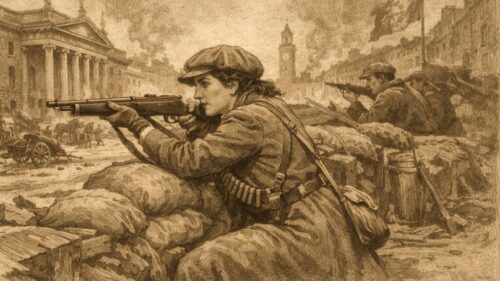
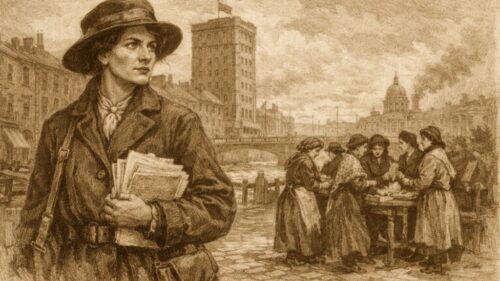
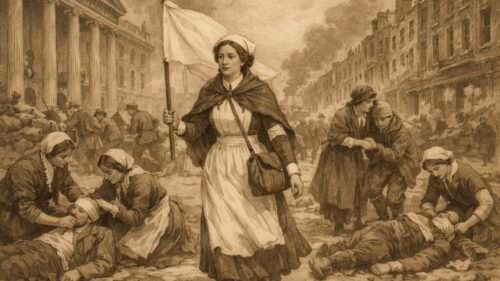
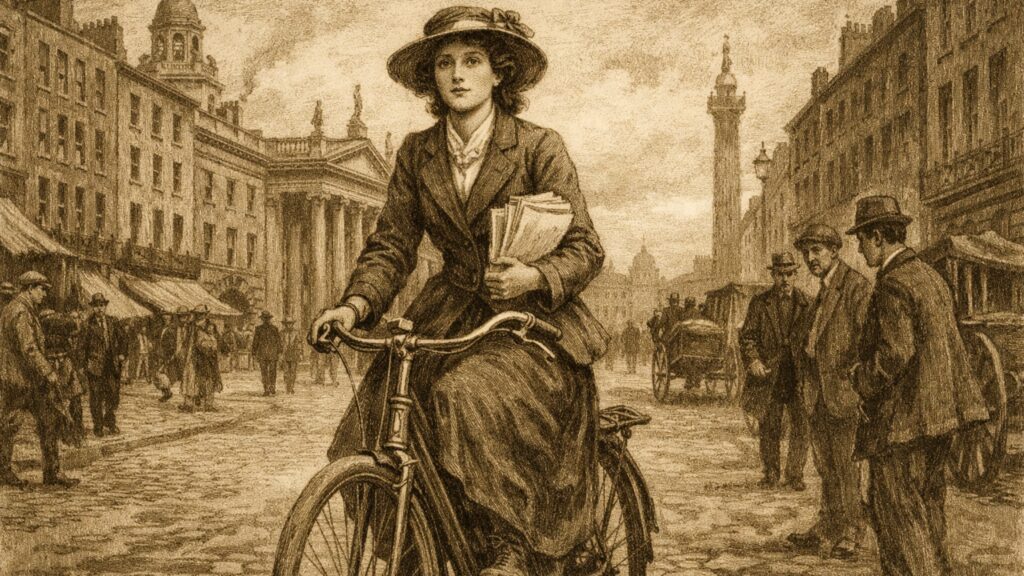
In the weeks before the Easter Rising, Perolz served as a courier of messages between leaders of the planned insurrection and volunteer commandants in the country. During the Rising she was dispatched to Cork city with Patrick Pearse’s remobilisation order. After the Rising she was one of five women internees deported to England on 20 June and was released the next month on appeal. She was elected acting president of the Irish Women Workers’ Union in February 1917, travelled to England in June 1917 to welcome released republican internees, married James Michael Flanagan in 1919, and later lived at 127 Botanic Road in Glasnevin and St Lawrence Cottage, Strand Road, Sutton. She remained a champion of women’s rights in industry and in the labour movement.
Source References
Hover over a number to see the source. Select it to open the source.