Louis MacNeice
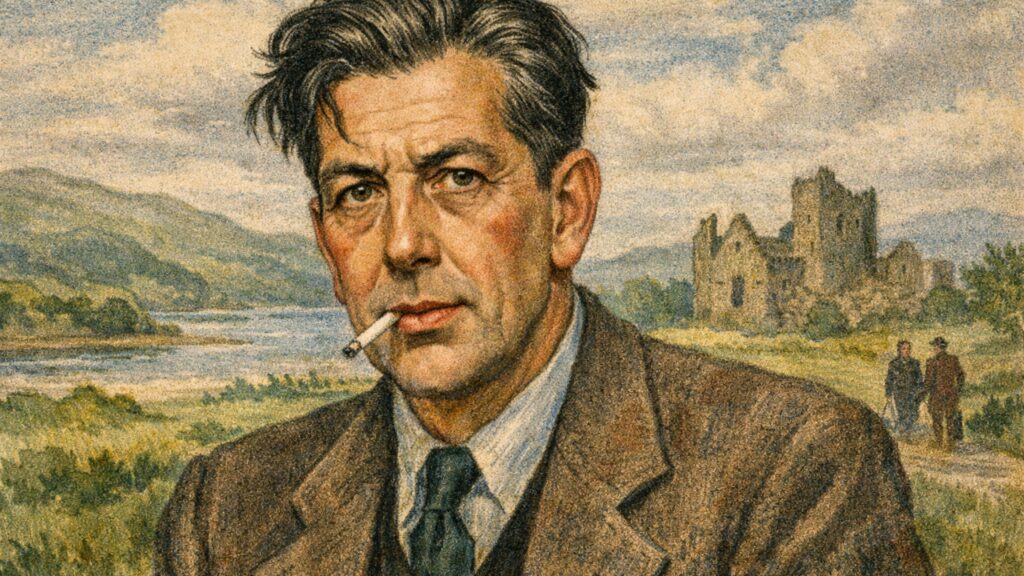
Louis MacNeice was born in Belfast in 1907. His father, John MacNeice, was Church of Ireland rector of Holy Trinity, Belfast, and later became Bishop of Down, Connor and Dromore. His mother, Elizabeth, died in 1914, and his father remarried in 1917. Shortly afterwards he was sent to school in Sherborne, Dorset, before continuing his education at Marlborough College, where John Betjeman and Anthony Blunt were among his contemporaries. MacNeice went on to Merton College, Oxford, where he studied classics and met W.H. Auden. In his final year there he published Blind Fireworks in 1929.
Dateline
Louis MacNeice was born in Belfast in 1907. His father, John MacNeice, was Church of Ireland rector of Holy Trinity, Belfast, and later became Bishop of Down, Connor and Dromore. His mother, Elizabeth, died in 1914, and his father remarried in 1917. Shortly afterwards he was sent to school in Sherborne, Dorset, before continuing his education at Marlborough College, where John Betjeman and Anthony Blunt were among his contemporaries.
Oxford Years
MacNeice went on to Merton College, Oxford, where he studied classics and met W.H. Auden. In his final year there he published Blind Fireworks in 1929. After Oxford he took up a lecturership in Classics at Birmingham University. In 1930 he married Giovanna Ezra. In autumn 1936 he moved to Bedford College, University of London, with his young son, Daniel.
Later Writing
His later work included Poems in 1935, The Earth Compels in 1938, and Autumn Journal in 1939. At that time he was also working on the incomplete autobiography The Strings Are False. He applied unsuccessfully for the chair of English Literature at Trinity College Dublin, then took a post as lecturer in poetry at Cornell University. He later joined the BBC Features Department, where he worked as writer, producer, and radio dramatist. In 1941 his critical study of W.B. Yeats appeared, and in 1942 he married Hedli Anderson; their daughter, Brigid Corinna, was born that year.
Public Recognition
MacNeice’s radio play The Dark Tower, with music by Benjamin Britten, was produced in 1946. In 1950-51 he was Director of the British Institute in Athens. His reputation was recognised by an honorary doctorate from Queen’s University in 1957 and a CBE in 1958. His marriage to Hedli ended in 1960, and he entered a relationship with Mary Wimbush. In 1963 he died after contracting viral pneumonia while recording sound effects in a cave in Yorkshire for his radio play Persons from Porlock. His ashes are interred in Christ Church, Carrowdore, Co Down.
Source References
Hover over a number to see the source. Select it to open the source.