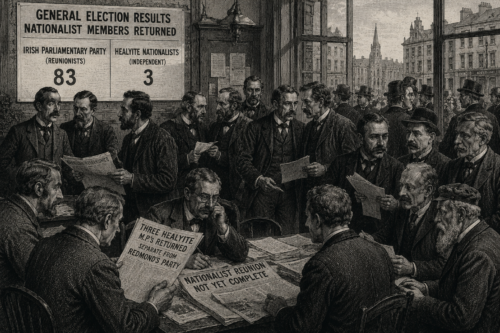
Party Reunited
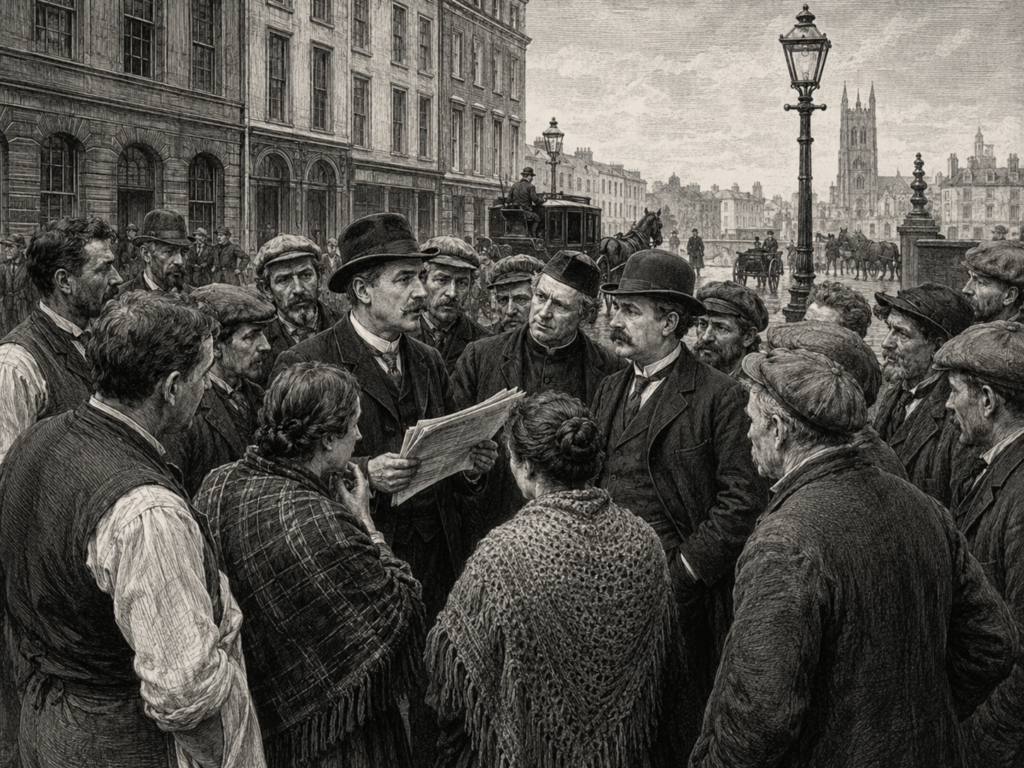
Limerick Archives — Wednesday, 31 January 1900
LIMERICK, Wednesday — News of the reunion of the Irish Parliamentary Party has been received with keen interest throughout the city and county, where nationalist divisions have long influenced public meetings, elections and local loyalties. Parnellites and anti-Parnellites have now agreed to end nearly ten years of hostility and restore a single parliamentary organisation. Supporters of Home Rule in Limerick believe the settlement may strengthen Ireland’s voice at Westminster and reduce the bitterness that has weakened nationalist politics since Charles Stewart Parnell’s fall. Local organisers are already discussing what the reunion may mean for future contests, land reform and national representation.
The split began in 1890, when controversy surrounding Parnell’s private life divided his followers and shattered the political unity that had brought Home Rule to the centre of British debate. Some members remained loyal to him, while others concluded that his continued leadership had become impossible. After Parnell’s death in 1891, the bitterness endured through rival organisations, disputed candidacies and personal feuds. In constituencies across Ireland, including Limerick, voters were repeatedly asked to choose between men who claimed the same national cause. The reunion therefore represents an attempt to repair both political machinery and damaged public confidence throughout Ireland.
William O’Brien and the United Irish League have played an important part in pressing the rival factions towards agreement. Founded in County Mayo in 1898, the League rapidly expanded by linking the demand for land reform with the wider struggle for national self-government. Its branches warned that ordinary supporters would no longer tolerate parliamentary leaders placing old grievances before Ireland’s interests. The movement has found a ready audience among tenant farmers, labourers and local nationalists who want stronger action on land purchase, evicted tenants and rural poverty. Its influence has made continued separation increasingly difficult for the parliamentary leaders concerned.
Attention will now turn to the choice of a chairman capable of holding together men whose loyalties were shaped by the Parnell crisis. John Redmond, leader of the smaller Parnellite group, is widely regarded as a possible compromise candidate. John Dillon, Timothy Healy, T. C. Harrington and William O’Brien remain influential figures whose cooperation will be essential. Agreement on organisation will not immediately remove differences over land agitation, parliamentary tactics, relations with British parties or the pace of the Home Rule campaign. Even so, the decision gives constitutional nationalism its strongest opportunity for political recovery since the division began.
For Limerick, the reunion may carry practical consequences as well as symbolic importance. Councillors, clergy, merchants, labourers, farmers and political clubs will watch closely to see whether unity produces firmer representation on tenant purchase, labourers’ cottages, congested districts and Irish legislative independence. Some will remain doubtful that old resentments can be set aside when candidates are selected or discipline is tested. Others believe the country has already lost too much influence through division. The first elections under the restored organisation will reveal whether yesterday’s agreement is genuine. For now, nationalist Ireland once more possesses a common parliamentary voice at Westminster.
- Freeman’s Journal, 31 January 1900 — contemporary Irish nationalist reporting on the agreement that reunited the Parnellite and anti-Parnellite parliamentary factions.
- Irish Daily Independent, 31 January 1900 — immediate newspaper coverage of the reunion settlement, the participating MPs and the proposed restoration of party unity.
- The Irish Times, 31 January 1900 — contemporary reporting and commentary on the reunited Irish Parliamentary Party and its implications for Home Rule politics.
- The Times of London, 31 January 1900 — British coverage of the conclusion of the reunion negotiations and the reorganisation of Irish nationalist representation at Westminster.
- John Redmond Papers, National Library of Ireland, 1878–1918 — contemporary correspondence and political documents relating to Redmond, the Parnellite faction, party organisation and the negotiations surrounding reunion. (National Library of Ireland)
The reunion agreement was concluded on 30 January 1900, following negotiations that had begun at a reunion conference on 17 January. (centenariestimeline.com)