Unionists Hold
Limerick Archives — Wednesday, 24 October 1900
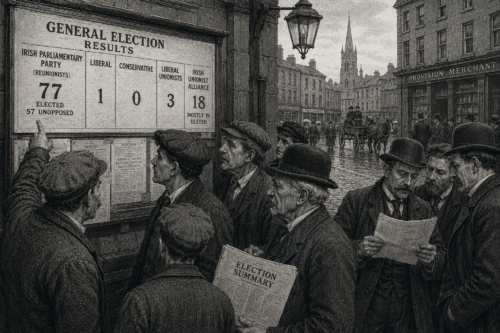
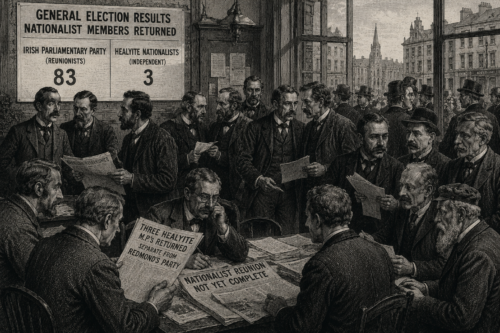
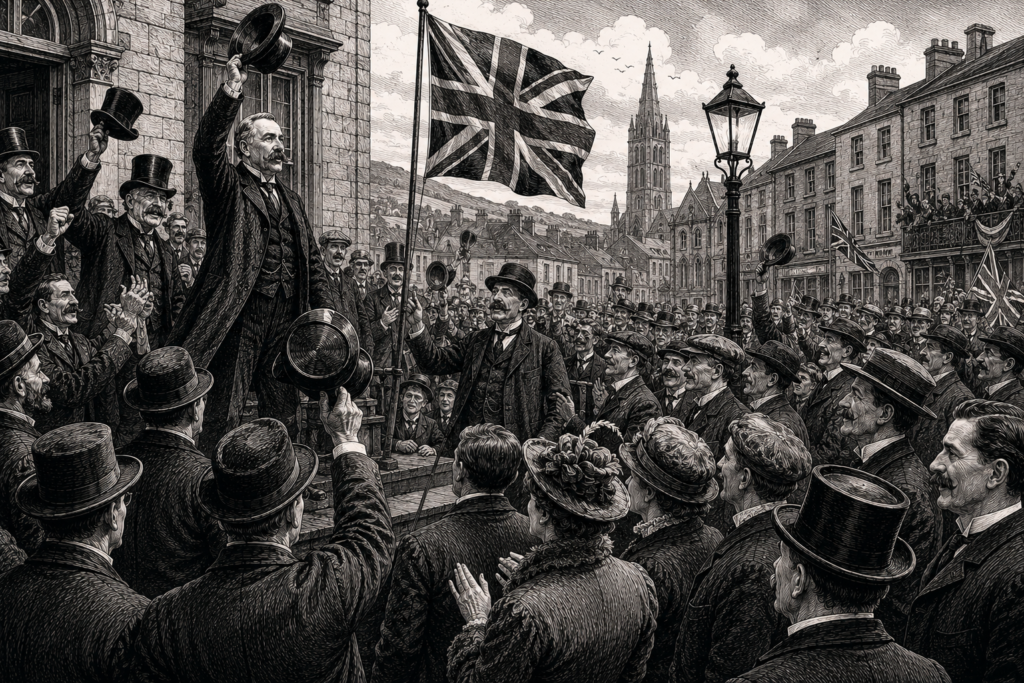
LIMERICK, Wednesday — The Irish Unionist Alliance has retained eighteen of Ireland’s 103 Westminster seats as the general election concludes, preserving its principal strength in Ulster despite the overwhelming national victory of the reunited Irish Parliamentary Party. The result will interest Limerick voters because it confirms that Ireland remains divided between two sharply opposed constitutional programmes. Nationalists demand an Irish legislature and land reform, while unionists insist that the political and economic union with Great Britain must remain intact. Although unionist representation is comparatively small across Ireland, its concentration in the north-east gives the movement considerable organisation, confidence and parliamentary influence.
The Irish Unionist Alliance was established to coordinate resistance to Home Rule among Conservatives, Liberal Unionists, landlords, merchants, professionals and Protestant organisations. Its support is strongest in Ulster, particularly within the industrial and commercial districts where many electors fear that an Irish parliament dominated by nationalists would endanger trade, employment, religious liberties and connections with Britain. Unionist candidates also retain influence in Dublin University and selected urban constituencies. Their position rests not merely upon attachment to the Crown, but upon a conviction that Ireland’s prosperity and security depend upon remaining fully represented within the Parliament of the United Kingdom.
Edward James Saunderson continues to provide the Alliance with prominent parliamentary leadership. Unionist candidates have defended the Government’s prosecution of the South African War and presented Irish military service as evidence of loyalty to the Empire. They accuse the Irish Parliamentary Party of encouraging hostility towards Britain while seeking concessions from Westminster. Nationalists answer that unionist power depends upon preserving political control against the expressed wishes of most Irish constituencies. The election has therefore returned two rival Irish delegations: a large nationalist bloc demanding self-government and a smaller, geographically concentrated unionist body determined to prevent it.
The eighteen Alliance seats are concentrated mainly in Ulster, where constituency boundaries, local organisation and religious and economic loyalties favour resistance to Home Rule. The party retained ten seats without opposition, demonstrating the security of several strongholds before polling occurred. Liberal Unionists secured three additional Irish seats, meaning that support for the Union extends somewhat beyond the Alliance’s official total. The figures nevertheless reveal its regional character. Across most of Munster, Connacht and Leinster, unionist candidates face electorates committed to constitutional nationalism, while north-eastern Ulster continues to return members who regard the Union as essential and non-negotiable.
In Limerick, where Unionist candidate Francis Kearney was heavily defeated by Michael Joyce, the Alliance possesses little electoral prospect but remains part of the city’s commercial, professional and religious life. Its supporters may take reassurance from the strength retained in Ulster and from the return of a Conservative-led government at Westminster. Nationalists, however, will interpret the wider Irish result as proof that unionist opposition represents a regional minority rather than the country as a whole. The election has strengthened both claims: Ireland’s majority has endorsed Home Rule, while organised unionism has shown that determined resistance remains firmly rooted in the northern counties.
- Parliamentary Election Returns, General Election of 1900, House of Commons Parliamentary Papers — official returns recording all Irish constituencies, candidates, vote totals and successful members, including the eighteen Irish Unionist Alliance seats. The exact command-paper number and relevant pages should be confirmed before formal citation.
- The Belfast News-Letter, 24–25 October 1900 — contemporary unionist reporting on the completed Irish results, Ulster representation and the political position of the Irish Unionist Alliance. Exact page and column should be confirmed before formal citation.
- The Northern Whig, 24–25 October 1900 — contemporary Belfast coverage of the election results, Unionist candidates and political opinion throughout Ulster. Exact page and column should be confirmed before formal citation.
- The Irish Times, 24–25 October 1900 — contemporary reporting and editorial analysis of Irish Unionist representation, the Westminster result and the continuing conflict over Home Rule. Exact page and column should be confirmed before formal citation.
- Irish Unionist Alliance election addresses and campaign literature, 1900, Public Record Office of Northern Ireland and National Library of Ireland collections — contemporary statements outlining opposition to Home Rule, defence of the Union and appeals to Ulster electors. The precise collection, item and archival reference should be identified before formal citation.