Women Participate
Limerick Archives — Sunday, 15 April 1900
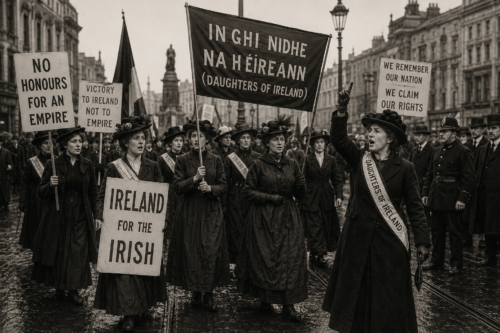
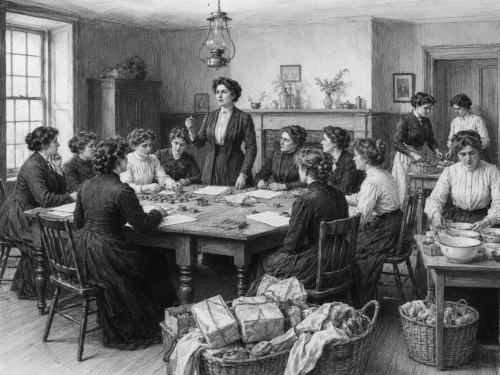
LIMERICK, Sunday — Inghinidhe na hÉireann has declared that women must take an active part in Ireland’s political and civic life rather than remain auxiliaries to movements led entirely by men. Established under Maud Gonne’s leadership, the organisation gives women responsibility for deciding policy, addressing meetings, raising funds and arranging public campaigns. Its exclusively female membership provides a political space in which women may develop confidence and organisational experience despite their exclusion from parliamentary elections. The Daughters of Ireland therefore challenges British rule while also questioning conventions that restrict women’s influence within nationalism, local affairs and public debate.
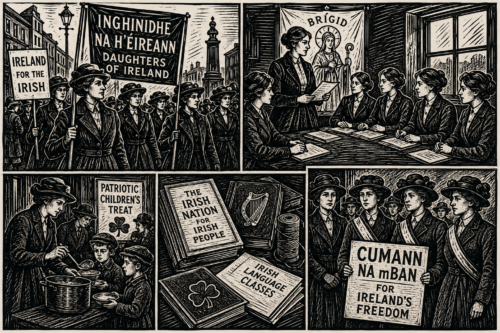
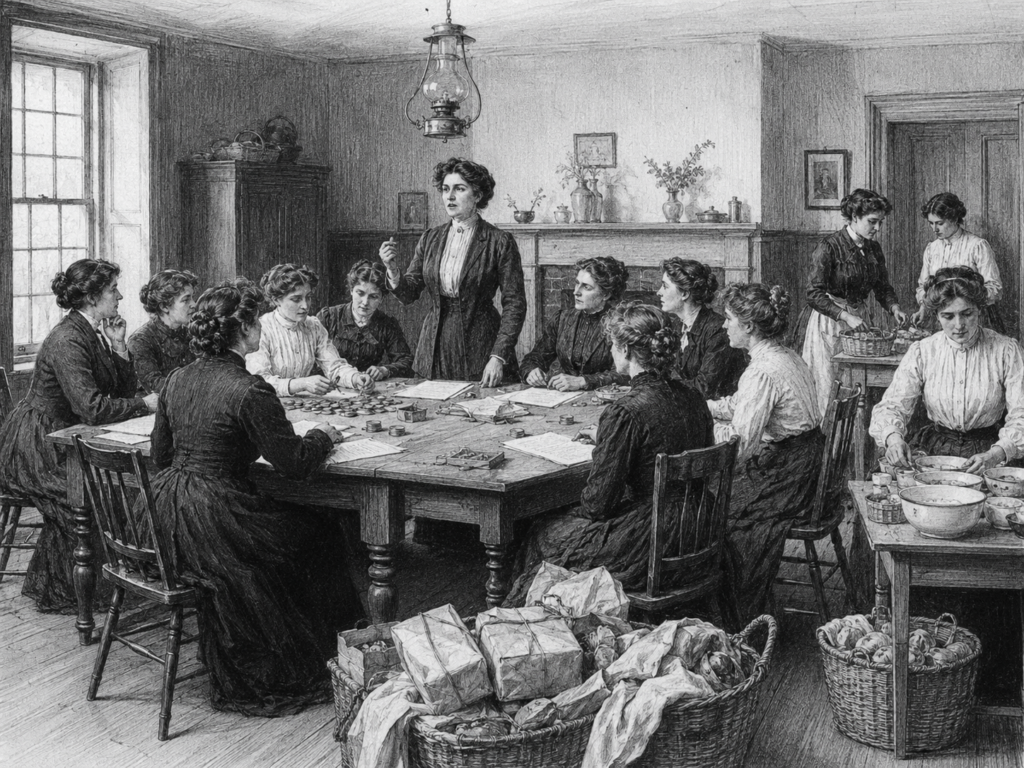
Members intend to participate through education, cultural activity, social relief and political mobilisation. They will organise lectures, language classes, dramatic performances, commemorations and children’s events while encouraging Irish manufacture and complete national independence. Such work places women before audiences as teachers, organisers and speakers rather than as decorative symbols of the nation. The National Library of Ireland describes the organisation’s programme as political, social and feminist, noting its support for women’s suffrage alongside independence and school meals. Its activities helped transform private labour and community service into recognised forms of public action.
Women remain unable to vote in Westminster elections or sit in Parliament, while many nationalist associations offer them only subordinate duties. Inghinidhe na hÉireann rejects those limitations by creating offices, committees and campaigns controlled by women themselves. Its members may determine priorities, publish political arguments and train younger activists without awaiting permission from male parliamentary leaders. Historian Margaret Ward identifies the organisation as the only explicitly nationalist and feminist body in early twentieth-century Ireland. Its emergence marks a significant advance from women being represented symbolically as Ireland towards women acting as practical participants in the struggle over Ireland’s future.
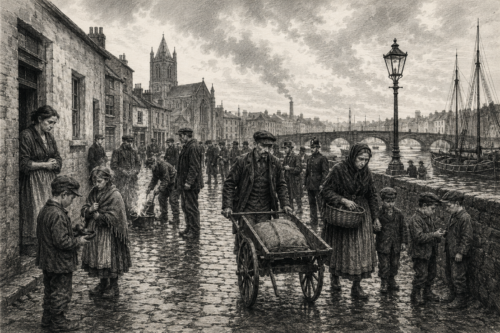
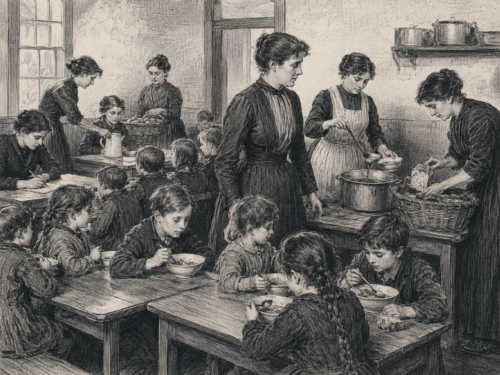
The organisation’s civic work extends beyond speeches and constitutional demands. Its members plan charitable, educational and cultural undertakings that bring them into direct contact with poor families, schoolchildren, workers and local communities. Organising meals, classes and public gatherings requires negotiation, bookkeeping, fundraising and the management of volunteers. These responsibilities provide political training while demonstrating that citizenship includes practical service. The women are not waiting for formal voting rights before contributing to public life. Instead, they are building experience through activities that expose social need, encourage collective action and make female leadership visible within communities usually governed by male officials.
For women in Limerick, the development offers a model of participation suited to existing local experience. Women already manage households, teach children, operate businesses, labour in factories, support charities and sustain religious and cultural associations, yet their authority seldom receives political recognition. The Daughters of Ireland suggests that these skills may be brought directly into national organisation and civic debate. Not every woman will share its separatist programme, but its example challenges the belief that public affairs properly belong to men. By organising independently, its members claim a voice in defining Ireland and in deciding how political freedom should affect the lives of its people.
- Maud Gonne MacBride, writings on the history, activities and aims of Inghinidhe na hÉireann, Maud Gonne MacBride Papers, National Library of Ireland, MS 49,531/19.
- Inghinidhe na hÉireann, early rules, objectives, membership records and annual reports, Maud Gonne MacBride Papers, National Library of Ireland. Exact manuscript numbers and folios should be confirmed before formal citation.
- Helena Molony, Bureau of Military History Witness Statement No. 391, recollections concerning women’s organisation and political activity within Inghinidhe na hÉireann. Exact page should be confirmed before formal citation.
- Bean na hÉireann, Dublin, 1908–1911, articles concerning women’s suffrage, nationalist politics, social reform and female civic participation. Exact issue, page and column should be confirmed before formal citation.
- Margaret Ward, Irish Nationalist Women, 1900–1918, Manchester: Manchester University Press, 1983; consult the chapter “Daughters of Ireland”.