Children Fed
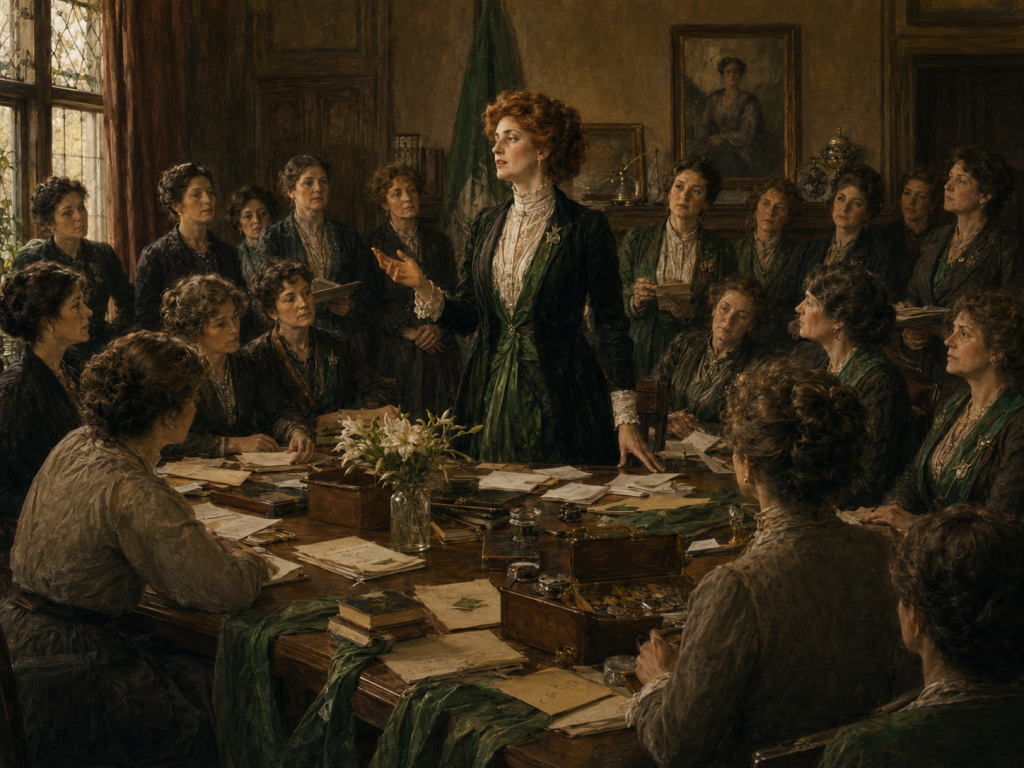
Inghinidhe na hÉireann has linked its demand for national independence with practical concern for poor children, arguing that political freedom must include protection from hunger, neglect and unequal education. Members of the women’s organisation have drawn attention to children arriving at school without adequate food and have pressed for organised meals in the poorest districts of Dublin. Their campaign places social welfare beside language, culture and sovereignty. For the Daughters of Ireland, a nation claiming the right to govern itself must also demonstrate that it can care for children whose health and education are damaged by poverty.
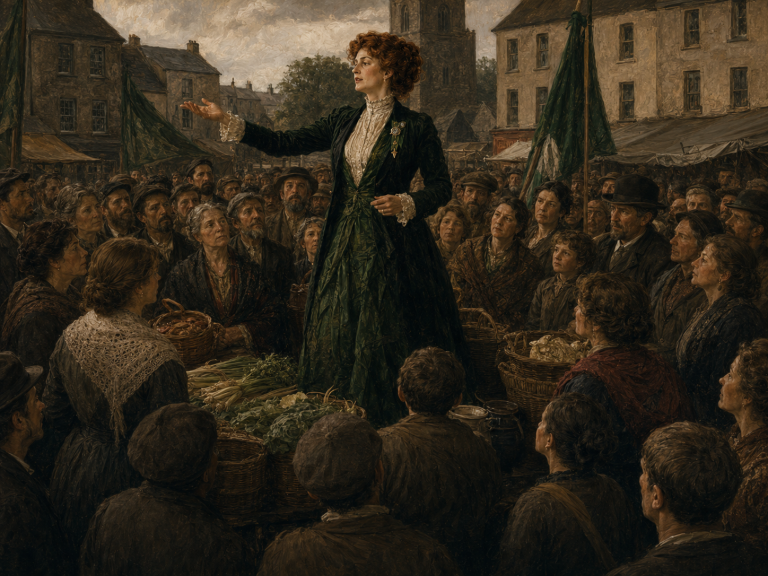
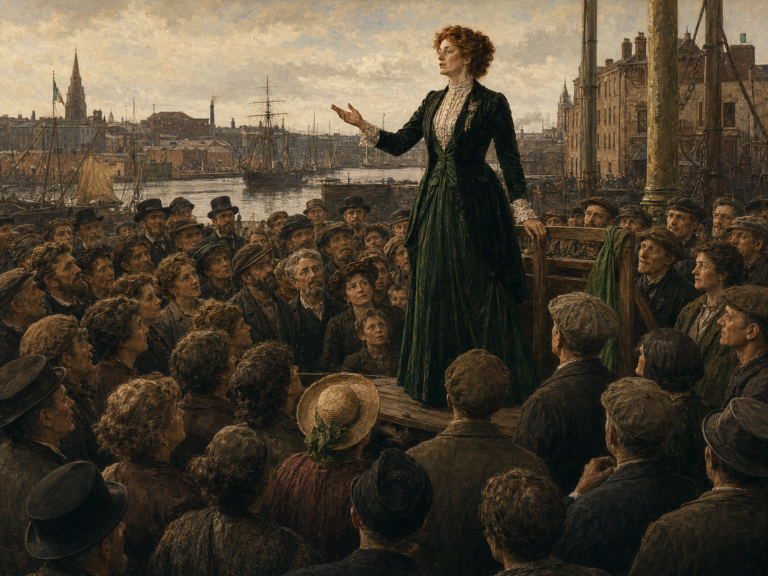
Maud Gonne’s interest in school meals developed from direct encounters with hungry children in Dublin. Inghinidhe na hÉireann established a school dinner committee and helped provide nourishing meals in impoverished districts, while also pressing Dublin Corporation and other authorities to accept greater responsibility. Hot stew, vegetables, milk and other simple food could determine whether a child remained attentive in class or struggled through the day weakened by hunger. The women treated malnutrition not as an individual moral failing but as a public problem requiring organisation, funding and political pressure from those willing to confront the conditions of urban poverty.
The campaign broadened the meaning of nationalist work. Irish independence was not presented solely as the transfer of authority from Westminster to an Irish government, but as a means of improving ordinary life. Children living in overcrowded rooms, attending school hungry or leaving education early could not be expected to benefit from cultural revival alone. The organisation therefore combined Irish-language classes, patriotic education and social assistance. Its members believed that national dignity required practical service, particularly where official institutions had failed. Feeding children became both humanitarian relief and a declaration that the Irish nation should assume responsibility for its most vulnerable members.
Women carried much of the daily labour behind the scheme. They raised subscriptions, purchased provisions, arranged cooking, distributed meals and collected evidence of need. This work gave female nationalists experience in administration and public campaigning while challenging the belief that politics belonged only to parliamentarians and councillors. Helena Molony and other members later became closely associated with the school meals campaign, pressing for meals of genuine nutritional value rather than token charity. Their activism connected women’s political organisation with labour conditions, housing, childhood health and educational opportunity, helping to make social reform part of advanced-nationalist discussion.
The campaign will be understood in Limerick, where poor families also face irregular wages, overcrowding and the difficulty of sending children to school properly fed. Teachers, charitable workers and parents know that hunger enters the classroom before lessons begin. Inghinidhe na hÉireann’s work suggests that national independence must be measured not only by flags, speeches or constitutional change, but by whether children are healthier, better educated and treated with dignity. Its members have placed a demanding principle before the nationalist movement: a free Ireland must be capable of feeding its children as well as celebrating its history.
Primary Sources
- Helena Molony, Bureau of Military History Witness Statement No. 391, recollections concerning Inghinidhe na hÉireann, poor children and the school meals campaign.
- Bean na hÉireann, October 1910, articles concerning hungry schoolchildren, school dinners and the responsibility of public authorities. Exact page and column should be confirmed before formal citation.
- Maud Gonne MacBride Papers, National Library of Ireland, records concerning Inghinidhe na hÉireann’s social, educational and children’s activities. Exact manuscript number and folio should be confirmed before formal citation.
- Dublin Corporation records concerning school meals, poor children and municipal responsibility during the early twentieth century, Dublin City Archives. Exact volume, committee and meeting entry should be confirmed before formal citation.
- Margaret Ward, Irish Nationalist Women, 1900–1918, Manchester: Manchester University Press, 1983; consult the discussion of Inghinidhe na hÉireann, social welfare and school meals.