Archived: 18 November 2026
Abstract
Irish RecordFor 536 CE, the clearest Irish notice in the surviving annals is in the Annals of Ulster, which records a failure of bread. The same source places a note about Marcellinus ending his chronicle and a Roman papal succession notice in the same chronological span, showing that the entry set for the year mixes Irish and external material.Parallel AccountsThe Annals of Tigernach and Chronicon Scotorum preserve no comparable event notice for 536 in the excerpts here; they mark the year with chronology labels but do not add a substantive Irish event in those passages. Annals of Inisfallen likewise offers
Read Article
Archived: 18 November 2026
Abstract
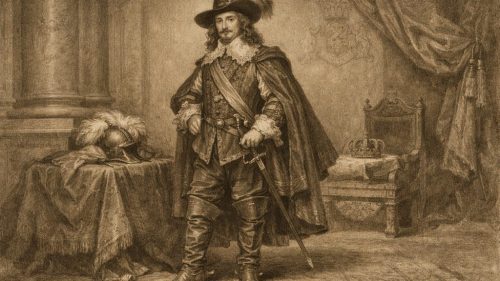
Ulick Burke was an Irish nobleman involved in the Wars of the Three Kingdoms. He was born in London in 1604, the son of the 4th Earl of Clanricarde and Frances Walsingham.Early LifeIn 1622, he married Anne Compton. They had one child, Margaret. Burke was summoned to the House of Lords as Lord Burgh in 1628, and he succeeded his father as 5th Earl of Clanricarde in 1635.Royalist ServiceHe was appointed Governor of Galway from 1636. From 1644 he served as Lieutenant-General and Commander in Connaught, and in 1645 he was appointed to the Privy Council of Ireland. In 1646,
Read Article
Archived: 18 November 2026
Abstract
Irish NoticesThe Annals of the Four Masters place the battle of Sligeach under 537 and say that Eoghan Bel was slain there. Annals of Tigernach record the battle of Claenloch, in which Maine son of Cearbhall fell defending the hostages of Uí Maine of Connacht, and Goibnenn son of Conall king of Uí Fiachrach Aidhne was the victor. Chronicon Scotorum places the battle of Claenloch under printed AD 538.Dating UncertaintyThe year labels are not fully aligned across the sources. The Annals of Ulster assign the battle of Sliab Éiblinne to 536 rather than 537, and the Annals of Inisfallen give
Read Article
Archived: 17 November 2026
Abstract
Poet Historian The same reference says he was evidently connected with the monastery of Fahan in Donegal. It also lists the attributed poem Flann for Éirinn.A modern study of Irish pseudohistorical poetry treats Máel Muru Othna as one of two authors whose work explores the construction of Irish identity. In that account, the poems draw on memory of the past, whether real or imagined, to present continuity for the Irish from the dawn of time to the medieval present.Book WitnessThe Book of Leinster preserves a poem headed “Mael Muru Othna cecinit.” In the opening lines, the speaker asks about the
Read Article
Archived: 17 November 2026
Abstract
Annal RecordIn the entries aligned with 538, the Annals of Ulster and the Annals of Tigernach both record a failure of bread. In the same Ulster year-group, a papal notice for Silverius follows, showing that the year contains more than one kind of entry. The Annals of the Four Masters do not repeat the bread failure here; instead, their 538 entry gives an Irish regnal frame and a different event, including the slaying of Tuathal Maelgarbh. Chronicon Scotorum likewise assigns a different event to A.D. 538, namely the battle of Claenloch, where Maine son of Cerbhall was slain.Dating IssuesThe surviving
Read Article
Archived: 17 November 2026
Abstract
Ulster NoticesIn the Annals of Ulster, the year headed AD 539 contains the birth of Gregory and a notice for Vigilius, described as a Roman bishop of the Roman Church, with his years of office and death at Syracuse also recorded.Tigernach RecordThe Annals of Tigernach place two comparable notices in their 539 sequence: the birth of Gregory the pope and a notice for Uigilius, who is said to have ruled for a stated length of time and died at Syracuse. In the same run, Tigernach also records the death of Nem the bishop.Masters YearThe Four Masters give 539 as the
Read Article
Archived: 17 November 2026
Abstract
Ulster noticesThe Annals of Ulster attach the heading AD 584 alias 85 to the entries labelled U585. The notices record the repose of Mac Nisi, abbot of Cluain Moccu Nóis, in the seventeenth year of his abbacy. They also record the death of Aed son of Suibne, king of Maenmag.Four MastersThe Annals of the Four Masters use the heading the Age of Christ 584 for M584. This grouping identifies the seventeenth year of Aedh and records the death of St Nathcheimhe, abbot of Tir Da Ghlas and brother of Caeimhighin, on the first day of May.Inisfallen datingThe Annals of Inisfallen
Read Article
Archived: 17 November 2026
Abstract
Year noticesIn the annalistic material for the mid-sixth century, the notices are brief and formulaic. In the Annals of Ulster, the year heading identified as AD 545 is followed by the notice that Daire Coluim Cille was founded. Chronicon Scotorum records Tigernach, Bishop of Cluain-eois, as having died under its AD 545 notice. The Annals of Tigernach place the death of Tighernach son of Cairpre, bishop of Cluain Eois, under T544. These are concise year entries rather than narrative accounts.Matching entriesThe Annals of Inisfallen preserve a foundation notice for Cluain Moccu Nóis under the identifier AI547. It names Nóis, described
Read Article
Archived: 17 November 2026
Abstract
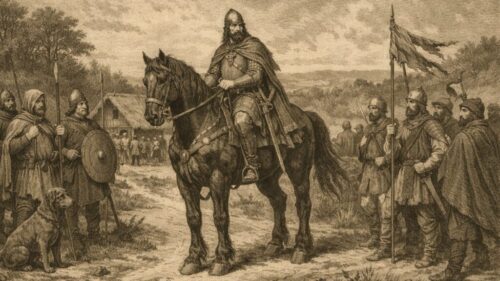
Art MacMurrough, also called Art Mac Murrogh Kavanagh, was king of Leinster in the later fourteenth and early fifteenth centuries. One biography states that he was born in 1357, was knighted when he was seven, and succeeded to the government of Leinster when he was twenty after his father died.Leinster PowerFrom his sixteenth year, he is said to have resisted encroachments and to have levied exactions upon the colonists in return for leaving the roads open between the northern and southern parts of the Pale. Many Leinster septs, claiming descent from Cahir Mor, obeyed him as their chief. Later tradition
Read Article
Archived: 17 November 2026
Abstract
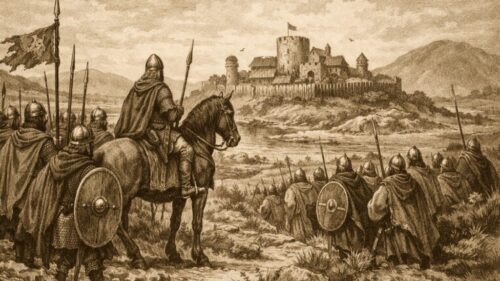
North CampaignBrian O'Neill appears in the Irish annals in connection with warfare in the north of Ireland in the early 1260s. One account says that Aed O Conchobair went to join him in the north, bringing many of the chief men of Connacht. It also says that Brian O'Neill and the chief men of Cenel Eogain went, together with Aed O Conchobair, to Downpatrick to attack the Galls. The same entry names him as king of the Gaels of Ireland and states that the Galls of that place defeated them both.The Annals of Ulster describe the same fighting as the
Read Article
