Archived: 17 November 2026
Abstract
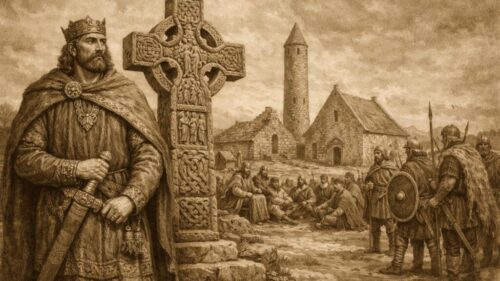
Royal Lineage The annals identify him as king in sovereignty over Ireland in 877, describing that year as the first year of his rule. Military RuleThe annals portray Flann’s kingship through repeated expeditions and plundering raids. In 877 he came into Leinster and took hostages, and Munster was plundered by him from Boraimhe to Corcach. In 879 he led a hosting into the north with Irish and foreigners, halted at Magh Eitir Di Glais, and the hostages of the Cinel Conaill and the Cinel Eoghain were taken on that expedition. The same year and again in 879, Munster was plundered
Read Article
Archived: 17 November 2026
Abstract
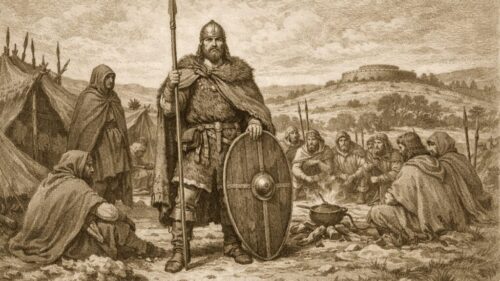
Domnall mac Aedo mic Ainmire is identified as the ruler who was victorious at the Battle of Mag Rath in 637 and as the "King of Ireland." The same account places him in the seventh century. In that period, the Ulaid continued in Ulster as the De1l Fiatach; they were predominant in Ulster in 600 and were variously aligned with or hostile to the De1l Riata of Antrim and the De1l nAraide between Belfast Lough and the Mournes. The Ued Ne9ill again routed De1l nAraide at Dfan Ceithirnn in 629, and together with their expatriate Argyll branch, De1l Riata joined
Read Article
Archived: 17 November 2026
Abstract
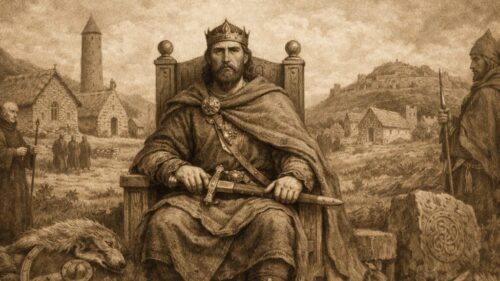
Cerball mac Dúnlainge is named in the annalistic record preserved in Chronicon Scotorum. The notice identifies him as king of Osruidhe, that is, king of Osraige, and says that he died suddenly (subita morte). On the evidence supplied here, this brief annal entry is the firmest basis for any account of him.Royal IdentityThe text gives his name as Cerball mac Dunlainge and attaches to him the title rí Osruidhe. No additional detail is supplied in the excerpt beyond this royal identification and the record of his death. The evidence therefore supports a short biography focused on the annalistic notice itself
Read Article
Archived: 17 November 2026
Abstract
Annal RecordThe year 593 appears in the annals as a compact set of notices rather than a single coherent narrative. Ulster and Chronicon Scotorum both record the death of Aengus son of Amalngaid under their 593 entries, while Tigernach and the Four Masters place other events in the same annal year, showing that the surviving records preserve year-attributions but not a single uniform chronology.Leinster NoticeTigernach’s 593 entry is the clearest specifically Irish political notice in the group: it records the death of Aodh Cerr, king of Leinster, and also says that Brandub son of Eochaid became king of Leinster. That
Read Article
Archived: 17 November 2026
Abstract
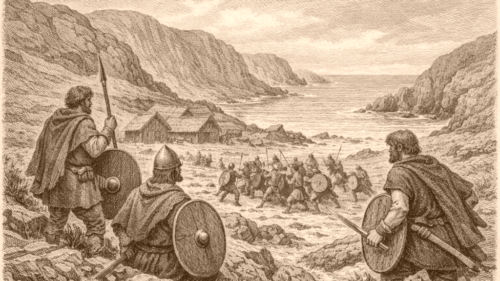
Ulster NoticeIn the Annals of Ulster, the year headed AD 575 includes a battle of Teloch in Cenn Tire. The same entry also records a spark of leprosy and an unheard-of abundance of nuts, and it names Dunchadh son of Conall son of Comgall among those who fell, together with many others of Gabrán's sons.That witness also preserves a separate notice for the same year about the death of Brénainn son of Brión, while another nearby Ulster entry for the same annal sequence offers an alternative tradition about Ainmire son of Sétna. The excerpted material shows that the Ulster text
Read Article
Archived: 17 November 2026
Abstract
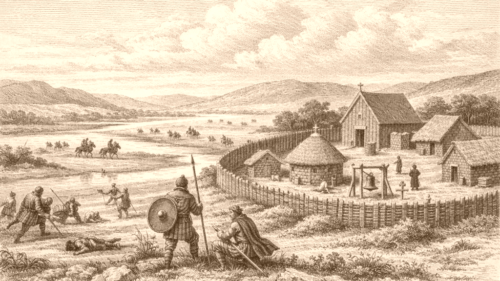
Dating frameThe printed headings do not line up one-to-one with a modern 573 CE year. Ulster has U573.0 with “AD 572” and U574.0 with “AD 573”; Tigernach has Annal T573 and T574; Chronicon Scotorum has Annal CS573 and CS575.Within this cluster, the most prominent military notice is the battle of Feimen. Annals of Ulster places it in an entry headed U573.1, while Annals of Inisfallen gives a parallel notice under AI573.1 and Chronicon Scotorum also records the battle under CS573. These are separate records, and they should be treated as parallel witnesses to a single annal notice rather than as
Read Article
Archived: 17 November 2026
Abstract
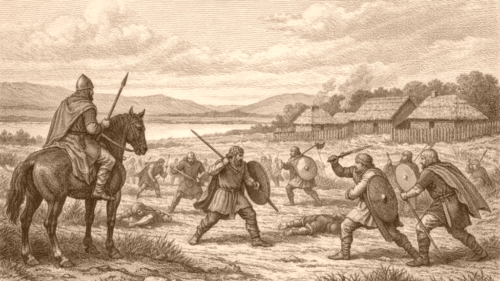
Year EvidenceThe clearest securely dated notice for Ireland in 551 CE is the battle of Cuilen. The Annals of Ulster place it under AD 551 and say that the Corco Óche of Munster perished there, while the Annals of Tigernach and Chronicon Scotorum record the same battle under their corresponding year entries and likewise connect it with the downfall of the Corcu Óche of Munster.Associated DeathThe same annal year also records the death of Fothad son of Conall. This notice appears beside the Cuilen battle in both the Annals of Ulster and the Annals of Tigernach, and Chronicon Scotorum preserves
Read Article
Archived: 17 November 2026
Abstract
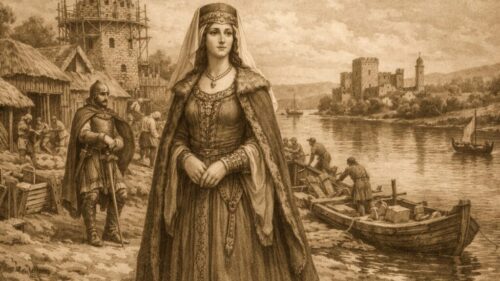
Early Life Wikidata gives her birth year as 1172 and her death year as 1220, and it lists Ireland as her place of birth. It names her father as Richard de Clare, 2nd Earl of Pembroke, and her mother as Aoife MacMurrough.MarriageIn August 1189, she married William Marshal, 1st Earl of Pembroke. The same source identifies several of their children, including Isabel Marshal and William Marshal, 2nd Earl of Pembroke.New RossLater accounts linked Isabella with New Ross on the River Barrow. One local history account says that William Marshal and Isabella de Clare arrived there in the early thirteenth century,
Read Article
Archived: 17 November 2026
Abstract
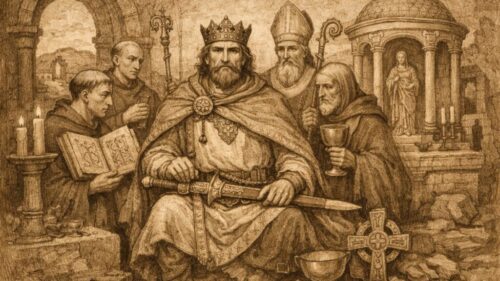
Donnchad mac Briain is named in the title of the Cambridge Core article “S. Stefano al Monte Celio, Donnchad mac Briain and papal legates in Ireland, 1064–1203.” The supplied evidence supports that article title and journal context, but it does not by itself supply a fuller biography.Source NotesThe bibliography below is limited to the supplied URLs and titles used in the evidence set. It preserves the identifiable published works and reference pages that mention Donnchad mac Briain, while avoiding unsupported additions.S. Stefano al Monte Celio, Donnchad mac Briain and papal legates in Ireland, 1064–1203 — Irish Historical Studies, Cambridge Core.
Read Article
Archived: 17 November 2026
Abstract
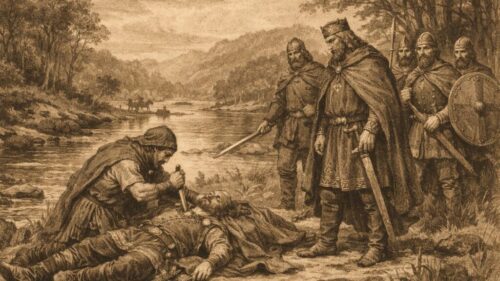
Áed Sláine is named in regnal material among the rulers of Ireland, alongside Colmán Rímid. In the annals, his slaying is recorded at Loch Semdile at the hands of Conall mac Suibne.Royal PlaceIn the regnal material preserved in the chronicles, Áed Sláine is counted among the kings of Ireland. The same tradition places him alongside Colmán Rímid, and in one chronicle poem the pair are named together among rulers of the island. The chronicle evidence records his death in the same year as the deaths of Aed Rón and Aed Buide. One annal records the slaying of Áed Sláine by
Read Article
